Australian Bass in Coastal Rivers and Impoundments
Identifying Australian Bass
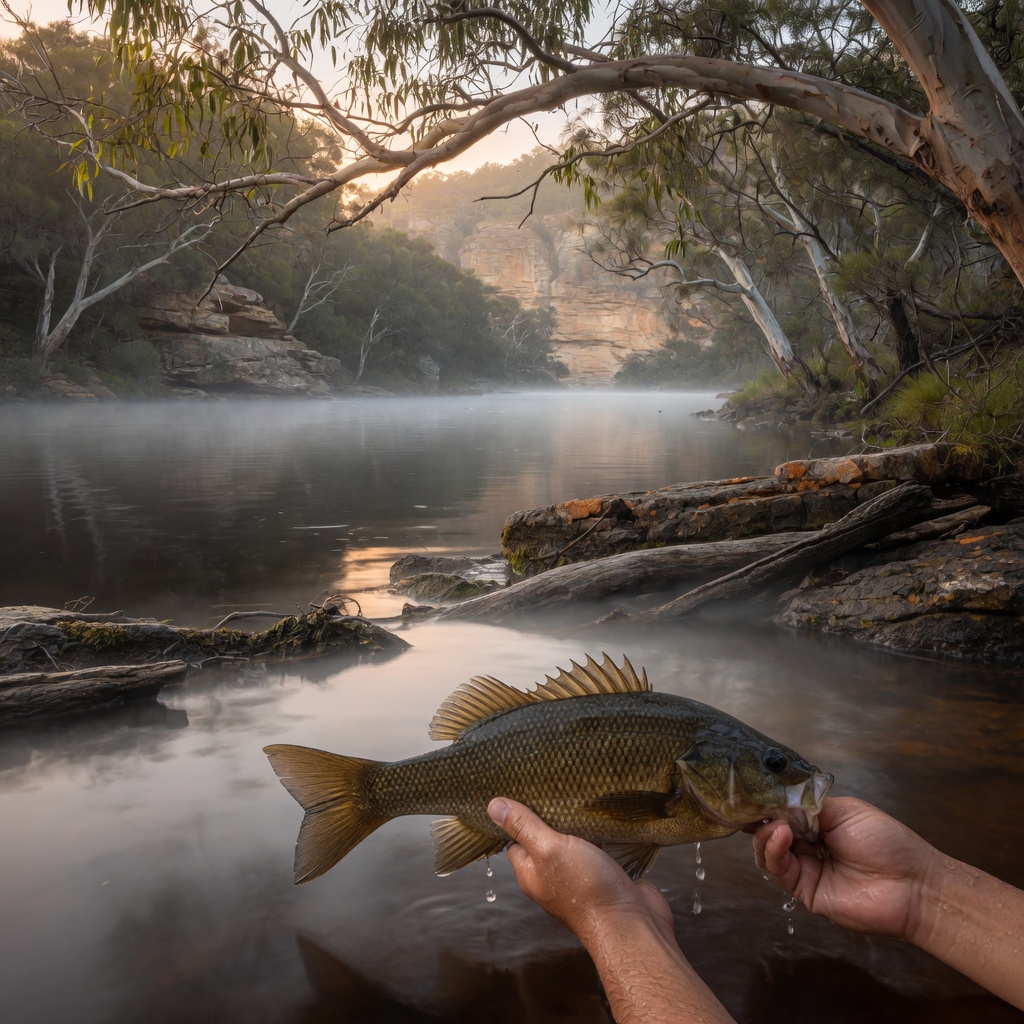
Australian bass (Macquaria novemaculeata) are a compact, deep-bodied native percichthyid found in coastal drainages from southern Queensland to eastern Victoria, with the Hawkesbury, Nepean, Colo, Georges and Shoalhaven systems all within reach of Sydney. Colour ranges from bronze-olive in tannin-stained creeks to almost slate-grey in clear impoundments, with a pale belly and a distinctly forked tail. Look for the spiny first dorsal fin, the concave forehead profile and the small dark spot pattern that is absent on the flanks. Adults in rivers commonly run 250-380 mm, while well-fed stocked fish in dams reach 450 mm or more.
The most frequent mix-up is with estuary perch, which share a similar body plan but have a straighter head profile and are more tolerant of salt. Where the two overlap in the lower tidal reaches, treat any doubtful fish as the species with the stricter protection and handle it accordingly. For broader comparison notes across native and estuary species, see our fish species profiles and identification guides.
Habitat: Coastal Rivers versus Dams
In rivers, bass are ambush feeders tied to structure. Concentrate on undercut banks, fallen timber, weed edges, rock bars and the shaded pockets under overhanging casuarinas and tea-tree. Bass hold in the slack water beside current, not in it, so cast upstream and let the lure swing naturally past cover. Deep pools hold fish through the day; the shallow tails of those pools come alive at dusk.
Impoundment bass behave more like open-water schooling fish. They follow bait and thermal layers, sitting over standing timber, submerged points, weed beds and creek channels. In summer, expect fish suspended at 4-10 m by day and pushed onto flats and edges at first and last light. Winter often stacks them tighter and deeper, where slow presentations earn more bites than fast ones.
Seasonal Behaviour and the Spawning Run
Bass are catadromous: mature river fish drop downstream in late autumn and winter to spawn in the brackish upper estuary, then move back upstream through spring. That migration is why most states apply closed seasons on rivers over the colder months while impoundments, where bass cannot breed, may stay open. Rules differ by state and change over time, so always confirm current closures, size limits and bag limits with the relevant state or territory fisheries authority before you fish.
- Spring: fish spread back through the freshwater reaches and feed aggressively as water warms past about 18 degrees.
- Summer: peak surface fishing, especially on humid evenings after rain when cicadas, beetles and frogs are active.
- Autumn: heavy feeding before the downstream run; larger fish become more catchable in the mid-river.
- Winter: river fish concentrate low in the system; dam fish school deep and respond to vertical techniques.
Weather matters as much as calendar. A warm barometric dip, light cloud, a rising moon at dusk and a fresh that lightly colours the water all lift feeding activity. Cold snaps, harsh westerlies and blazing midday sun push fish deeper into cover.
Techniques, Lures and Rigs
A 2-4 kg spin outfit of 1.8-2.1 m paired with a 2000-2500 size reel, 4-6 kg braid and a 4-6 kg fluorocarbon leader covers nearly all river work. Step up to 6-8 kg leader around heavy timber. In dams, a slightly longer rod helps cast small vibes and lift fish clear of standing trees.
- Surface: small poppers, paddlers and cicada imitations worked with long pauses at dusk and dawn.
- Shallow divers: 40-55 mm hardbodies cast tight to timber and rolled with a stop-start retrieve.
- Soft plastics: 60-75 mm grubs, paddle-tails and creature baits on 1/16-1/4 oz jig heads, hopped along rock bars.
- Lipless vibes and blades: the go-to for suspended dam fish, either cast and burned or dropped vertically to sounder marks.
- Spinnerbaits: effective in stained water and around weed where snags punish hardbodies.
Fly anglers do well with 5-7 weight outfits, floating lines and small poppers or Dahlberg-style divers in summer, switching to weighted Woolly Buggers and Clousers when fish sit deep. In tight creeks, accuracy beats distance every time.
Handling, Release and Conservation
Australian bass are slow-growing and long-lived, so the population in any single pool is easily thinned. Treat them as a catch and release species by default. Use single inline hooks or crushed barbs where practical, keep fish in the water while unhooking, support the body horizontally rather than hanging it by the jaw, and wet your hands before contact. In summer heat, limit air exposure to a few seconds and revive the fish facing into gentle current before letting go.
Fish taken from deeper impoundment water can show signs of barotrauma, including a distended stomach or difficulty swimming down. Release these fish quickly, or use a release weight to return them to depth. Protect the habitat too: leave snags and fallen timber in place, avoid trampling bank vegetation and carry out every scrap of line and packaging.
Safety on Coastal Rivers
Most bass water is quiet, but it is not risk-free. Check the marine and inland forecast before launching a kayak or dinghy, wear a lifejacket, and never chase fish through a flooded river where debris and current are unpredictable. Sudden freshes can strand you upstream of a rock bar, so watch water levels and plan an exit. Tell someone your intended stretch and return time, and carry a charged phone in a dry bag.
Questions about a particular system near Sydney? Reach Australian Fish Species on +61295585271 or [email protected] during Mon–Fri: 09:00 – 17:00 (AEST).

Navigation
See also
FAQ