Murray Cod and Trout Cod: Identification and Conservation Status
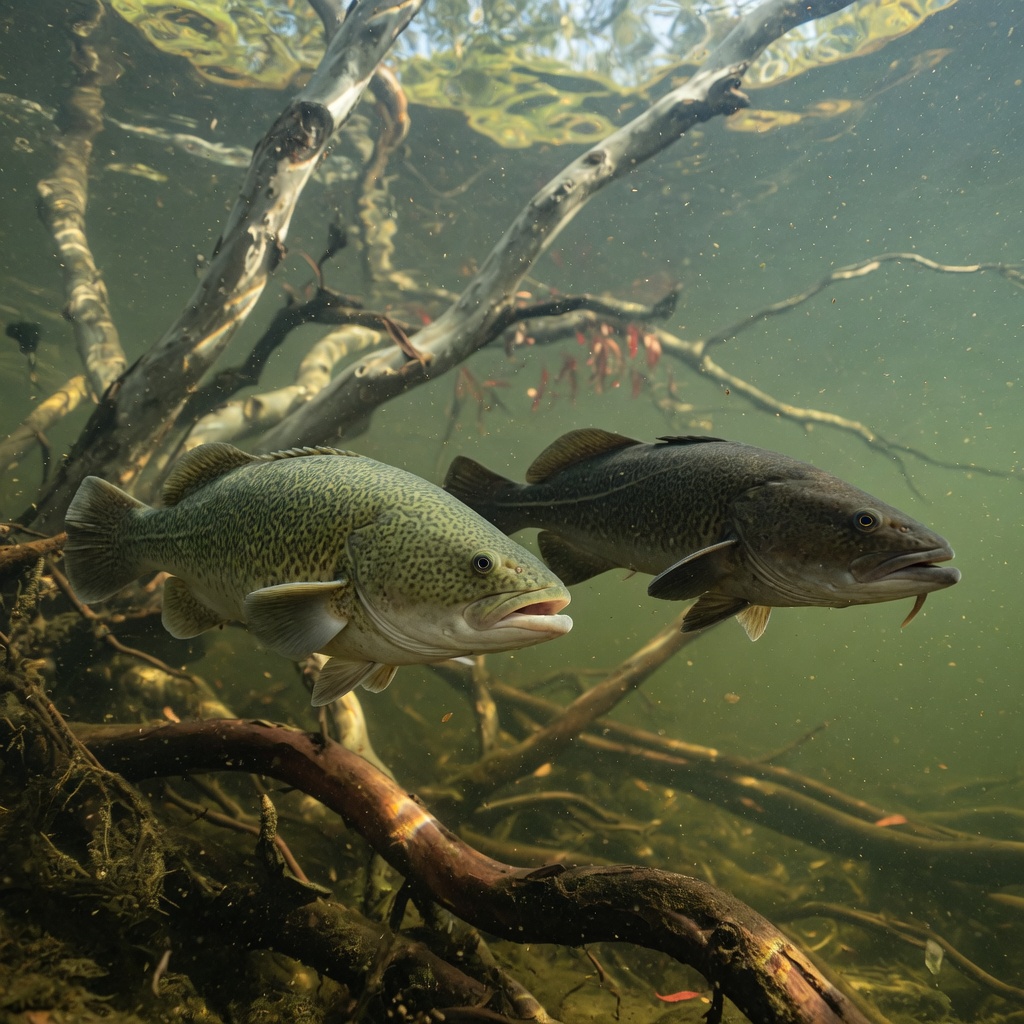
Two Cod, One River System
The Murray-Darling Basin holds two native cod that are regularly confused: Murray cod (Maccullochella peelii) and trout cod (Maccullochella macquariensis). Both are ambush predators of snag-filled runs and deep holes, both take the same lures, and both can turn up on the same session in parts of the mid-Murray and Murrumbidgee. The difference matters enormously, because trout cod are a threatened species and must be released immediately wherever they are encountered. Learning to separate them in the water, before the fish is even lifted, is a core skill for anyone fishing inland New South Wales, Victoria and the ACT, including anglers travelling inland from Sydney for a weekend on the rivers.
Identifying Murray Cod
Murray cod are heavy-bodied, deep-bellied fish with a broad, rounded head and a distinctly protruding lower jaw when viewed from the side. Key features include:
- Mottled pattern: irregular green to olive blotching over a pale cream to yellowish belly, giving a marbled look rather than crisp lines.
- Jaw: lower jaw equal to or slightly longer than the upper jaw, and the mouth reaches back past the front of the eye.
- Profile: straight to slightly convex forehead, thick shoulders, large rounded tail and soft dorsal.
- Size: commonly 40-70 cm in accessible water, with far larger fish present in mature snag habitat and impoundments.
Identifying Trout Cod
Trout cod are more streamlined and trout-like, hence the name. Look for:
- Speckling: small, dark, close-set spots and flecks over a bluish-grey to slate body, without the broad mottled blotches of Murray cod.
- Overhanging snout: the upper jaw clearly overhangs the lower jaw, the most reliable single feature.
- Dark eye stripe: a faint dark line often runs through or above the eye.
- Shape: longer, leaner body and a straighter forehead, with a smaller average size than Murray cod.
If a fish shows an overhanging upper jaw and fine speckling, treat it as a trout cod and release it in the water without delay.
Habitat, Season and Behaviour
Both species favour structure: fallen timber, undercut banks, rock bars and the shaded edges of deep holes. Murray cod spread widely through lowland rivers, weir pools and stocked impoundments, while trout cod persist in a much smaller set of cooler, faster, well-oxygenated reaches. Feeding activity lifts as water temperatures climb through spring and summer, with dawn, dusk and warm humid evenings producing the most consistent surface and shallow-diving action. Winter fish sit deeper and slower, and respond better to a slow-rolled spinnerbait or a lure worked tight to timber. Spring closures apply to Murray cod in most jurisdictions to protect spawning fish, and closure dates and boundaries differ by state.
Conservation Status and the Rules
Trout cod are listed as threatened and are protected across their range, with no take permitted in general waters; a small number of designated fisheries may be managed differently over time. Murray cod are managed with size limits, bag limits, slot limits in some waters and seasonal closures. Because these settings are reviewed and changed, the practical approach is to read the current rules for the exact water you are fishing before you leave home, and to confirm them with the relevant state or territory fisheries authority. Carry a measuring device, know the closure dates for your destination, and if in doubt about the species in your hands, release it.
Handling and Release Practices That Work
- Use a large knotless rubber-mesh net and keep the fish in water while you unhook it.
- Support the belly with two hands and never hang a heavy cod vertically by the jaw.
- Crush barbs or swap trebles for single hooks on hard-bodies to speed up releases.
- Keep the fish out of the water for seconds, not minutes, and wet your hands and mat first.
- Hold the fish facing gentle current until it kicks away under its own power.
Heavier leaders of 20-40 kg and a rod with backbone let you land fish quickly rather than exhausting them near snags. For more on separating lookalike natives and building a reliable identification routine, see our wider species profiles and identification guides.
Protecting the Habitat
Cod depend on structure. Leaving snags in place, avoiding damage to riparian vegetation, cleaning gear between catchments to limit the spread of pests and disease, and taking all rubbish and line home all contribute directly to future fishing. Report unusual fish kills or suspected illegal take to your state fisheries authority. Questions about a specific reach or a tricky identification can be sent to [email protected] or raised by phone on +61295585271 during Mon–Fri: 09:00 – 17:00 (AEST), and Australian Fish Species will point you to the current official guidance.

Navigation
See also
FAQ