Yellowfin Bream Profile: Identification, Habitat and Seasonal Behaviour
Why bream matter to Australian anglers
Yellowfin bream (Acanthopagrus australis) are the backbone of estuary fishing along the east coast, from southern Queensland through to eastern Victoria, with Sydney harbours, creeks and rock platforms holding strong year-round populations. They are accessible from a jetty, a kayak, the sand or a boat, they feed in shallow water, and they respond to everything from a peeled prawn to a 40 mm hard body. For anglers learning to read tide, structure and light, bream are the ideal teaching species.
Identification: telling bream apart
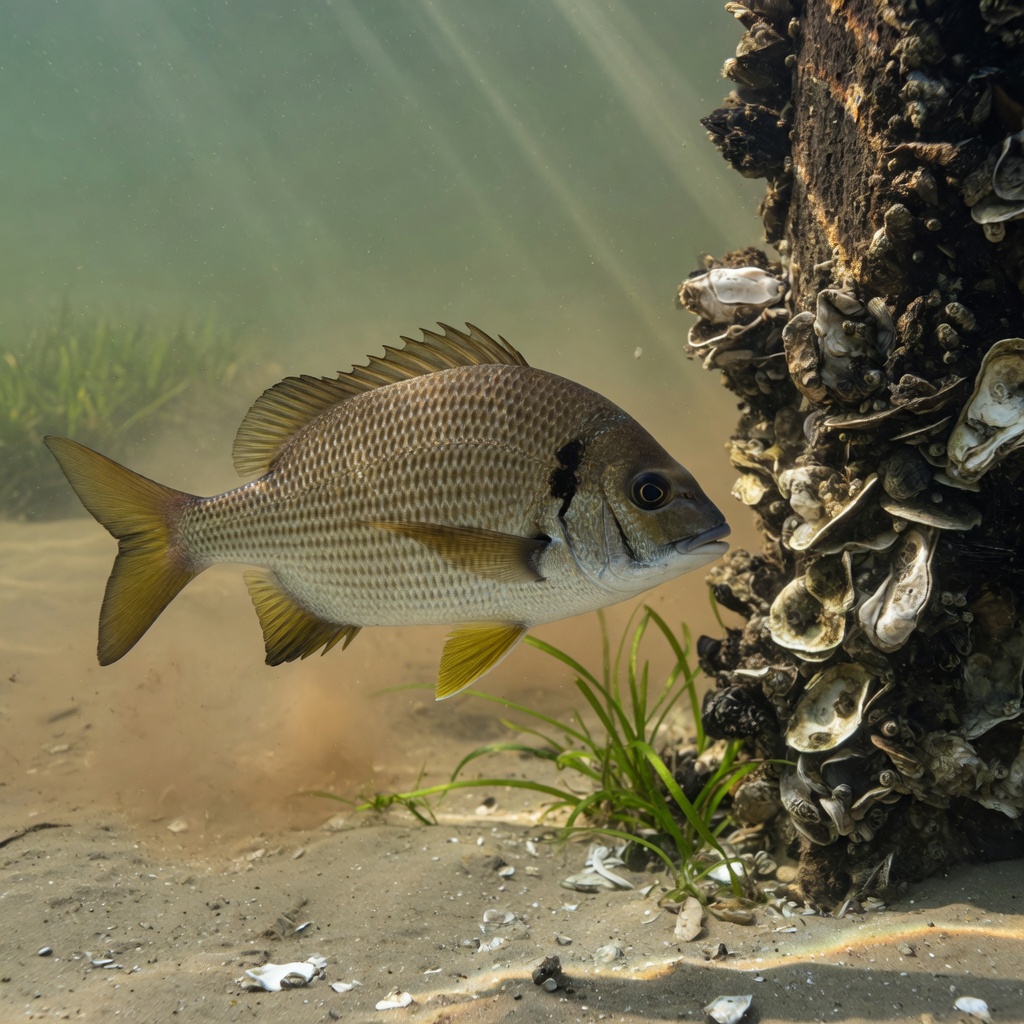
Yellowfin bream are deep-bodied and laterally compressed, silver to bronze on the flanks, often darker across the back in clear ocean water and noticeably brassier in tannin-stained upper estuaries. Key features to check:
- Fins: yellow to yellow-olive pelvic and anal fins, which give the species its name.
- Head profile: a moderately steep forehead with a small, tough mouth set with strong conical front teeth and crushing molars at the rear.
- Scales: large, firm scales with a fine dark edge, giving a subtle chequered look in good light.
- Tail: forked, usually with a dusky trailing margin.
Common confusion is with black bream (more southern, duller fins, often darker overall), tarwhine (rounder body, thin gold horizontal stripes, smaller mouth, silver fins) and juvenile snapper (blue spots along the back, distinctly different head shape). Hybrids of yellowfin and black bream occur where their ranges overlap in far southern NSW and eastern Victoria, so expect intermediate fin colour there. Careful identification matters because size and bag limits can differ between species and between states, and rules change over time.
Biology and growth
Bream are slow-growing and long-lived, with fish over 30 cm often being many years old and larger specimens beyond 40 cm representing decades of growth. They are omnivorous opportunists: crabs, prawns, nippers, worms, small baitfish, cunjevoi, oysters and marine growth scraped from pylons all feature in their diet. Those molars are built for crushing shellfish, which is why hard-bodied baits and slow-rolled crab imitations work so well.
The critical behavioural fact is the annual spawning migration. As water cools through late autumn and winter, mature bream leave the upper and middle estuaries and gather near river mouths, breakwalls and adjacent ocean rocks and beaches to spawn in higher salinity water. Juveniles then use seagrass beds, mangrove-lined flats and shallow sandy bays as nursery habitat, which is why protecting those areas matters as much as any bag limit.
Habitat: where to find them
Estuaries and harbours
Look for structure that concentrates food and provides shade: oyster leases and racks, bridge pylons, moored boat hulls, rock walls, fallen timber, drop-offs at the edge of seagrass, and drains that flush the flats on a falling tide. In Sydney, deep harbour pylons hold fish through the middle of the day while shallow sand and weed flats produce best on the first of a rising tide.
Rocks and beaches
Ocean-facing platforms with cunjevoi-covered ledges, washes and white water hold larger average fish, particularly in winter. Beaches produce bream from gutters and holes close to the sand, especially near a river mouth or headland. Rock platforms carry real risk, so read the swell forecast, wear a life jacket and cleated boots, and never fish a ledge you have not watched for at least fifteen minutes.
Upper reaches
In warmer months bream push a long way upstream into near-fresh water, hunting shrimp and insects along undercut banks, snags and lily edges. These fish are usually smaller on average but aggressive and excellent surface-lure targets at dawn and dusk.
Seasonal behaviour through the year
- Spring (Sep-Nov): post-spawn fish spread back through the estuary and feed hard. Flats, weed edges and oyster racks come alive as water temperatures climb.
- Summer (Dec-Feb): peak surface-lure season. Fish move high in the water at first light and again late, then retreat to deep shade and pylons through the heat. Upper estuaries fish well after rain settles.
- Autumn (Mar-May): the pre-spawn run begins. Fish start staging near lower estuary structure and breakwalls, and average size increases noticeably.
- Winter (Jun-Aug): the big-fish window on ocean rocks, breakwalls and beaches near river mouths. Cold, clear water favours natural baits and slow presentations.
Feeding windows: tide, moon and weather
Bream feed on movement. The most reliable windows are the two hours either side of a tide change over structure, with the first push of a rising tide onto a drained flat being especially productive. Low light at dawn and dusk lifts confidence in shallow water, while overcast days extend the bite. Around new and full moons, stronger tidal flow generally sharpens the bite on drop-offs and rock walls, though very fast water can push fish tight into cover. After heavy rain, work the salt wedge lower in the system where cleaner water meets the dirty flow, and expect prawns and worms to out-fish lures for a few days.
Practical approach and gear notes
A 2-4 kg spin outfit, 1000-2500 size reel, 4-8 lb braid and a 6-10 lb fluorocarbon leader covers most estuary work; step up leader to 12-20 lb around oyster racks and heavy rock. Keep sinkers as light as conditions allow so baits and lures drift naturally. Effective baits include peeled prawns, live nippers, beach worms, mullet strip, halved crabs and bread near jetties. Lures worth carrying: small crank baits, 40-70 mm plastic prawns and grubs on 1/16-1/12 oz jig heads, blades for deep pylons, and walk-the-dog surface lures for summer flats.
Because bream are slow-growing, release the bigger breeders where you can. Use wet hands, support the fish horizontally, minimise air time, and consider circle hooks or single-hook conversions on lures to reduce damage. For more on handling and gear selection across estuary species, see our estuary fishing techniques guide.
Rules, safety and further help
Bag limits, minimum legal lengths and seasonal or spatial closures for bream differ by state and are updated periodically, so always confirm current rules with the relevant state or territory fisheries authority before you fish. Australian Fish Species explains how the rules work rather than substituting for them. Questions about species identification or a local region? Contact us on +61295585271 or [email protected] during Mon–Fri: 09:00 – 17:00 (AEST).

Navigation
See also
FAQ