Australian Tuna Species: Longtail, Yellowfin, Southern Bluefin and Mackerel Tuna
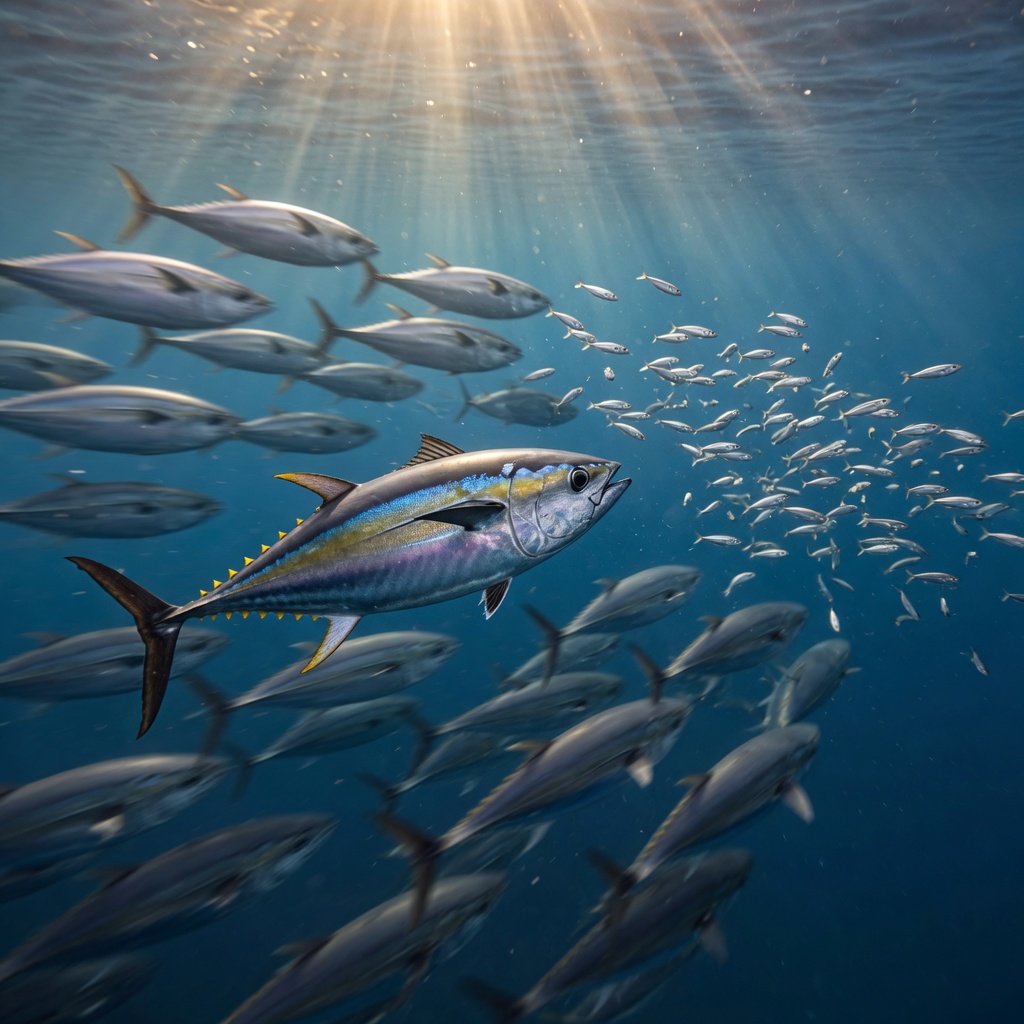
Why Tuna Identification Matters
Tuna are among the fastest and most powerful fish an Australian angler will ever hook, and they are also among the most commonly misidentified. A school of surface-busting fish off Sydney might be mackerel tuna, longtail tuna, or juvenile yellowfin, and each behaves differently, feeds on different bait sizes and falls under different rules. Because bag and size limits vary between states and change over time, always confirm the current settings with the relevant state or territory fisheries authority before you keep a fish.
The reliable identification features are fin length, body markings, the pattern on the belly and back, and the shape of the finlets between the second dorsal and the tail. Colour fades quickly once a fish is out of the water, so photograph the flanks and finlets immediately if you are unsure.
Longtail Tuna (Thunnus tonggol)
Longtail tuna, often called northern bluefin, are the premier light-tackle tuna of northern and eastern Australia. They are recognised by an elongated, slender body, unusually long pectoral-to-tail proportions, and distinctive colourless oval spots and short broken bars arranged in rows along the lower flanks and belly. The dorsal and anal finlets are yellow with dark edges.
- Range: Common from central New South Wales north through Queensland, the Northern Territory and across to north-western Western Australia.
- Season: Broadly summer to autumn in the south of their range, with long periods of activity through the warmer months further north.
- Behaviour: Often found working bait in relatively shallow coastal water, along headlands, over inshore reef and around river mouths where tide pushes bait.
- Approach: Small metal slugs, soft plastics and slim stickbaits cast ahead of a moving school, retrieved fast. Long, sustained runs mean plenty of line capacity matters more than heavy drag.
Yellowfin Tuna (Thunnus albacares)
Yellowfin are the classic blue-water target along the eastern and western seaboards. Larger fish develop very long, sickle-shaped second dorsal and anal fins, the body is deep and torpedo-shaped, and the finlets are bright yellow. A faint golden stripe often runs along the flank, and the belly carries broken vertical lines rather than the oval spots of longtail.
Yellowfin follow warm current lines and temperature breaks, particularly where the East Australian Current meets cooler water. Look for pressure edges, current lines holding weed and debris, working birds, and bait concentrations over canyons and shelf drop-offs. Trolling skirted lures and swimming baits, cubing with pilchards on a drifting berley trail, and casting stickbaits into feeding schools all produce, depending on how the fish are behaving.
Southern Bluefin Tuna (Thunnus maccoyii)
Southern bluefin are the cool-water heavyweight, most commonly encountered off Victoria, Tasmania, South Australia, south-western Western Australia and southern New South Wales. They are stocky and thick through the shoulders with short pectoral fins, a dark metallic blue back, and yellow-to-dusky finlets with a dark trailing edge. Unlike yellowfin, the second dorsal and anal fins stay comparatively short even in large fish.
The peak run is generally autumn into winter as cooler water pushes inshore. Trolling small to mid-size skirts and bibbed minnows around bait schools and shelf structure is the standard method, often with a spin rod ready for fish that surface behind the boat. Because of their strength and stamina, southern bluefin demand well-serviced drags and healthy, straight hooks.
Mackerel Tuna (Euthynnus affinis)
Mackerel tuna, also called kawakawa or bonito in some regions, are the most abundant small tuna along the northern half of the coast. Identification is straightforward once you know it: a scaleless silver belly marked with several dark blotches near the pectoral fin, and a bold pattern of wavy dark lines across the back above the lateral line. They rarely exceed a few kilograms but fight far above their weight.
They are ideal for practising school-fishing technique: small metals, 40 to 60 mm soft plastics and fly gear all work. Mackerel tuna have dark, strongly flavoured flesh and are widely used as bait for larger pelagics and other species covered in our profiles, so consider releasing surplus fish in good condition.
Finding Tuna: Water, Bait and Timing
- Watch the water temperature. Small shifts across a current break concentrate bait and predators. Note the temperature where you find fish and use it as a starting point next trip.
- Follow the birds. Terns hovering low and dipping usually indicate small bait and small tuna; wheeling gannets and shearwaters diving hard often mean larger fish beneath.
- Use tide and light. Early morning and late afternoon, combined with a running tide near headlands and river mouths, produce the most reliable inshore surface activity.
- Match the bait size. Tuna feeding on tiny whitebait will refuse oversized lures. Carry a spread from 20 g slugs through to larger stickbaits.
- Check the forecast. Offshore tuna fishing depends on wind against swell and current. Read the full marine forecast, not just the wind speed, and plan a clear return window.
Handling, Release and Eating Quality
Tuna generate enormous internal heat while fighting, so fish destined for the table should be bled and chilled in an ice slurry immediately. Fish intended for release should be fought as quickly as tackle allows, kept in the water where practical, supported horizontally, and released with the head into the current so water flows across the gills. Avoid long air exposure and never hold a tuna by the tail alone. Single hooks and crushed barbs make release far cleaner on fast-moving schools.
Because tuna are highly migratory and shared across state and international waters, management settings for southern bluefin in particular can change between seasons and may involve specific tagging or reporting arrangements. Treat any rule summary you read, including ours, as an explanation of how the system works rather than a current legal limit, and verify the details with your state or territory fisheries authority before the trip.
Getting More From Australian Fish Species
Australian Fish Species covers species identification, seasonal patterns, rigs and safety across every Australian state and territory. If you have a photo you cannot identify or a question about a local run, contact us at [email protected] or +61295585271 during Mon–Fri: 09:00 – 17:00 (AEST), and we will point you to the most relevant guide.

Navigation
See also
FAQ