Billfish of Australia: Black, Blue and Striped Marlin Compared
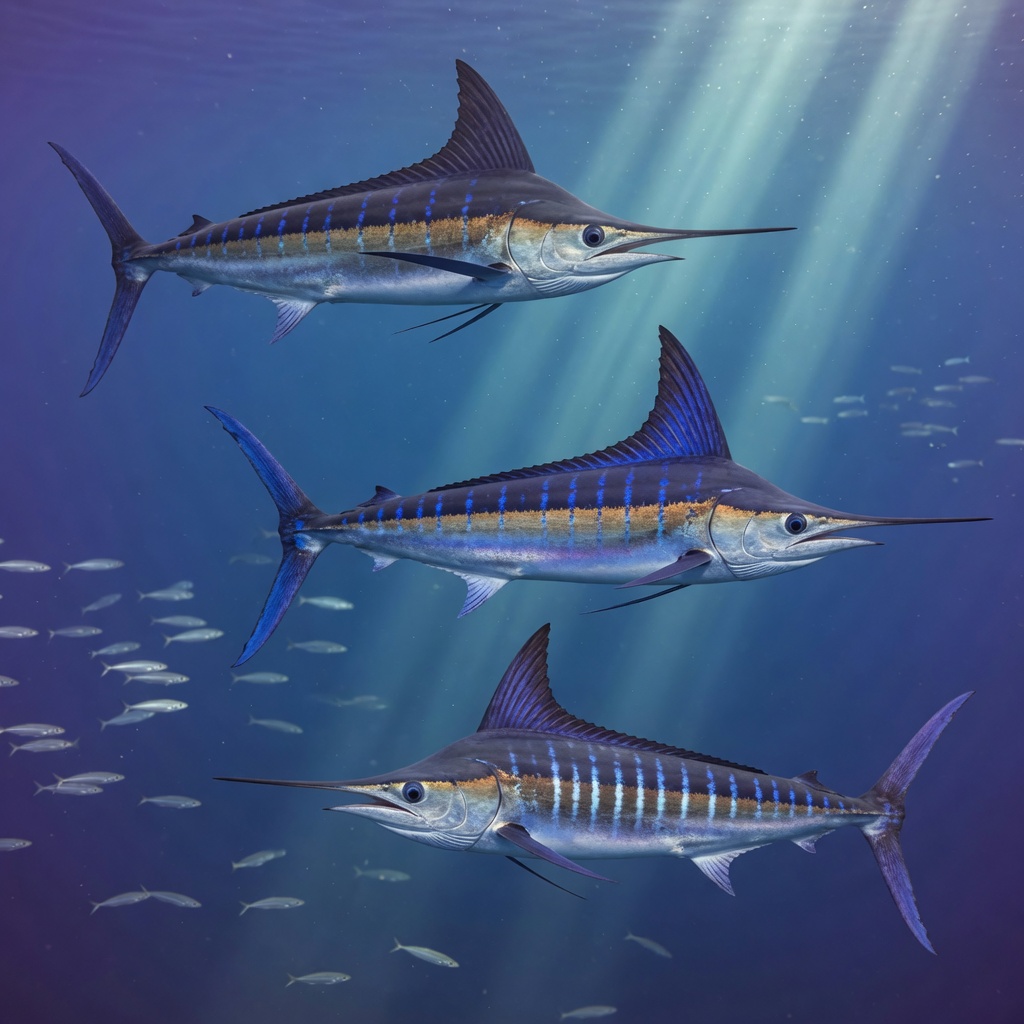
Three Marlin, One Coastline
Australia is one of the few places on earth where black, blue and striped marlin can all be encountered along the same stretch of coast, sometimes within the same week. Off Sydney, the continental shelf swings close to shore and the East Australian Current carries warm blue water south each summer and autumn, delivering all three species within a few hours' run of the harbour. Learning to separate them quickly matters: identification affects how you fight the fish, how you handle the release, and how you log the encounter for tag-and-release programs.
This guide from Australian Fish Species focuses on the practical field marks you can read from the cockpit, not museum measurements. For broader identification habits across estuary, reef and offshore species, see our species profiles and identification section.
Black Marlin
Black marlin are the classic Australian billfish and the species most often encountered by trailer boats. Key features:
- Rigid pectoral fins that cannot be folded flat against the body — the single most reliable field mark, even on a small fish.
- Heavy shoulders and a thick, blocky body, with a relatively short, stout bill.
- Dorsal fin height lower than the body depth, giving a low-profile look when the fin is raised.
- Colour is dark blue-black above with a hard silver-white flank; live fish often show no lasting stripes.
Juvenile "small blacks" of 15 to 40 kg gather along shelf edges and inshore bait grounds from late summer into autumn, while larger fish are more common on the reef fringes and canyons further north. Blacks tend to fight shallow with long, greyhounding runs and repeated jumps.
Blue Marlin
Blue marlin are the deep-water bruisers, usually found in the warmest, clearest water beyond the shelf break. Look for:
- Pectoral fins that fold flat against the flanks.
- A pointed, falcate first dorsal fin, noticeably lower than the greatest body depth.
- Cobalt blue back with pale, blue-tinged vertical bars that fade rapidly after capture.
- A rougher lateral line pattern under the skin and a very high, rounded body cross-section.
Blues typically dive hard and deep rather than staying on the surface, which means a longer, heavier fight and greater risk of exhaustion. They are most likely in Australian waters during the warmer months when surface temperatures push past the mid-twenties.
Striped Marlin
Striped marlin are the most numerous billfish through the cooler shoulder seasons off southern NSW and are prized for spectacular surface work. Identifying features:
- Tall dorsal fin roughly equal to or greater than the body depth, often held up while cruising.
- Slender, compressed body and a long, slim bill.
- Bright, persistent vertical blue stripes that stay visible on a boated or released fish.
- Flexible pectoral fins that fold against the body.
Stripes commonly hunt in loose packs, working bait balls near current lines, and respond well to switch-baiting and skirted lures pulled at moderate speed.
Where and When to Look
Focus your search on structure in the water rather than structure on the bottom: current edges, temperature breaks, colour changes, floating weed lines and concentrations of slimy mackerel, yellowtail or striped tuna. Off Sydney, the shelf between roughly 100 and 200 metres is the classic starting point, with wider canyons producing more blue marlin. Peak activity generally runs from January to May, though warm-water eddies can bring fish earlier or hold them later. Check marine forecasts before committing to a shelf run and plan a conservative turn-around time, especially where a bar crossing is involved.
Tackle and Rigs
- Small blacks and stripes: 15 to 24 kg outfits, skirted lures, swimming garfish or slimy mackerel on circle hooks.
- Blue marlin: 24 to 37 kg or heavier, larger lures at higher trolling speeds, with plenty of line capacity for a deep fight.
- Leaders: heavy monofilament to handle bill abrasion, sized to your target class and rigged so a wireman can safely release the fish at the boat.
- Circle hooks on bait dramatically improve jaw hook-up rates and survival on release.
Release Care and Conservation
All three species are highly valued as catch-and-release fish. Keep fights short, use tackle heavy enough to bring the fish in before it is exhausted, and never lift a marlin from the water. Leave the fish alongside, cut the leader close to the hook if it cannot be removed cleanly, and swim the fish with water flowing over its gills until it kicks away strongly. Gloves and long-sleeved shirts protect crew during the trace work, and a clear plan for who does what at the boat prevents injuries.
Billfish are subject to state and federal management arrangements, and rules around retention, gear and reporting change over time. Always verify current bag limits, size limits and closures with the relevant state or territory fisheries authority before you fish. Questions about this guide can be sent to [email protected] or raised by phone on +61295585271 during Mon–Fri: 09:00 – 17:00 (AEST).

Navigation
See also
FAQ