Yellowfin vs Black Bream vs Tarwhine: Telling Them Apart
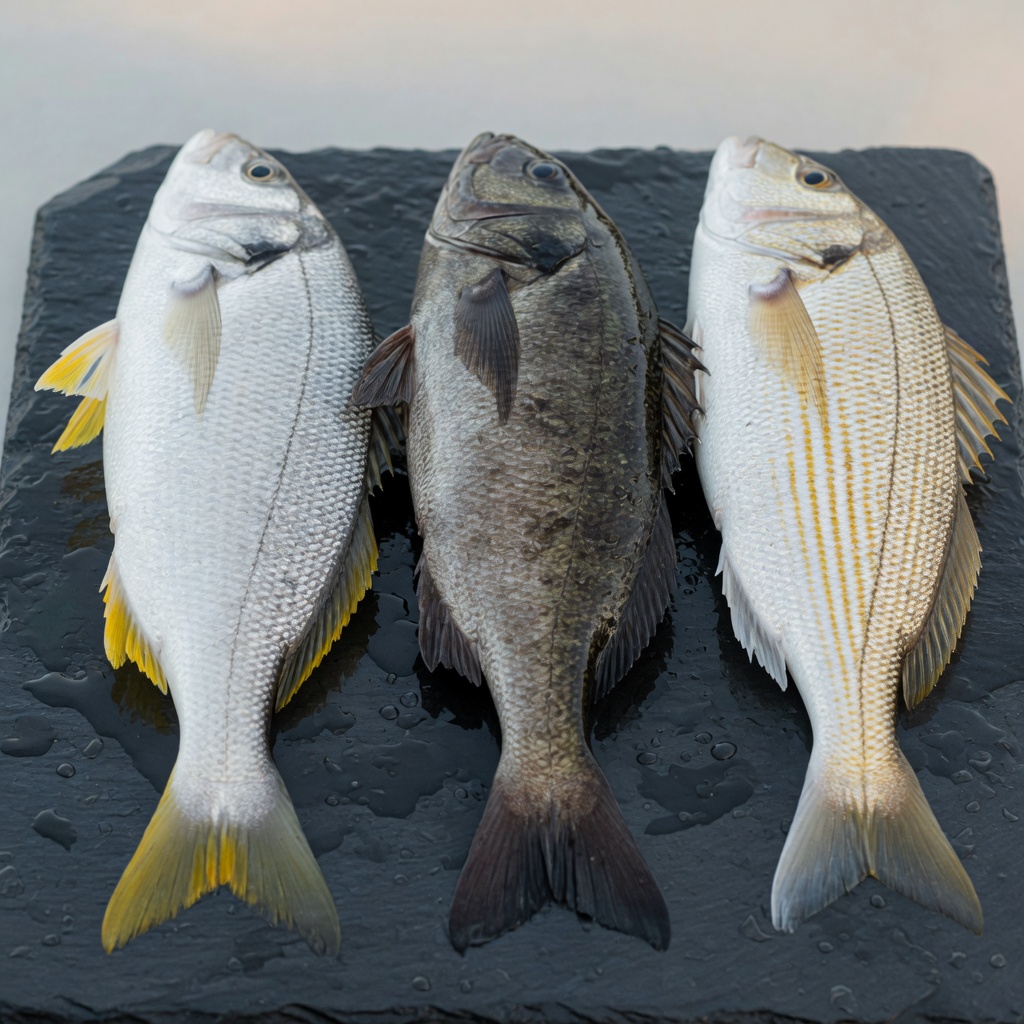
Why These Three Get Mixed Up
Walk any Sydney wharf, breakwall or oyster lease and you will hear the same argument: is that a yellowfin bream, a black bream, or a tarwhine? All three are deep-bodied sparids with silver flanks, spiny dorsals and a taste for prawns, nippers and half-pilchards. They share the same estuary systems, they hit the same rigs, and juveniles of all three can look almost identical in low light or dirty water. Getting the identification right matters, because size and bag limits are set by species and differ between states, and tarwhine in particular is often counted separately from bream. When in doubt, take a clear look before the fish goes into the keeper net, and always verify current limits with the relevant state or territory fisheries authority.
Yellowfin Bream: The Sydney Standard
Yellowfin bream (Acanthopagrus australis) is the default bream through NSW and southern QLD, and the fish most Sydney anglers meet in the Hawkesbury, Georges, Parramatta and Port Hacking systems. Key features:
- Fins: distinctly yellow pelvic and anal fins, often bright buttery yellow on fish from clean coastal water.
- Body: silver to bronze-olive, no strong horizontal striping, sometimes a faint dark blotch near the pectoral base.
- Profile: steep forehead, tough rubbery lips, strong crushing teeth at the rear of the jaw.
- Habitat: everywhere from oyster racks and bridge pylons to beach gutters, rock ledges and inshore reef.
A big yellowfin from a Sydney estuary will often show darker, brassier tones in tannin-stained upper reaches, which is exactly how the black bream confusion starts.
Black Bream: The Southern Cousin
Black bream (Acanthopagrus butcheri) is the estuary specialist of VIC, TAS, SA and southern WA, and it spends its whole life inside brackish systems rather than moving to sea to spawn. In practical terms:
- Fins: dusky, grey-brown or dark olive rather than clean yellow. Some individuals show a faint yellowish wash, but never the crisp lemon of a yellowfin.
- Body: deeper and often darker overall, with a smoky, coppery sheen in tea-coloured water.
- Range: if you are fishing Sydney, a genuine black bream is very unlikely. Assume yellowfin unless there is a strong reason not to.
Where ranges overlap in far southern NSW and eastern Victoria, hybrids occur, and fin colour alone can be ambiguous. Note the location, photograph the fish side-on, and treat borderline fish conservatively.
Tarwhine: Look for the Stripes
Tarwhine (Rhabdosargus sarba) is the easiest of the three to separate once you know the cues, yet it is the most often misreported.
- Stripes: a series of fine gold or bronze horizontal lines running the length of the flanks, following the scale rows. Bream do not have these.
- Snout: shorter, blunter and more rounded than a bream, with a smaller mouth.
- Belly and fins: the anal fin margin and belly often carry a dark edge; fins are generally paler and less yellow than a yellowfin bream.
- Size: typically smaller on average, with a tubbier, more compact body.
Tarwhine are common in Sydney surf gutters, off ocean rock platforms and around inshore reef, mixed in with bream schools and whiting. They fight hard for their size and are excellent eating when bled and iced immediately.
A Fast Field Checklist
- Check the pelvic and anal fins. Bright yellow points to yellowfin bream; dusky suggests black bream; pale with a dark edge suggests tarwhine.
- Look for fine gold horizontal lines. Present means tarwhine.
- Assess the snout. Long and sloping is bream; short and blunt is tarwhine.
- Consider location. Sydney and NSW estuaries mean yellowfin bream by default; southern estuaries raise the black bream possibility.
- Measure to the tip of the tail unless your state specifies otherwise, and release anything you cannot confidently identify.
Why Correct ID Matters On The Water
Species-specific rules exist because these fish behave differently. Yellowfin bream aggregate near estuary mouths and ocean headlands in late autumn and winter to spawn, black bream are landlocked estuary residents vulnerable to local overfishing, and tarwhine are shorter-lived and school heavily where they are easy to over-harvest. Correct identification also sharpens your fishing: a school of tarwhine calls for smaller baits and finer hooks, while a big bronzed yellowfin around the oyster racks demands heavier leader and a tighter drag.
If you are building your identification skills more broadly, work through the Australian Fish Species species profiles and identification guides and compare fresh fish against the described features rather than relying on memory. Photograph your catch side-on in good light, with fins spread, so you can confirm later.
Handling And Release
All three species handle release well if treated properly. Use wet hands or a knotless landing net, support the body horizontally, avoid gripping the gills, and keep air exposure under thirty seconds. Circle hooks reduce deep hooking on bait; if a fish is gut-hooked, cut the line close rather than digging. Fish taken from deeper inshore reef may show signs of barotrauma, so vent-free release weights are the safer option. For more on responsible practice, ethical release and habitat care around Sydney waterways, get in touch via [email protected] or +61295585271 during Mon–Fri: 09:00 – 17:00 (AEST).

Navigation
See also
FAQ