Whiting Species of Australia: Sand, King George, Trumpeter and Yellowfin
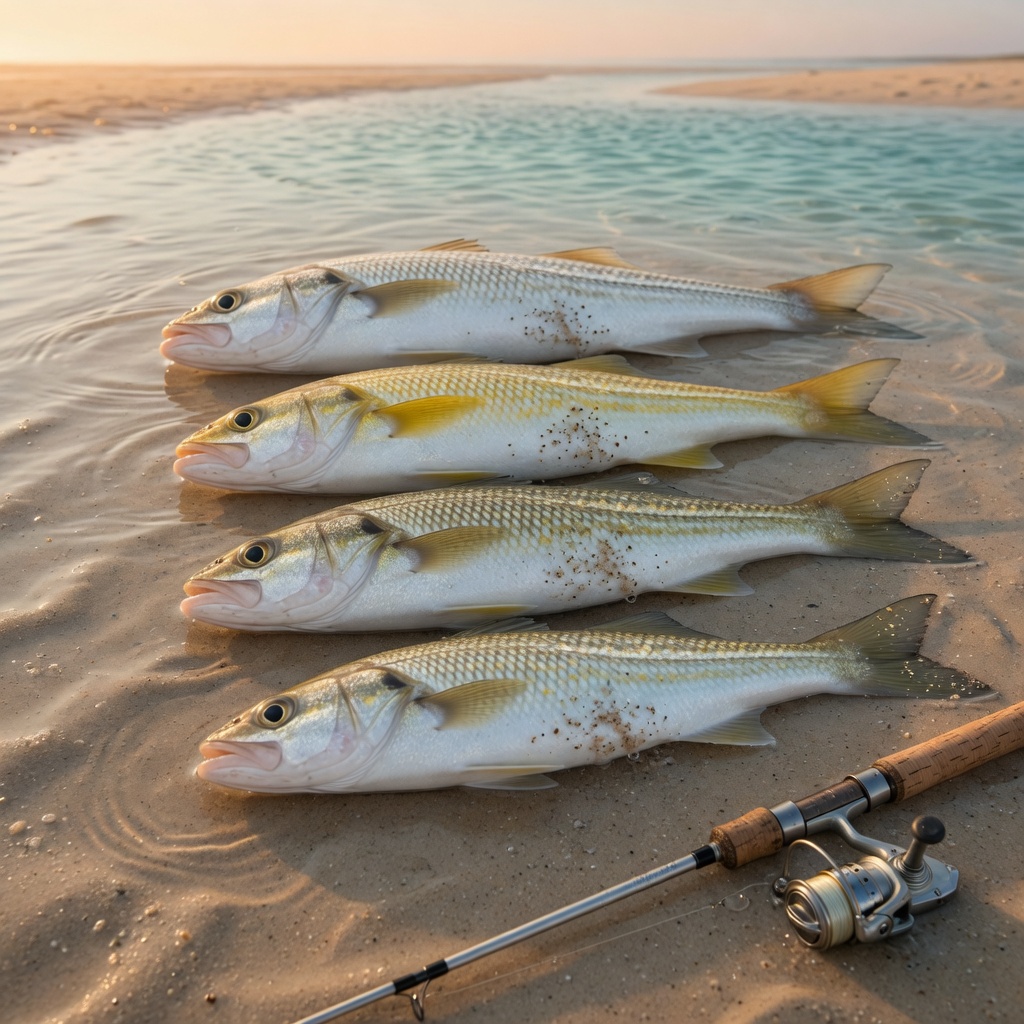
Why Whiting Reward Careful Identification
Whiting are among the most accessible sportfish in the country, caught from ankle-deep sand flats, estuary drop-offs and surf gutters within reach of most coastal towns. The catch is that "whiting" covers several distinct species with different sizes, ranges and legal minimum lengths. Getting the identification right matters for the frying pan and, more importantly, for compliance: minimum lengths and bag limits are set species by species and vary between states, so always check current rules with the relevant state or territory fisheries authority before you keep a fish.
This guide from Australian Fish Species focuses on the four species most anglers encounter — sand whiting, King George whiting, trumpeter whiting and yellowfin whiting — with practical field marks you can read on a wet fish at the water's edge.
Sand Whiting (Summer Whiting)
Sand whiting are the classic east coast estuary target, common from the Sydney region north into Queensland and south into eastern Victoria. Look for a slim, sandy-olive body with a pale belly, no obvious body stripes or blotches, and a distinctive dark blotch at the base of the pectoral fin. That pectoral mark is the fastest way to separate them from trumpeter whiting.
They feed hard over clean sand and yabby banks on a rising tide, following the water in until their backs are almost out. Fish of 30 cm and above are common in good systems, and larger specimens hunt surprisingly aggressively — surface poppers worked fast across shallow flats will draw slashing strikes through the warmer months.
Rigs and Baits
- Running sinker rig, small ball sinker to a swivel, 40–60 cm of 6–8 lb fluorocarbon leader, size 4 to 6 long-shank hook.
- Live nippers (bass yabbies), beach worms, squirt worms and peeled prawn are the standout baits.
- Small surface walkers and poppers, 45–70 mm, retrieved briskly with the rod tip high.
King George Whiting
The premium southern species, King George whiting range across South Australia, Victoria, Tasmania and southern Western Australia. They are heavier-bodied than sand whiting, with rows of golden-brown spots or dashes along the flanks and a longer, more pointed snout. Fish beyond 45 cm are prized, and the flesh is widely regarded as the best of the group.
Target them over broken ground — sand patches beside seagrass, rubble edges and channel margins in 3–15 m. They are cautious feeders, so long light leaders, small sinkers and fresh bait outfish heavy gear. Squid strips, pipis, cockles and pilchard fillet on paternoster rigs with two size 4 long-shanks cover most situations. Anchoring up-current of a sand patch and letting a light berley trail of crushed pilchard and sand drift back is a proven approach.
Trumpeter Whiting
Trumpeter whiting are smaller, typically 20–30 cm, and mark themselves out with irregular dark blotches or bars along the body and a shorter snout. They school in numbers over mud and sand in deeper estuary and bay water — Moreton Bay, Hervey Bay and the larger NSW river systems all hold them. Because they mass together, once you find a patch you can catch steadily on a two-hook paternoster with small baits of prawn or squid. They are a genuine table fish, though their smaller size means many anglers release the bulk of a session.
Yellowfin Whiting
Yellowfin whiting are the southern and western shallow-water specialist, found in South Australia, Western Australia and the Northern Territory's cooler edges. They resemble sand whiting in shape but show yellow tones through the pelvic and anal fins and lack the pronounced pectoral blotch. They hunt very shallow tidal flats, often in water barely deep enough to cover them, and respond well to small blades, soft plastic worms and unweighted bait drifted with the tide. Stealth is everything: wade slowly, keep your shadow off the water and cast well ahead of moving fish.
Reading Tide, Season and Weather
Whiting are tide-driven feeders. The best windows are usually the last two hours of the flood and the first hour of the ebb over flats, when crustaceans and worms are flushed from the sand. In deeper bays, King George often feed hardest around the slack either side of the tide change when baits sit naturally. Summer and autumn are peak months for sand and yellowfin whiting; King George fish through the cooler half of the year in many areas, with local variation across their range.
Wind matters as much as tide. A light onshore breeze that puts a slight ripple on the flats gives fish confidence, while glassy calm in bright sun pushes them into deeper channels. After heavy rain, look for whiting to shift downstream toward cleaner, saltier water near the mouth.
Tackle That Suits the Job
- 2–4 kg spin rod of 2.1–2.4 m, 2500 size reel, 4–8 lb braid.
- Long-shank hooks for easier unhooking of deeply taken baits; circle hooks help when soaking bait on a rod holder.
- Only as much lead as the current demands — whiting drop a bait they cannot move.
- Wet hands, a knotless net and quick release for undersize fish and any you do not intend to keep.
Care, Conservation and Next Steps
Whiting are lean fish that deteriorate fast, so bleed and ice them immediately in a slurry. Handle releases in the water where possible, and avoid dragging fish across dry sand. Protecting the seagrass and yabby banks these species depend on is as important as any bag limit: avoid churning motors through shallow beds and keep bait pumping to sustainable levels.
For side-by-side comparisons with other inshore targets, and to build a broader picture of what shares these flats and gutters, browse our species profiles and identification guides. Questions about a fish you cannot place? Get in touch at [email protected] or +61295585271 during Mon–Fri: 09:00 – 17:00 (AEST).

Navigation
See also
FAQ