Mulloway Profile: Diet, Habitat and Why Big Jewfish Are Rare
Identifying a Mulloway
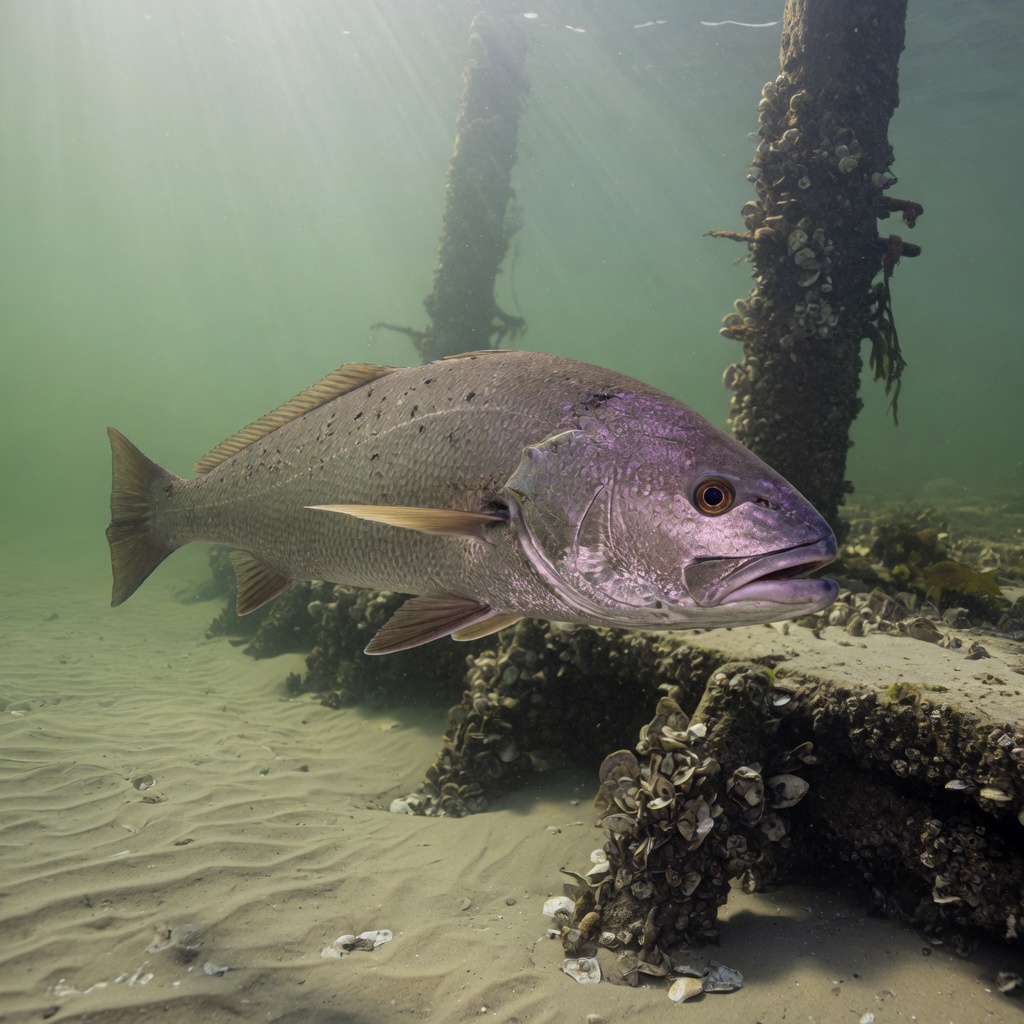
Mulloway (Argyrosomus japonicus) are known by plenty of names around the country: jewfish, jewie, river king, butterfish for the small ones, and soapy for undersized fish with soft, pale flesh. They are a large, deep-bodied member of the croaker family with a slightly concave forehead, a big mouth set low on the head, and a distinctive silvery bronze sheen that shifts to purple or dusky grey depending on water clarity and light.
The key identification features to look for are a broken line of silvery spots running along the lateral line on younger fish, a rounded to slightly pointed tail, and small barbel-like pores under the chin. Mulloway also produce an audible drumming or croaking sound using muscles against the swim bladder, which is why the family is called croakers. Anglers occasionally confuse them with teraglin, which are smaller, more slender and have a notched tail, or with juvenile snapper in poor light. If you want a broader comparison chart of lookalike species, our fish species profiles and identification section is the place to start.
Diet: A Predator That Follows the Bait
Mulloway are opportunistic ambush predators that hunt on structure and in current. Their diet in Sydney estuaries and along nearby beaches is dominated by:
- Squid and cuttlefish — a premium bait, especially in winter and around the deeper harbour holes.
- Mullet, tailor and yellowtail — live baits or whole fresh slabs work when schools of bait are pushed into the shallows.
- Prawns — huge on the first big flush after rain, when prawns run out of the upper estuary on a dropping tide.
- Beach worms and pipis — worth using on surf beaches where mulloway patrol gutters at night.
- Small bream, whiting and herring — taken from around bridge pylons, rock walls and reef edges.
Because they feed by sound, vibration and lateral-line detection as much as sight, mulloway will feed happily in dirty, tannin-stained water. That is why the days after solid rain are so productive, and why paddle-tail soft plastics, vibes and larger swimbaits with plenty of thump out-fish subtle presentations in low visibility.
Habitat and Seasonal Behaviour
Mulloway are a coastal and estuarine species found from southern Queensland around to Western Australia. Around Sydney they occupy three main zones: deep estuary holes and bridge lights, surf gutters and beach headland corners, and inshore reef and wreck ground out to around 60 m. Juvenile fish spend their first few years in the estuary, while larger adults move more freely between the ocean and the river mouth.
Seasonally, the pattern in the south-east goes roughly like this: spring and early summer bring prawn runs and school fish into the estuaries; late summer and autumn see beach and rock-based captures as tailor and mullet numbers build; winter concentrates bigger fish around inshore reefs, harbour holes and the deeper channels. Overlay that with tide and moon — the last two hours of a falling tide, the change of light at dawn and dusk, and the nights either side of the full and new moon are the classic feeding windows.
Why Genuine Big Jewfish Are Rare
Most anglers catch soapies between 45 and 70 cm. A metre-plus fish is a genuine milestone, and there are clear biological reasons for that.
- Slow growth and long life. Mulloway can live for decades. A metre fish is not a season or two old; it represents many years of survival in a heavily fished system.
- Late maturity. Fish are often caught before they have had multiple spawning seasons, which reduces the number that ever reach trophy size.
- Predictable aggregations. Big mulloway gather on known structure at known times, which makes them easy to target repeatedly.
- Habitat pressure. Estuary nursery grounds — seagrass, mangroves, soft-bottom holes — are the same areas affected by development, dredging and altered river flows.
- Release mortality. Fish brought up quickly from deeper water can suffer barotrauma, and poor handling of large breeding fish adds avoidable losses.
Handling and Release
If you intend to release a big jewfish, plan for it before the fish is at your feet. Use tackle heavy enough to end the fight quickly, keep the fish in the water where possible, support it horizontally with wet hands rather than lifting by the jaw, and avoid dropping it on hot sand or rock. Single hooks and crushed barbs make unhooking faster. Where a fish comes from deeper reef ground and shows signs of barotrauma — a distended belly, bulging eyes, or an inability to swim down — a release weight or venting tool used correctly gives it a far better chance.
Rules, Limits and Local Advice
Minimum legal lengths, bag limits and closed areas for mulloway differ by state and change over time. Treat any figure you read in a forum or an older article as a prompt to check, not as fact. Always confirm current size and bag limits with the relevant state or territory fisheries authority before you keep a fish, and note that some estuaries and marine parks carry additional restrictions.
Australian Fish Species publishes species profiles, regional guides and technique articles for anglers across Sydney and the wider coast. Questions or corrections are welcome by email at [email protected] or by phone on +61295585271 during Mon–Fri: 09:00 – 17:00 (AEST).

Navigation
See also
FAQ