Australian Salmon vs Tailor: Identification, Habits and Table Quality
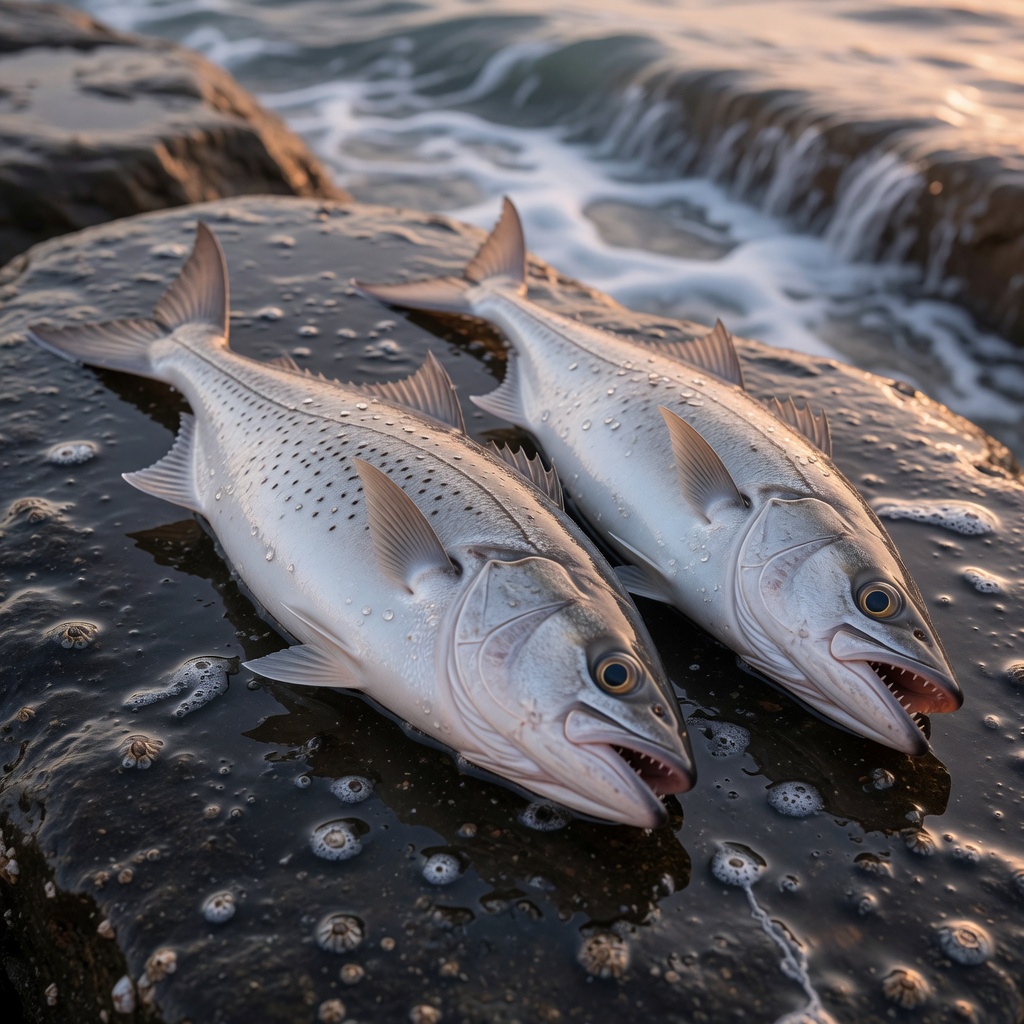
Two Surf Bruisers, Often Confused
Along the Sydney beaches and headlands, two hard-fighting schooling fish dominate the cooler months: Australian salmon (Arripis trutta, often called eastern Australian salmon or "sambos") and tailor (Pomatomus saltatrix, known as chopper tailor when small). Both smash surface baits, both travel in fast-moving schools, and both can appear in the same gutter on the same tide. Telling them apart matters, because bag and size limits differ, handling differs, and their value on the table is very different.
Identification at a Glance
- Teeth: tailor have a mouth full of sharp, blade-like teeth that will shear through light monofilament. Australian salmon have small, rough, sandpapery teeth and no cutting edge.
- Body shape: salmon are deeper through the shoulders with a distinctly forked tail and a small mouth relative to the body. Tailor are more elongated and torpedo-shaped with a large, jutting jaw.
- Markings: juvenile and adult Australian salmon show rows of golden-brown spots or blotches across a greenish-blue back. Tailor are cleaner silver to blue-green with a dark blotch at the base of the pectoral fin.
- Fins: tailor have two separate dorsal fins, the first short and spiny. Salmon show a single continuous dorsal profile with a spiny front section that folds down.
- The bite: bitten-off traces, chopped bait tails and mangled soft plastics almost always mean tailor.
Habitat and Seasonal Behaviour
Australian salmon are a cool-water species that push north along the NSW coast through autumn and winter, with big schools common from April to September around Sydney's ocean beaches, rock platforms and estuary mouths. They chase whitebait, pilchards and small pelagic prey, often working bait balls on the surface with birds overhead.
Tailor tolerate warmer water and are found from southern QLD around to WA. In Sydney they are most reliable in the cooler half of the year too, but bigger fish tend to feed in low light. Both species favour deep beach gutters, headland washes, rips draining a sandbar, and the front of breaking waves where bait is disorientated.
Feeding Windows: Tide, Light and Weather
- Change of light: the hour either side of dawn and dusk is prime, especially for larger tailor.
- Tide: a run-in tide filling a gutter, or the first of the outgoing pushing bait out of an estuary mouth, concentrates fish.
- Water clarity: a light swell with some white water suits both species; dirty, sand-choked shore breaks after a big blow usually shut the bite down.
- Moon: larger tides around new and full moon increase water movement and bait activity, which lifts surface feeding.
Tackle, Rigs, Baits and Lures
A 3 to 4 m beach or rock rod rated 6 to 10 kg with a 4000 to 6000 size reel handles both species comfortably. Spool with 15 to 20 kg braid or 8 to 10 kg mono for the surf. For tailor, add a short 30 to 40 lb fluorocarbon or light single-strand wire trace to survive the teeth; for salmon, straight fluorocarbon of 20 to 30 lb is plenty.
- Baits: whole or half pilchard on a two-hook ganged rig, blue bait, garfish strips and fresh slimy mackerel fillet.
- Lures: 20 to 40 g metal slugs, chrome stickbaits, small poppers and 4 to 5 inch soft plastics on 1/4 to 1/2 oz jig heads.
- Retrieve: fast and erratic. Both species chase down a fleeing bait; a slow retrieve is often ignored when schools are switched on.
Table Quality: The Honest Verdict
Tailor are a genuinely good eating fish when bled and iced straight away, with soft white flesh best cooked fresh on the day. They deteriorate quickly, so treat them well or release them.
Australian salmon have dark, strongly flavoured red flesh that many anglers dislike when handled poorly. Bled immediately, iced in a slurry, then filleted with the dark lateral line trimmed away, they are perfectly good in fish cakes, curries, smoked dishes or as fresh bait. They are also one of the best sportfish available from the shore, which is why plenty of anglers release them.
Handling, Release and Safety
Use a wet hand or a damp towel, avoid dropping fish on dry sand, and support the body when photographing. Keep tailor away from fingers and use long-nose pliers to unhook. Only keep what you will eat that week, and release the rest quickly and in good condition.
Rock platforms around Sydney are dangerous in any swell. Check the marine forecast, wear a life jacket and cleated boots, never fish alone, and watch a spot for a full set before committing. If the wash is reaching your feet, move higher or go elsewhere.
Rules Change: Always Verify
Minimum legal lengths, bag limits and closures for Australian salmon and tailor differ between states and are reviewed over time. Treat the figures you hear at the beach as hearsay and confirm the current rules with the relevant state or territory fisheries authority before you keep a fish. For more on separating look-alike species and reading the details that matter, browse our species profiles and identification guides.
Questions about a fish you could not identify near Sydney? Contact Australian Fish Species at [email protected] or +61295585271 during Mon–Fri: 09:00 – 17:00 (AEST) and describe the teeth, tail and markings.

Navigation
See also
FAQ