Barotrauma and Release Weights for Deep Water Fish
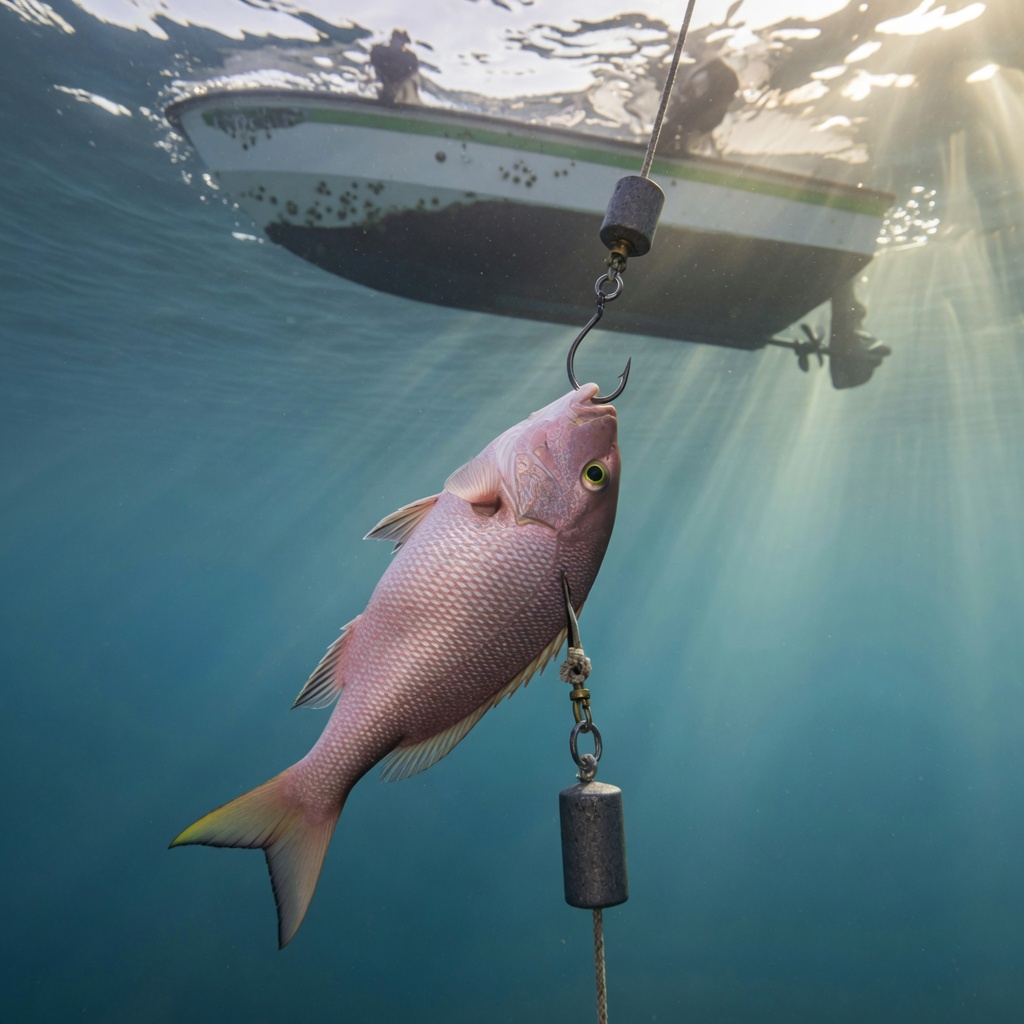
What Barotrauma Actually Is
When a fish is winched up from 30, 60 or 90 metres, the gas inside its swim bladder expands as the pressure around it drops. The bladder can over-inflate or rupture, pushing the stomach out through the mouth, bulging the eyes, forcing the intestine out of the vent and trapping gas under the skin or behind the gill covers. That collection of injuries is called barotrauma, and it is the main reason a released deep water fish floats away on the surface instead of swimming down.
Barotrauma is a physical problem, not a fish that is simply tired. A snapper with an expanded bladder is buoyant, and no amount of resting it beside the boat will fix that. Left on the surface it will drift, sunburn, be taken by a shark or gull, or die slowly. The good news is that many species recover well if they are returned quickly to a depth where the gas recompresses, which is exactly what a release weight is designed to do.
Species That Are Most Affected Around Sydney and Beyond
Off Sydney and along the wider NSW shelf, the usual candidates are snapper, pearl perch, teraglin, morwong, nannygai and the various deep water cod and gurnard. Further north, red emperor, coral trout, red throat emperor and tropical snappers show the same symptoms on the reef edge. Species without a closed swim bladder, such as tuna, mackerel and most sharks, do not suffer classic barotrauma, though they still need careful handling. Flathead, bream and mulloway taken in shallow estuary water are rarely affected because the pressure change is small. If you are unsure which fish you are holding, work through our fish species profiles and identification notes before deciding on a release method.
Signs to Look For
- Stomach protruding from the mouth, often mistaken for a swallowed bait
- Bulging or clouded eyes, sometimes with the lens pushed forward
- A distended, firm belly and gas bubbles under the scales
- Intestine trailing from the vent
- The fish cannot stay upright or rolls onto its side at the surface
Release Weights: How They Work
A release weight is a heavy sinker with an inverted barbless hook, a clamp or a lip-grip mechanism attached. You hook the weight into the fish's lower jaw or clip it onto the lip, drop the fish over the side, let it sink fast to somewhere near the depth of capture, then give a sharp upward pull on the line. The pull releases the fish at depth, where the expanded gas has already compressed and the fish can swim off under its own power.
Simple, effective versions can be made from a 500 g to 1 kg sinker or a moulded lead head with a large barbless hook bent open and mounted point-up. Heavier weights of around 1 kg suit deep drops and current. Attach the weight to a dedicated handline, a spare rod with braid, or an electric reel if you fish 100 metres or more, so you can send a fish down and retrieve the gear in seconds.
Step by Step
- Decide before the fish comes aboard whether it is going in the esky or back in the water, and have the release weight rigged and ready.
- Keep handling to a minimum. Use wet hands or a wet cloth, support the body, and avoid dropping the fish on hot decks.
- Unhook quickly with pliers or a hook remover; cut the line close if the hook is deep.
- Hook or clamp the release weight into the lower jaw and lower the fish head-first into the water.
- Let it drop under its own weight, aiming for at least two-thirds of the capture depth.
- Give one firm upward jerk to disengage, then wind in and check the weight is undamaged.
Venting Versus Recompression
Venting, that is piercing the body cavity with a hollow needle to let gas escape, has been widely used but carries risks: puncturing organs, introducing infection and leaving a wound that will not seal. Current best practice in Australian recreational fishing leans strongly towards recompression with a release weight because it treats the cause rather than one symptom, and needs no cutting. Never puncture the stomach protruding from the mouth and never try to push it back in; if the fish is recompressed, the stomach usually retracts on its own.
Reducing Barotrauma Before It Happens
- Wind fish up at a steady, moderate pace rather than at full speed, giving tissues a little time to adjust.
- Use tackle heavy enough to land the fish quickly; long fights in deep water add stress on top of gas expansion.
- Fish circle hooks and single hooks to reduce deep hooking and gill damage.
- Move off a mark once you have your fish rather than catching and releasing repeatedly at depth.
- Avoid deep drops in very warm surface water and mid-afternoon heat when survival rates fall.
- Keep a bucket of clean seawater ready and work in the shade of the cabin where possible.
Rules, Records and Responsibility
Several states require or strongly recommend that a release weight or approved release device be carried when fishing offshore for species prone to barotrauma, and some fisheries specify how undersize or out-of-season fish must be returned. Bag limits, size limits, closures and gear requirements differ by state and territory and change over time, so check the current rules with the relevant fisheries authority for the waters you are fishing before you leave the ramp. Treat any figures you read online, including on Australian Fish Species, as background rather than the legal text.
Practically, the goal is simple: every fish you do not intend to keep should go back with the best possible chance of survival. That means planning your release before the fish surfaces, carrying the right gear, and accepting that some marks are simply too deep for catch and release fishing. If you have questions about building a release weight for the depths you fish, contact us on +61295585271 or at [email protected] during Mon–Fri: 09:00 – 17:00 (AEST).
Navigation
See also
FAQ