Barramundi in Northern Rivers and Creeks: Timing the Tide
Why Tide Matters More Than Time of Day
Barramundi (Lates calcarifer) are ambush predators built for moving water. In the tidal rivers and creeks of the Northern Territory, far north Queensland and the Kimberley, a barra will often sit motionless for hours and then feed hard for twenty minutes when the current starts pushing bait past its snag, rock bar or drain mouth. That is why experienced anglers plan sessions around the tide chart first and the clock second. A midday session on a strong falling tide can easily out-fish a dawn session on slack water.
The practical rule is simple: find structure that concentrates bait, then be there when water is moving across it. Everything else — lure choice, retrieve speed, leader weight — is secondary to being in the right place at the right stage of tide.
Reading Northern Tidal Systems
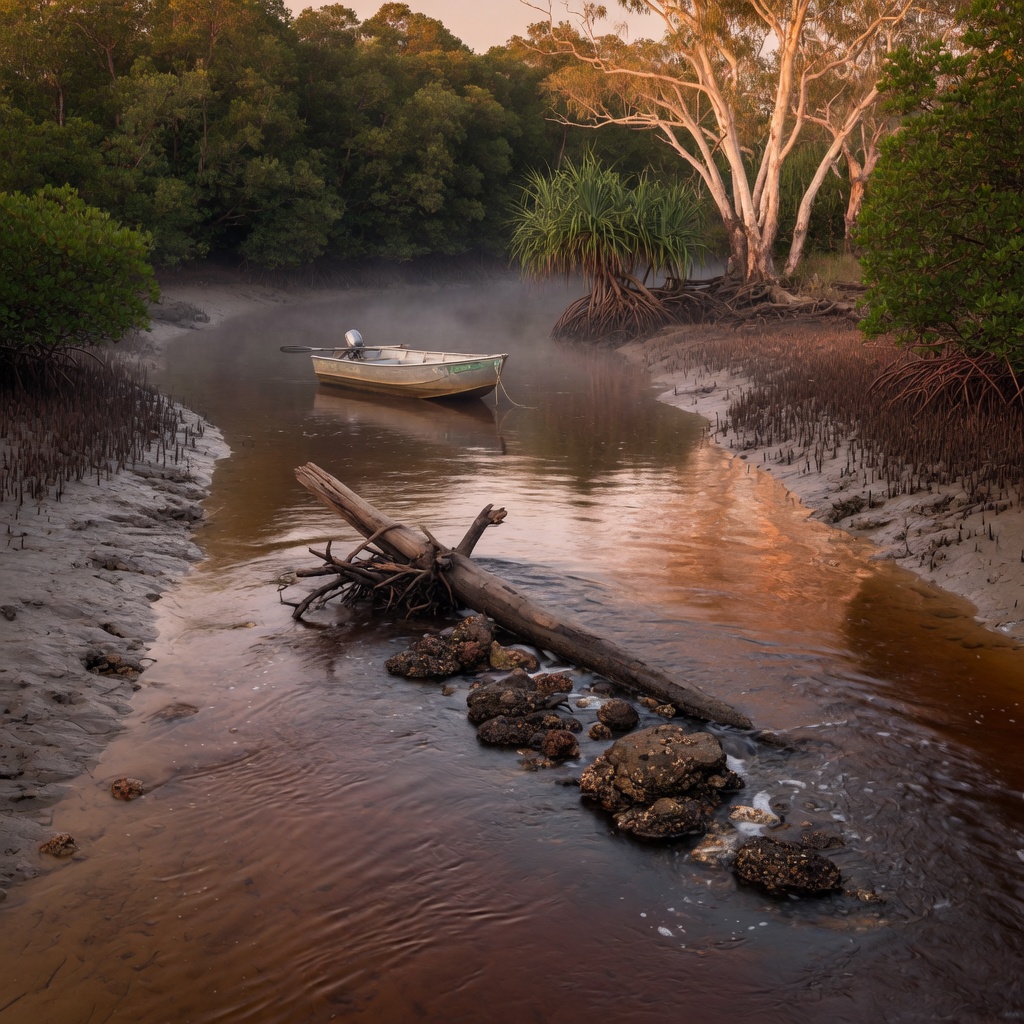
Northern rivers can run tides of several metres, so the same creek looks like a different fishery from high to low. Break the system into repeatable features:
- Drain and gutter mouths — small feeder creeks that dump baitfish and prawns on the first two hours of the falling tide.
- Rock bars — barra hold in the eddy behind the bar, facing into the flow. Best on a run-out when the pressure edge is sharp.
- Snag lines and fallen timber — reliable on the last of the flood and the top of the tide when fish push tight to the bank.
- Creek junctions and back eddies — current seams here hold fish across more of the tide cycle than open banks.
- Deep holes — worth probing on slack water and in cooler months when fish sulk deep.
Tide Stages and What to Do
- Last of the flood: work shallow snags, mangrove roots and flooded bank edges with shallow-diving hard bodies and weedless soft plastics.
- Top of the tide and slack: slow down. Suspending lures, paused retrieves and live bait fished on a lightly weighted rig earn bites.
- First two hours of the ebb: the prime window. Cast to drain mouths and current seams, retrieve with the flow, expect aggressive takes.
- Bottom of the ebb: fish pull back into holes and along the deeper edge of bars. Switch to deeper divers or heavier jig heads.
Moon, Season and Water Temperature
Bigger tides around the new and full moon move more water and often trigger stronger feeding, but they also stir up sediment and can make creeks unfishable at the peak of the spring cycle. Many locals prefer the building or easing tides either side of the biggest days, when flow is strong but visibility holds.
Seasonally, barramundi are warm-water fish. In the build-up and wet season (roughly October to March in the Southern Hemisphere sense) water temperatures climb, metabolism lifts and fish feed hard, with the run-off period after heavy rain producing outstanding fishing at creek mouths and floodplain drains. Through the dry-season cool snaps, bites become shorter and more precise, and slower presentations in deeper water usually beat fast shallow work. Barramundi are also protandrous hermaphrodites — most mature first as males and later change to female — which is why big fish are typically breeding females and why closures and slot limits exist in several jurisdictions.
Rigs, Lures and Tackle That Work
- Rods and reels: a 2 to 4 kg class estuary outfit is fine for small creek fish, but around heavy timber a 6 to 10 kg baitcast or spin outfit gives you the authority to turn a fish before it reaches the snag.
- Leader: 30 to 50 lb fluorocarbon or hard nylon is standard; barra have abrasive jaw plates and gill covers that will cut light line.
- Hard bodies: 80 to 125 mm minnows in shallow, mid and deep-diving models so you can match the depth of the structure.
- Soft plastics: paddle tails and prawn profiles on 1/4 to 1/2 oz jig heads, hopped along rock bars and drop-offs.
- Surface lures: excellent over shallow flats and along mangrove edges at dawn, dusk and on quiet top-of-tide water.
- Bait: live mullet, prawns or herring under a float or on a running sinker rig, drifted naturally with the current, remains one of the most consistent methods.
Upgrade split rings and trebles on new lures, and check hook points after every fish and every snag — a big barra will straighten cheap hardware in one head shake.
Handling, Release and Conservation
Barramundi handle release well if treated properly. Use a knotless landing net, support the fish horizontally with a wet hand under the belly, avoid the gill rakers, and keep the fish in the water while you unhook it. Fish taken from deeper holes can show barotrauma symptoms, so return them quickly and, where needed, use a release weight. Keep only what you will eat and let the big breeding females go.
Safety in Northern Waters
Northern rivers are crocodile country. Stand back from the water's edge, never clean fish or swim at the same spot repeatedly, and be careful when launching or wading. Check the marine forecast before crossing any bar, carry appropriate safety gear, and tell someone your plan and return time. Wet-season storms build fast, and mud banks and tidal drops can strand a boat for hours.
Plan the Next Session
Keep a simple log: date, tide height and stage, moon phase, water temperature, water clarity and what worked. Two or three seasons of notes will show you which creek fires on which tide, and that local knowledge is worth more than any single lure. For identification features, size ranges and comparisons with other target species, see our fish species profiles and identification guide.
Bag limits, size and slot limits and seasonal closures for barramundi differ between the Northern Territory, Queensland and Western Australia and change over time. Always verify the current rules with the relevant state or territory fisheries authority before you fish. Questions about this guide can be sent to [email protected] or +61295585271 during Mon–Fri: 09:00 – 17:00 (AEST) — Australian Fish Species is written and edited from Sydney.

Navigation
See also
FAQ