Bottom Bouncing for Pearl Perch, Trag and Morwong
Why These Three Travel Together
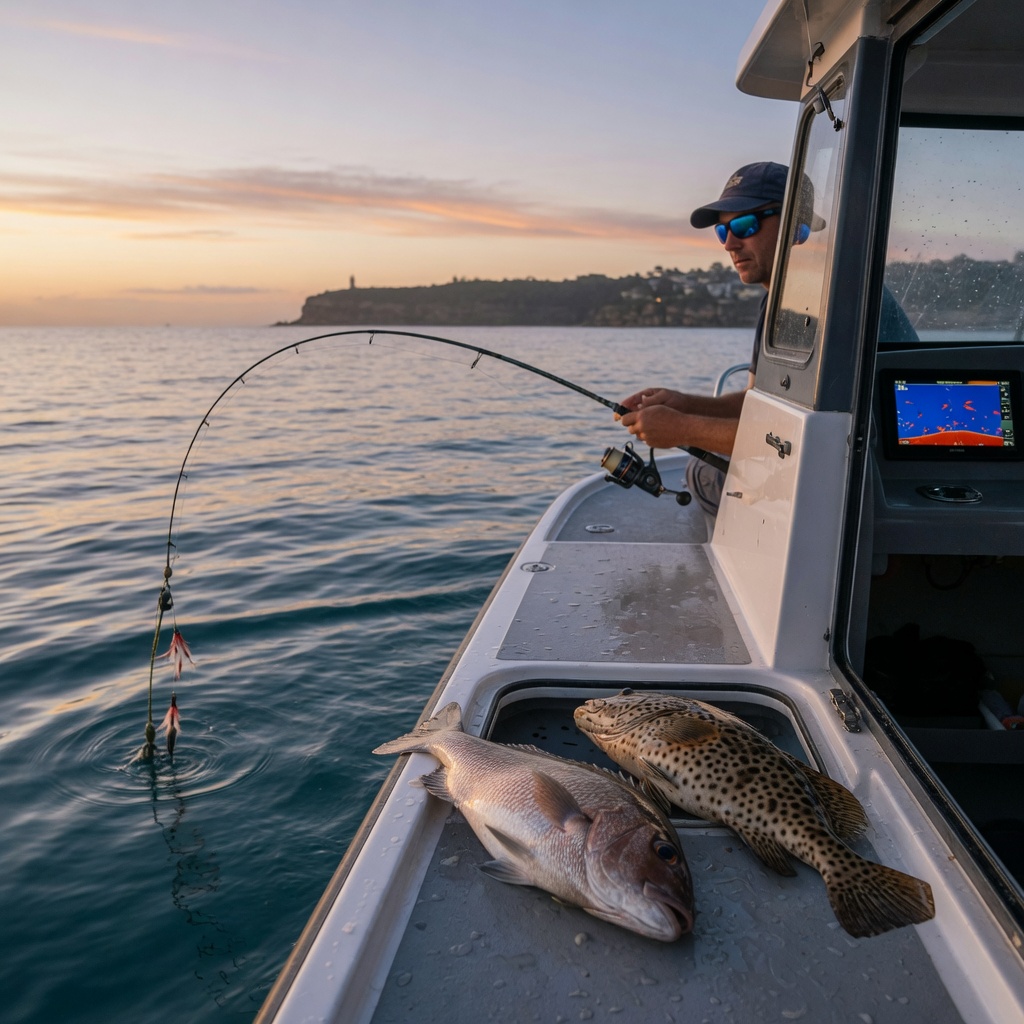
Off Sydney and the wider NSW coast, pearl perch, teraglin (trag) and jackass morwong share the same broad ground: gravel patches, low rubble edges and the shoulders of deeper reef in roughly 50 to 120 metres. They rarely sit in identical spots, but a single day of bottom bouncing over mixed ground can produce all three, which is why they are grouped so often in offshore talk. Learning to read the sounder, hold a controlled drift and present bait hard on the bottom matters more than any single secret mark.
Bottom bouncing simply means keeping a weighted rig ticking along the seabed as the boat drifts, so baits sweep across new ground instead of sitting in one hole. It covers water, finds isolated fish and suits the patchy structure these species favour.
Identification at a Glance
Pearl Perch
Deep, compact body with a silvery-bronze sheen, large eye and a distinctive bony plate behind the head that gives a pearl-like appearance in fresh fish. They are usually caught close to the bottom over rubble and gravel adjoining reef, often as singles or small groups rather than big schools.
Teraglin
Slim and silvery with a slightly pinkish-blue cast, a large mouth, forked tail and soft flesh that bruises easily. Trag school hard, feed most freely at dusk and after dark, and often sit a few metres up off the bottom, so a rig fished just clear of the reef can outfish one dragged in the rubble.
Jackass Morwong
Silver-grey with a dark saddle-like blotch behind the head, thickened lips and a small mouth suited to picking small crustaceans. Morwong prefer cooler, deeper gravel and broken bottom, and they nibble rather than smash, so smaller hooks and neat baits help. For more on separating similar-looking reef fish, see our species profiles and identification notes.
Rigs, Tackle and Baits
- Rod and reel: a 5 to 8 kg spin or overhead outfit with low-stretch braid, ideally 20 to 30 lb class, so you feel a light morwong bite in 90 metres.
- Leader: 20 to 30 kg fluorocarbon, around a metre and a half, keeps abrasion resistance without spooking fish.
- Paternoster rig: two dropper loops above a bomb sinker, hooks in the 4/0 to 6/0 range for pearlies and trag, dropping to 2/0 to 4/0 circles for fussy morwong.
- Sinkers: carry 8 to 16 ounce bombs and match weight to drift speed, not habit. If line angles past 45 degrees you are no longer bouncing bottom.
- Baits: squid strips, pilchard fillets, slimy mackerel and yellowtail cut into tapered strips that flutter. Fresh beats frozen every time.
- Lures: 60 to 150 gram micro jigs and soft vibes work well on trag and pearlies when fish are active and drift is manageable.
Working the Drift
- Sound the ground first without dropping a line. Mark the edge where reef meets gravel, plus any small pinnacles.
- Motor up-current so the drift carries you across that edge, allowing for wind pushing against tide.
- Drop until the sinker taps down, then wind up one or two turns and hold the rod. Re-tap the bottom every 15 to 20 seconds.
- On a bite, lift smoothly instead of striking hard. Circle hooks need load, not a swing.
- Reset the drift the moment you lose contact with productive ground rather than fishing dead water.
Tides, Moon and Timing
Deep water fish are less tide-driven than estuary species, but current still controls presentation. The best windows are the softer parts of the tide when a manageable drift lets baits stay near the bottom, ideally paired with dawn, dusk or a light current run after a moon change. Trag in particular switch on in the last light of the day and into darkness. In Southern Hemisphere terms, autumn and winter often bring the most consistent pearl perch and morwong sessions off central NSW, while warmer months can see fish spread wider and mixed with pelagic bycatch.
Safety Offshore
Fishing 30 to 60 kilometres offshore means checking the marine forecast, swell period and wind change timing before you leave the ramp, not after. Carry the required safety gear for your vessel category, log on with your local marine rescue service, and set a return time you will actually honour. Bar crossings on some NSW coastal ports demand extra caution on outgoing tide with any swell running. If the forecast is marginal, deeper ground is not worth it.
Barotrauma and Release Care
Fish lifted from 60 metres or more often show barotrauma: bulging eyes, a distended gut and inability to swim down. If you intend to release, use a release weight or venting tool correctly and get the fish back to depth quickly. Keep fish out of the water and out of the sun for the shortest possible time, wet your hands or use a wet cloth, and avoid boarding fish you plan to release. Bag and size limits for pearl perch, teraglin and morwong differ by state and change over time, including seasonal closures in some jurisdictions, so always verify the current rules with the relevant state or territory fisheries authority before you fish.
Getting More Help
Australian Fish Species publishes species guides, rig diagrams in text form and region-by-region notes for anglers based in Sydney and beyond. Questions about a specific piece of ground or rig setup can be sent to [email protected] or +61295585271 during Mon–Fri: 09:00 – 17:00 (AEST), and we will point you to the most relevant guide.

Navigation
See also
FAQ