Braid, Monofilament and Fluorocarbon: Choosing the Right Line
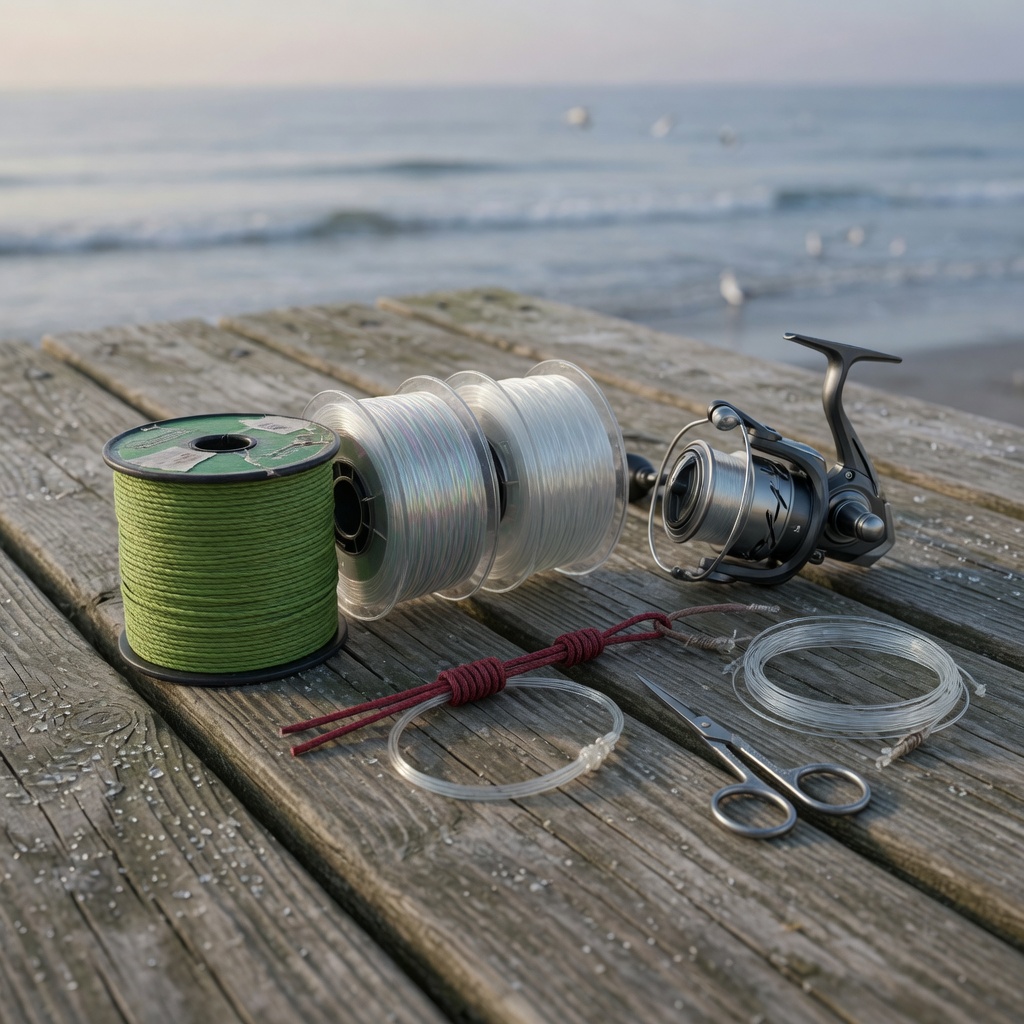
Why Line Choice Changes the Way You Fish
Line is the only physical connection between you and the fish, and it quietly shapes everything else about your session: how far you cast, how much you feel, how well a lure swims, and whether a big fish stays attached over oyster racks or reef. On Australian Fish Species we treat line as a system made up of a main line, a leader and the knots that join them. Get the combination right for the species and structure you are targeting, and average gear will outperform expensive gear rigged badly.
Around Sydney you might fish flats for whiting in the morning, drop baits for snapper at dusk and chase kingfish along the harbour walls on the weekend. Those three jobs ask very different things of a line, which is why most keen anglers end up carrying a small spread of spools rather than searching for one perfect option.
Braid: Sensitivity, Distance and Zero Stretch
Braided line is made from woven gel-spun polyethylene fibres. It has almost no stretch, so it transmits the smallest bream tap or the scrape of a flathead's teeth straight to your hand. Because it is very thin for its breaking strain, braid also cuts through wind and water, giving you longer casts with light lures and better contact when jigging in deep water or heavy current.
- Best for: soft plastics and hardbodies in estuaries, deep jigging, offshore bottom bouncing, long-cast beach lure work.
- Typical strengths: 3-6 kg for estuary lure fishing, 8-15 kg for kingfish and snapper, 24 kg and up for game trolling and heavy jigging.
- Watch out for: braid has poor abrasion resistance against rock and no shock absorption, so it is almost always fished with a leader. It also cuts skin easily and can dig into itself on the spool if you crank against drag.
Fill the spool properly with a mono or braid backing so the braid does not slip on the arbor, and spool under moderate tension. Re-tie your leader connection regularly, especially after a hard fight.
Monofilament: Forgiveness and Value
Nylon monofilament stretches roughly 20 to 30 per cent under load, and that stretch is a feature, not a fault. It cushions head shakes from a hooked mulloway, softens the shock of a fish surging in the wash, and keeps single hooks in soft mouths. Mono is also cheap, easy to knot, and floats better than fluorocarbon, which suits surface lures and unweighted baits.
- Best for: beach and rock bait fishing, running sinker rigs, live baiting, pier and jetty sessions, gang-hook rigs for tailor and Australian salmon.
- Strengths to consider: 4-6 kg for whiting and bream on bait, 8-10 kg for beach work, 15 kg and up for rock ledges and larger pelagics.
- Limitations: mono absorbs a little water, weakens with UV exposure and takes a set on the spool. Replace it at least once a season if you fish often.
Because mono is thicker for the same breaking strain, it also creates more drag in current. On deep reef drops that means more lead and less feel, which is exactly where braid earns its keep.
Fluorocarbon: The Leader Specialist
Fluorocarbon has a refractive index closer to water than nylon, so it is harder for fish to see. It is also denser, sinking rather than floating, and generally more abrasion resistant than standard mono of the same diameter. Most Australian anglers use it as a leader rather than a main line.
- Estuary bream and flathead: 4-8 kg fluorocarbon leader, one to two metres long.
- Snapper and reef fish: 10-20 kg, longer if you are fishing rubble or bommies.
- Kingfish, mangrove jack and barramundi: 20-40 kg to survive gill plates, pylons and snags.
- Toothy species: Spanish mackerel and tailor often need a short single-strand wire or heavy fluorocarbon bite trace.
Fluorocarbon is stiffer than mono, so it needs careful knot lubrication and steady tension when tying. Wet the knot, draw it down slowly, and trim tags close.
Matching Line to Species and Structure
Rather than asking which line is strongest, ask what the fish and the ground demand. Clear, shallow flats and pressured fish reward long, light fluorocarbon leaders. Oyster racks, rock ledges and timber snags reward short, heavy leaders and a drag setting that stops fish rather than lets them run. Open sand and deep water reward thin diameters and long casts. For a refresher on what each target actually eats and where it lives, work through our species profiles and identification guides before you decide on breaking strains.
- Identify the species and the average size you expect.
- Note the structure: sand, weed, rock, oyster, timber or open blue water.
- Choose a main line that suits your presentation, then a leader that suits the structure.
- Set drag to roughly a quarter to a third of your line's breaking strain and adjust from there.
Knots and Connections That Hold
A line system is only as strong as its weakest join. For braid to leader, the FG knot and the double uni are both reliable and slim enough to pass through guides. For terminal tackle, the improved clinch, uni knot and lefty's loop cover most situations, while a loop knot lets small hardbodies and jig heads swing more freely. Practise your chosen knots at home until you can tie them in poor light on a rocking boat.
Check the last metre of leader by running it between your fingers after every decent fish. Any nick, chalky patch or curl means you re-tie. That habit costs a minute and saves the fish of the season.
Care, Storage and Sensible Disposal
Rinse reels lightly with fresh water after saltwater sessions, keep spools out of direct sun, and strip off the top layer of mono if it looks dull or feels rough. Never leave old line on the rocks, beach or ramp: discarded line entangles seabirds, turtles and fish. Collect offcuts in a pocket or container and bin them, or use a dedicated line recycling bin where one is provided.
Questions about a specific rig or a local application around Sydney? Contact Australian Fish Species at [email protected] or +61295585271 during Mon–Fri: 09:00 – 17:00 (AEST), and always check current bag, size and gear rules with your state or territory fisheries authority before you fish.
Navigation
See also
FAQ