Bream Around Oyster Racks, Pontoons and Snags
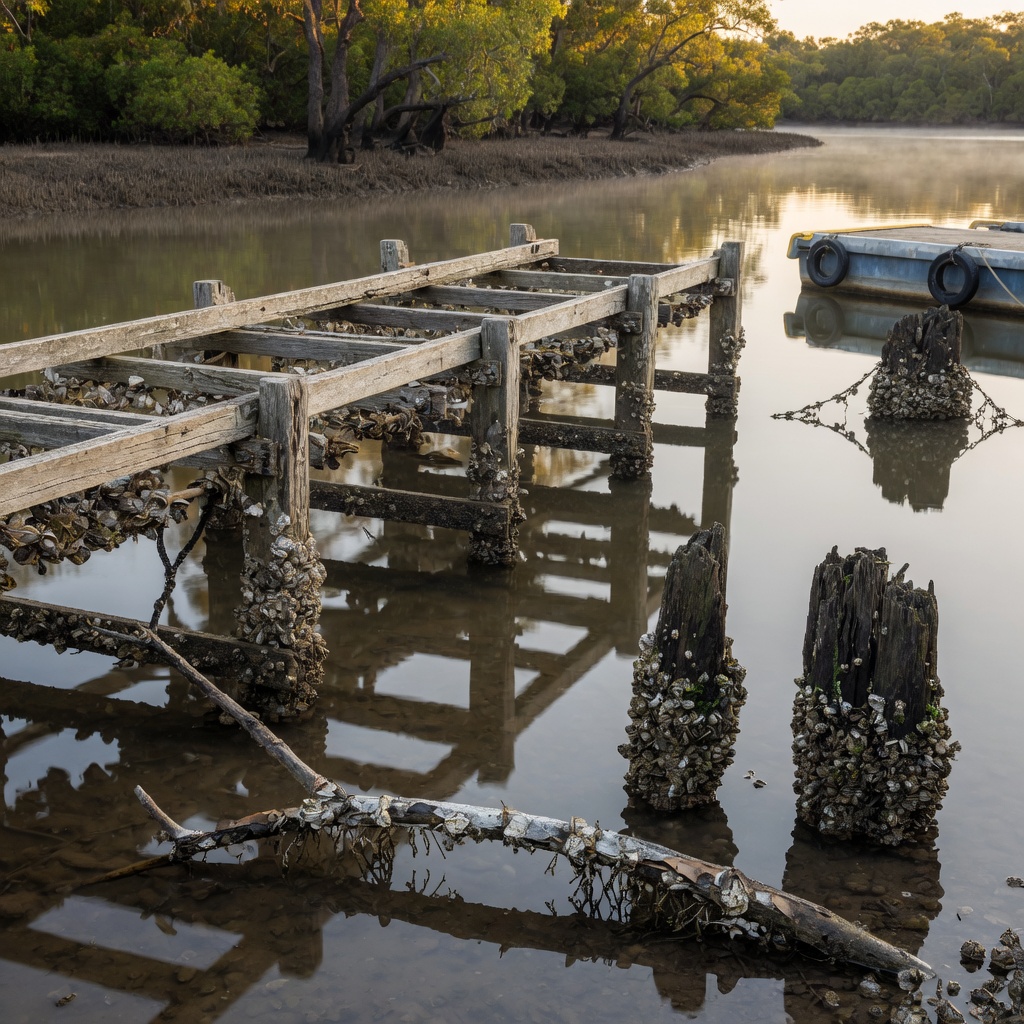
Why Bream Live Hard Against Structure
Yellowfin bream (Acanthopagrus australis) are built for tight country. Deep-bodied, silver-bronze with yellowish pelvic and anal fins, they use crushing molar-like teeth to deal with oysters, crabs, prawns and marine worms. Around Sydney, that diet puts them exactly where the food grows: oyster leases in the Hawkesbury and Georges River systems, marina pontoons in Middle Harbour and Pittwater, rock walls along Botany Bay, and fallen timber in the upper reaches of every estuary. Structure gives bream three things at once — food, shade and an instant escape route. Understanding that is more important than any single rig.
Larger bream are usually the most structure-bound. A 25 cm fish will happily roam a sandflat, but a 38 cm specimen tends to hold within a metre of a barnacle-crusted pile or under the shadow line of a pontoon, only moving to feed when tide and light suit it. If your lure or bait is not touching that country, you are fishing for the smaller fish.
Reading Oyster Racks, Pontoons and Snags
Oyster racks
Racks are grids of posts and rails encrusted with oysters, worms and small crabs. The best sections are the outer rows facing current flow, corners where two rows meet, and gaps where broken rails create eddies. Bream sit on the down-current side of posts, facing into the flow. Fish the front edge first, then work down the alleys.
Pontoons and marinas
Look for the shadow line, the pontoon corners, mooring chains, and the vertical piles that hold everything in place. On sunny days bream tuck right under the deck; on overcast days or at dawn they will sit out along the edge. Keep noise down — hull slap, dropped pliers and heavy footfalls on a jetty will shut a berth down for twenty minutes.
Timber snags
In the brackish upper estuary, single fallen trees with current sweeping past them out-fish tangled log jams. Prioritise snags in at least a metre of water at low tide, with a deeper hole nearby. After heavy rain, bream push down toward saltier water, so slide your search a few kilometres downstream.
Tide, Moon and Feeding Windows
- Racks: best on a rising tide once water covers the rails, and the first two hours of the drop when prawns and crabs get flushed out.
- Pontoons: the last of the run-out and the turn often produce, as bait concentrates around piles.
- Snags: a moving tide of any direction beats slack water; low light adds confidence.
- Moon: larger tides around new and full moons mean more water over the structure but faster flow — go heavier on weight or fish the shoulders of the tide.
- Weather: a light chop and cloud cover keep big bream feeding well into the day. Cold, clear, still winter mornings usually mean a slower, deeper bite.
Winter also brings the spawning run, when bream gather near estuary mouths and along ocean rocks. Structure fishing in the middle and upper estuary tends to peak from spring through autumn when water temperatures sit higher and prawns are about.
Rigs, Baits and Lures
Bait approach
Keep it simple: a lightly weighted running sinker rig or an unweighted bait on 2–4 kg fluorocarbon leader, size 1/0 to 2/0 suicide or circle hook. Effective baits include peeled prawn, live nippers (yabbies), half-pilchard, mullet strips, chicken breast marinated lightly, and — around racks — fresh oyster meat or crab. Cast up-current and let the bait swing naturally into the structure. Long soaks with heavy sinkers are a recipe for lost rigs.
Lure approach
A 2–4 kg spin outfit, 1000–2500 size reel, 3–5 kg braid and 2.5–4 kg fluorocarbon leader covers most work. Productive options:
- Small hardbody crankbaits (35–50 mm) cast parallel to racks and pontoon edges, paused often.
- Soft plastics — 2–3 inch grubs, prawn and crab profiles on 1/20 to 1/8 oz jigheads, hopped down piles and past snags.
- Surface lures — poppers and walkers at dawn, dusk and over shallow racks on a high tide.
- Vibes and small blades for deep pontoon berths and bridge pylons in 4–8 m.
Keep leader knots tidy and check for abrasion after every second or third cast; oyster shell will shred line quickly.
Landing Fish in Tight Country
Set the drag firm enough to turn a fish away from the structure on the first surge, then back off once it is clear. Rod angle matters more than brute force: drop the tip low and lead the fish out sideways rather than lifting it up into the rails. If a fish buries into a snag, ease off pressure for a few seconds — many bream swim back out. Use a knotless mesh net, wet hands, and support the fish horizontally for photos.
Handling, Rules and Conservation
Bream are slow growing and long lived, so releasing the bigger breeders keeps a system healthy. Crush barbs if you release most of your fish, avoid dropping them on hot boat decks, and never lift a fish by the jaw alone with the body hanging. Deeply hooked fish are best released with the line cut close to the hook.
Size limits, bag limits and any closures for bream differ between states and change over time. Always confirm the current rules with the relevant state or territory fisheries authority before you fish, and note that oyster leases are private working infrastructure — do not tie up to, stand on or damage racks. For more identification detail and comparisons with tarwhine, snapper and other estuary species, see our species profiles and identification guides.
Questions about a specific Sydney system? Contact Australian Fish Species at [email protected] or +61295585271 during Mon–Fri: 09:00 – 17:00 (AEST).

Navigation
See also
FAQ