Ciguatera, Mercury and Sensible Choices About Eating Your Catch
Why Food Safety Belongs in a Fishing Guide
Most Australian anglers keep a feed now and then, and a fish you caught yourself is about as fresh as food gets. Two topics come up often enough that they deserve a plain explanation rather than tackle-shop rumour: ciguatera poisoning, which is tied to certain tropical reef fish, and mercury, which accumulates in long-lived predators. Neither is a reason to stop eating fish. Both are a reason to be selective about species, size and where the fish came from.
Australian Fish Species treats this as part of catch care. If you are going to kill a fish, it should be despatched quickly, chilled properly and eaten with confidence. If you are not going to eat it, release it well instead of taking it "just in case".
Ciguatera in Plain Terms
Ciguatera is caused by natural toxins produced by microalgae living on tropical and subtropical coral reef systems. Small grazing fish pick up the toxins, larger predators eat those fish, and the toxins concentrate as they move up the food chain. The toxins are not destroyed by cooking, freezing, smoking, filleting or gutting, and there is no way to see, smell or taste them. Symptoms reported in cases include tingling, numbness, gut upset and unusual reversal of hot and cold sensation, sometimes lasting a long time. If anyone becomes unwell after a meal of reef fish, seek medical advice promptly and, if you can, keep any leftover fish for assessment.
Where the Risk Sits
- Geography matters most. Risk is associated with tropical and subtropical coral reef areas, including parts of northern QLD, the NT and north-west WA, and certain offshore reefs. Some individual reefs and localities have a long history of problem fish.
- Species matter. Large reef predators are the usual culprits: chinaman fish, red bass, paddletail and moray eels are widely advised against, while big coral trout, cod, groper, Spanish mackerel, barracuda and large trevally have all been linked to cases in some regions.
- Size matters. Within a risky species, larger and older fish generally carry more accumulated toxin than smaller ones.
Practical Habits That Reduce Risk
- Ask locally before you keep an unfamiliar reef fish. Charter skippers, tackle shops and local anglers in the region usually know which reefs and species have a bad reputation.
- Do not keep species that state or territory authorities and local advice list as no-take or do-not-eat.
- Prefer smaller, legal-size fish for the table and release the oversized trophy predator after photos.
- Avoid eating the liver, roe, head and gut of large tropical reef fish, where toxin levels are typically higher.
- Do not share a large questionable reef fish around a group. If in doubt, let it go.
Mercury: A Slow, Cumulative Issue
Mercury enters waterways from natural and industrial sources and converts to methylmercury, which builds up in fish tissue over a lifetime. Small, fast-growing species carry very little. Long-lived apex predators such as large sharks (flake), billfish, some large tuna, and freshwater giants like very big Murray cod or catfish tend to carry more. Unlike ciguatera, mercury is a long-term dietary consideration rather than a same-day illness.
The sensible approach used by food authorities is a balanced diet: eat fish regularly, but rotate species and favour smaller, shorter-lived fish for frequent meals. People who are pregnant, planning pregnancy, breastfeeding or feeding young children should follow current national dietary advice on how often to eat high-mercury species, and treat shark, billfish and very large predators as occasional rather than weekly.
Lower-Concern Table Fish Around Sydney
- Whiting from estuary sand flats and surf gutters.
- Flathead in legal size ranges, released once they exceed upper limits.
- Bream and tailor, both short-lived and abundant.
- Australian salmon, best bled immediately and iced hard for the table.
- Snapper in the pan-size to mid range, rather than only the biggest fish.
Local Advisories and Closed-Water Warnings
Some waterways carry specific consumption advice because of historic contamination. Around Sydney, anglers should be aware that dietary advisories apply to parts of Sydney Harbour and the Parramatta River system, and that commercial fishing has been prohibited there. Similar advisories exist for particular rivers, harbours and industrial estuaries in other states. Because these notices are updated over time, always check the current advice with the relevant state or territory fisheries or health authority before keeping fish from an urban or industrial waterway. Where advisories apply, catch and release is the straightforward answer.
Handling Fish You Do Intend to Keep
Most bad experiences with home-cooked fish are nothing to do with toxins and everything to do with heat and time. A fish left in a bucket of warm water or under the gunwale in the sun deteriorates fast, and scombrids such as tuna and mackerel can develop histamine that cooking will not remove.
- Despatch the fish promptly with an ike jime spike or a firm blow to the head.
- Bleed it by cutting the gill arches, especially oily species.
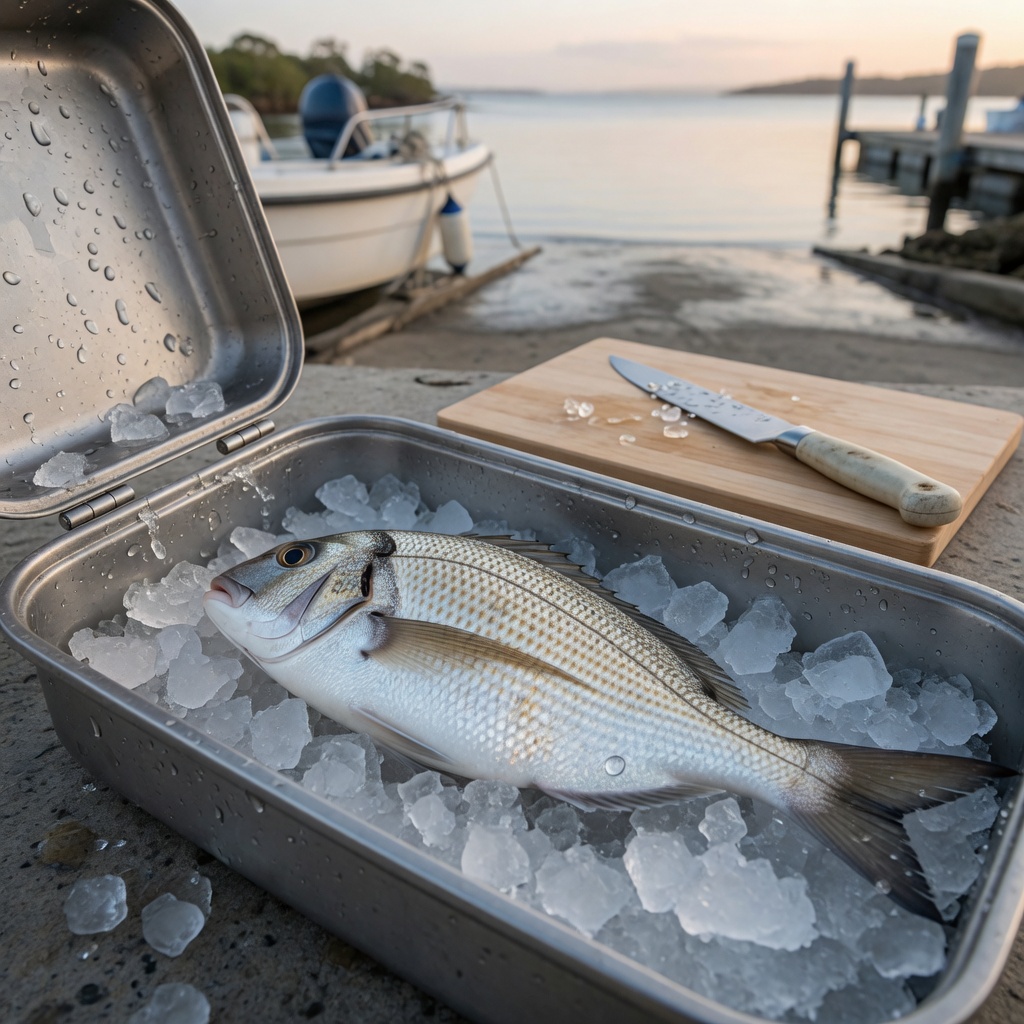
- Get it into an ice slurry, roughly two parts ice to one part water, within minutes.
- Gut larger fish once the initial chill has set, and keep the cavity clean.
- Fillet at home on a clean board, keep flesh cold, and eat within a day or two or vacuum-seal and freeze.
- Discard any fish with off odours, honeycombed flesh, peppery taste or a soft, mushy texture.
Taking Only What You Need
The best food-safety decision is often a conservation decision as well. Keeping two or three fish for a family meal, releasing the big breeders, and letting undersized and questionable fish swim away means less waste in the freezer and more fish in the system next season. Bag and size limits are legal minimums, not targets, and they differ by state and change over time, so confirm current limits with your state or territory fisheries authority before every trip.
For technique on reviving fish, managing barotrauma in deeper-water species and reducing release mortality, see our catch care, release and conservation guidance. Questions about local advisories or handling gear can be sent to [email protected] or raised by phone on +61295585271 during Mon–Fri: 09:00 – 17:00 (AEST).
Quick Checklist Before You Fillet
- Do I know exactly what species this is, using local Australian names?
- Is it from a tropical reef area with known ciguatera history?
- Is it an oversized apex predator better released?
- Does a consumption advisory apply to this waterway?
- Was it bled and iced within minutes of capture?
- Am I keeping only what my household will actually eat this week?
This article is general fishing information, not medical or legal advice. For health concerns after eating fish, consult a medical professional, and for current rules and advisories consult the relevant state or territory authority.

Navigation
See also
FAQ