Coral Trout and Red Emperor on Tropical Reef Systems
Two Reef Icons, Two Very Different Habits
Coral trout (Plectropomus species) and red emperor (Lutjanus sebae) are the fish most anglers picture when they think of tropical reef country off Queensland, the Northern Territory and northern Western Australia. They often share the same patch of ground, but they hold in different places and respond to different presentations, so a boat that understands both usually finishes the day with a better mixed bag.
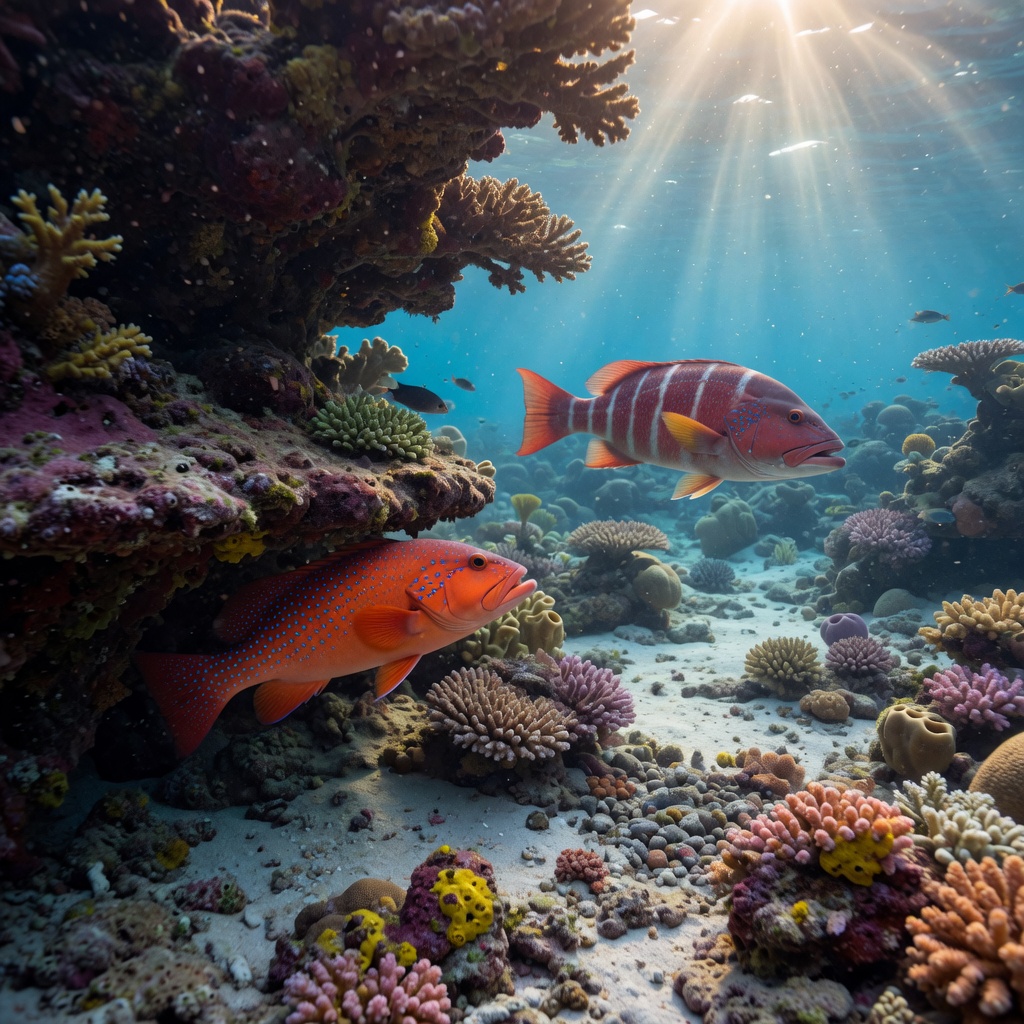
Coral trout are ambush predators. They sit hard against structure — bommies, ledges, coral heads, rubble edges and the shaded side of isolated lumps — and rarely move far to feed. Colour ranges from bright orange-red to olive-brown with electric blue spots, and the fish tend to be shallower, from a few metres inside the lagoon out to about 40 m on the outer reef. Red emperor prefer adjacent softer ground: gravel, shell, sponge and low rubble patches near the reef edge, commonly in 25–90 m. Juveniles carry bold red and white barring and often live in sheltered inshore country, while big adults turn deep rose-red and roam the deeper flanks in small groups.
Reading the Ground and the Tide
On reef systems the fish are made by structure, but the bite is made by water movement. Small to moderate tides usually fish best because you can hold position and keep baits near the bottom without excessive scope. Big spring tides can create ferocious flow across the reef edge; on those days work the lee of bommies, back eddies and channels where current slows.
- Coral trout: the first hour of a rising or falling tide over a shallow bommie, and the low-light windows at dawn and dusk.
- Red emperor: the slower stages either side of the tide change, especially on the dark of the moon and through the night.
- Both species: pressure drops before a change of weather can spark a short, intense feed. Rising south-easterlies then flatten the bite.
Mark bait schools and hard edges on the sounder rather than trusting a single waypoint. A productive lump is often only 10–20 m across, so short, accurate drifts beat long passes.
Rigs, Baits and Lures That Work
Reef fishing is about turning a fish before it reaches cover, so tackle is heavier than it looks necessary.
- Bait rig: paternoster with two dropper loops, 60–100 lb mono or fluorocarbon leader, 6/0–8/0 circle or suicide hooks and a snapper lead sized to hold bottom.
- Baits: fresh strip baits from mackerel, mullet or squid; whole pilchards for trout; larger squid heads and half-fish for red emperor.
- Lures: 40–150 g knife jigs and slow-pitch jigs for trout on shallower bommies; soft-plastic jerkshads and 5–7 inch paddle tails on 3/4–2 oz jig heads worked with sharp hops.
- Tackle: PE3–PE6 overhead or spin outfits, 30–50 lb braid, sound drag washers and a rod with enough butt to lift.
Drop the bait or lure to the bottom, wind up two or three turns, and stay in contact. Coral trout hit hard and dive straight back into coral, so lock up early. Red emperor bite more deliberately — let a circle hook load up rather than striking.
Barotrauma, Release and Reef Care
Fish brought up from 30 m or more often suffer barotrauma: a distended gut, bulging eyes and inability to swim down. Carry a release weight or venting tool and know how to use them before you need them. Handle fish with wet hands, keep them out of the sun, support the belly, and return unwanted fish quickly. Avoid anchoring into live coral — use reef-friendly anchoring or drift where possible, and take all line, bait bags and rubbish home.
Coral trout and red emperor are both slow-growing and highly targeted, and several tropical reef species are subject to spawning closures. Bag limits, size limits and closed seasons differ between Queensland, the NT and WA and change over time, so check the current rules with the relevant state or territory fisheries authority before every trip.
Planning a Safe Reef Trip
Distances offshore are long and weather windows are short. Watch the marine forecast for wind against tide, plan bar crossings carefully, log a trip with a family member or the local volunteer marine rescue group, and carry a beacon, charged VHF and adequate fuel reserve. In the wet season, factor in afternoon storms and reduced visibility. For related techniques on pelagic species that hunt the same reef edges, see our wider coverage of offshore reef and game fishing.
Australian Fish Species is written from Sydney for anglers across Australia, with metric units and Southern Hemisphere seasons. Questions or corrections are welcome by [email protected] or +61295585271 during Mon–Fri: 09:00 – 17:00 (AEST).
Navigation
See also
FAQ