Crocodiles, Sharks and Marine Stings in Northern Australia
Why Northern Waters Demand a Different Mindset
Anglers who learn their craft on southern estuaries and rock ledges often arrive in the tropics with good tackle skills and the wrong habits. In northern Australia, from the Kimberley across the Top End to Cape York and the central Queensland coast, the hazards are not only weather and water. Estuarine crocodiles, several shark species and seasonal marine stingers change how you wade, where you launch, how you land fish and where you clean them. The good news is that the risks are largely predictable, and predictable risks can be managed with routine rather than luck.
Treat this article as a planning companion, not a substitute for local knowledge. Ranger stations, regional fisheries offices, local tackle shops and council signage carry current warnings for specific boat ramps, creeks and beaches. If a sign says do not enter the water, that advice was written for a reason.
Estuarine Crocodiles: Assume They Are There
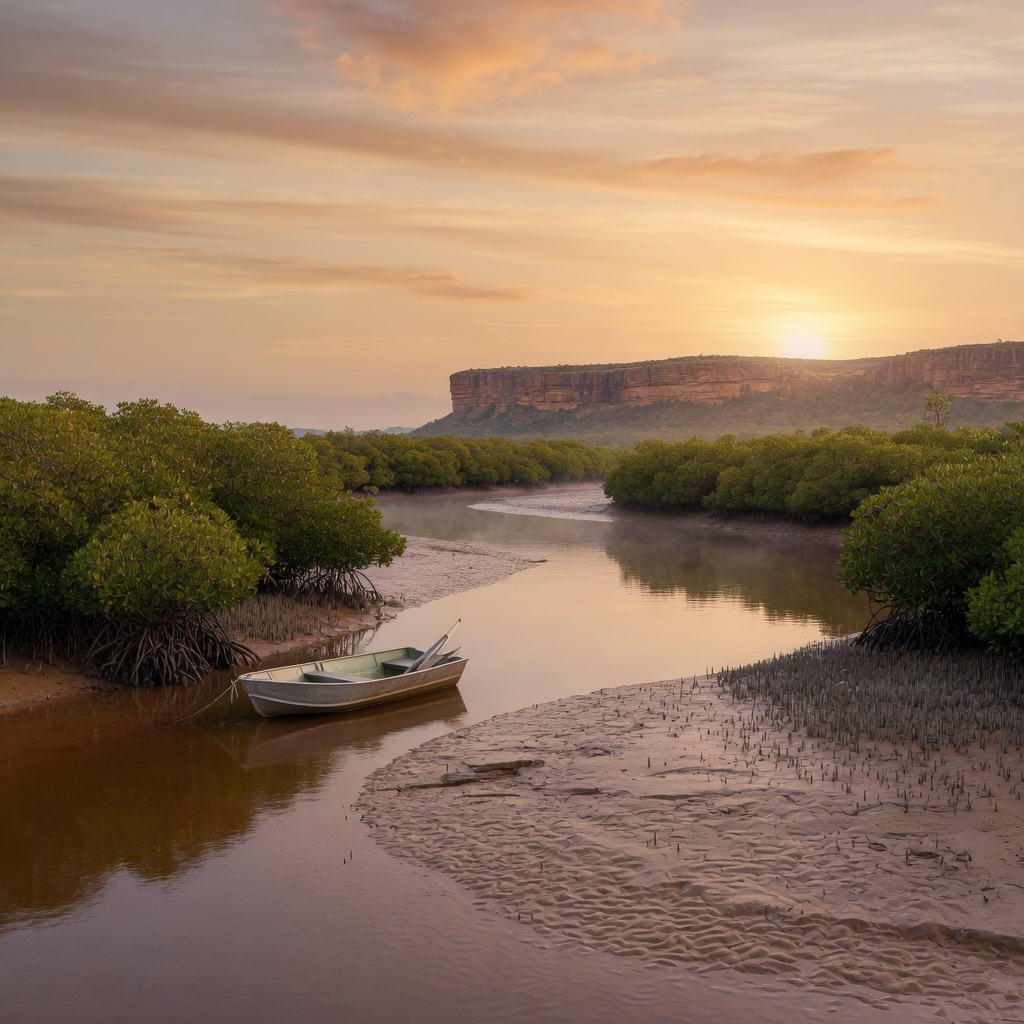
Estuarine (saltwater) crocodiles occupy tidal rivers, mangrove creeks, floodplain billabongs, beaches, offshore islands and freshwater reaches well upstream. The safest working assumption in northern Australia is that any body of water may hold a crocodile, whether or not you can see one. Sightings are the exception; presence is the rule.
Practical habits that reduce risk
- Stay several metres back from the water's edge when casting, landing fish or walking a bank, and never stand on a steep, slippery drop-off.
- Do not clean fish, discard frames or throw berley at ramps, jetties or campsites. Repeated feeding teaches crocodiles to associate people with food.
- Vary your routine. Avoid fishing the same spot, at the same tide, at the same time each day, and avoid returning to a place where a crocodile has been seen.
- Camp at least 50 m from the water where terrain allows, above the bank, and keep torches handy for after-dark movement.
- Never dangle arms or legs over the side of a boat and keep children and dogs well away from the edge. Dogs attract attention quickly.
- Do not swim, wade or launch a kayak in croc country unless a reliable local source confirms it is appropriate, and understand that conditions change with each wet season.
Crocodiles move with floodwaters, so a creek that was quiet in the dry may hold new animals after monsoon rain. Barramundi and mangrove jack fishing puts you exactly where crocodiles feed, especially around drains, snags and creek mouths on a falling tide, so build the setback distance into your casting position before you tie on a lure.
Sharks: Handling, Landing and Water Entry
Sharks are part of a healthy northern system, and most encounters are simply competition for your catch. Bull sharks push far up tidal rivers, whalers and reef sharks patrol headlands and coral edges, and tiger sharks appear around offshore grounds. The realistic hazards for anglers are shark bite during handling, injury from a thrashing fish alongside the boat, and taxation of hooked fish on the way to the boat.
- Never lift a shark aboard. Leave it in the water, use long-nose pliers or a de-hooker, and cut the leader close if the hook cannot be reached safely.
- Keep hands out of the water when releasing fish in murky river mouths, near cleaning tables, or where sharks have been circling.
- Move on if sharks are taking your catch. Repeatedly hooking fish that get eaten is poor practice for the fishery and increases activity around the boat.
- Avoid swimming at dawn, dusk and night, in turbid water, near river mouths, or where bait schools and birds are working.
- Do not swim near people who are fishing or spearing, and never enter the water where fish scraps have been dumped.
Marine Stings: Box Jellyfish, Irukandji and Others
The tropical stinger season broadly runs through the warmer months, commonly quoted from around October to May, though stings have occurred outside that window. Box jellyfish are large, near-invisible in shallow sandy bays and can cause severe, immediate pain. Irukandji are tiny, often found in deeper water and around reefs, and may produce delayed but severe systemic symptoms known as irukandji syndrome. Bluebottles, stingrays, cone shells, blue-ringed octopus, stonefish, catfish and estuary cobbler also cause injuries around northern shorelines.
Prevention
- Wear a full-length stinger suit if you must enter the water, plus booties and gloves when handling ropes, anchors or nets.
- Shuffle your feet in shallow sand to warn stingrays, and wear sturdy footwear on reef flats and rock bars.
- Never handle unidentified shells, octopus or spiny fish. Unhook catfish and scorpionfish with pliers and a wet towel, not bare hands.
- Carry a bottle of household vinegar in the boat and the beach bag through stinger season.
First aid basics
- Get the person out of the water and call for emergency help early; in remote areas, start the evacuation plan before symptoms escalate.
- For suspected box jellyfish or irukandji stings, douse the area liberally with vinegar for at least 30 seconds, do not rub, and monitor breathing and consciousness while awaiting help.
- For bluebottle stings, pick off remaining tentacles and use hot water immersion as tolerated.
- For stonefish, stingray and catfish spine injuries, hot water immersion helps pain, but puncture wounds need medical assessment because of retained spines and infection risk.
- Learn CPR before you travel. In remote country, the nearest help may be hours away.
This is general information only. Complete a recognised first aid course, carry a stocked kit, and follow the directions of emergency services and medical professionals.
Trip Planning for Remote Northern Fishing
Most serious incidents in the north involve isolation as much as animals. A blown motor in a tidal creek, a bar crossing gone wrong or a heat-related collapse can turn a good day into an emergency. Build redundancy into every trip.
- Check the marine forecast, wind, tide and swell before you leave, and again in the morning. Tropical lows and squall lines build fast in the wet.
- Carry a satellite communicator or EPIRB, a marine radio, spare fuel, drinking water well beyond your expected need, sun protection and insect repellent.
- Leave a written float plan with someone ashore: launch point, intended area, return time and vehicle details.
- Plan bar crossings around tide and swell, and be willing to wait or abandon the trip. No fish is worth a rolled boat.
- Manage heat: fish early and late, rest in shade during the middle of the day, and watch companions for confusion or cramping.
For seasonal weather patterns, tide reading and forecast interpretation that apply across the country, see our broader guidance on marine safety, weather and trip planning, then layer the tropical-specific rules above on top of it.
Respect the Habitat, Respect the Wildlife
Crocodiles, sharks and stingers are protected parts of northern ecosystems and indicators that the system still works. Do not attempt to move, feed, provoke or photograph animals at close range, and report problem crocodiles to the relevant wildlife authority rather than dealing with them yourself. Keep mangrove roots, seagrass and reef structure intact when anchoring or walking, take all rubbish and line home, and release fish you do not intend to keep with wet hands and minimal air time.
Australian Fish Species publishes species, technique and safety guides written for Australian conditions from our base in Sydney. Rules, closures and stinger advisories differ by state and change over time, so always confirm current requirements with the relevant state or territory fisheries and wildlife authority before you fish. Questions or corrections are welcome at [email protected] or +61295585271 during Mon–Fri: 09:00 – 17:00 (AEST).

Navigation
See also
FAQ