Crossing Coastal Bars Safely in a Trailer Boat
Why Bars Deserve Your Full Attention
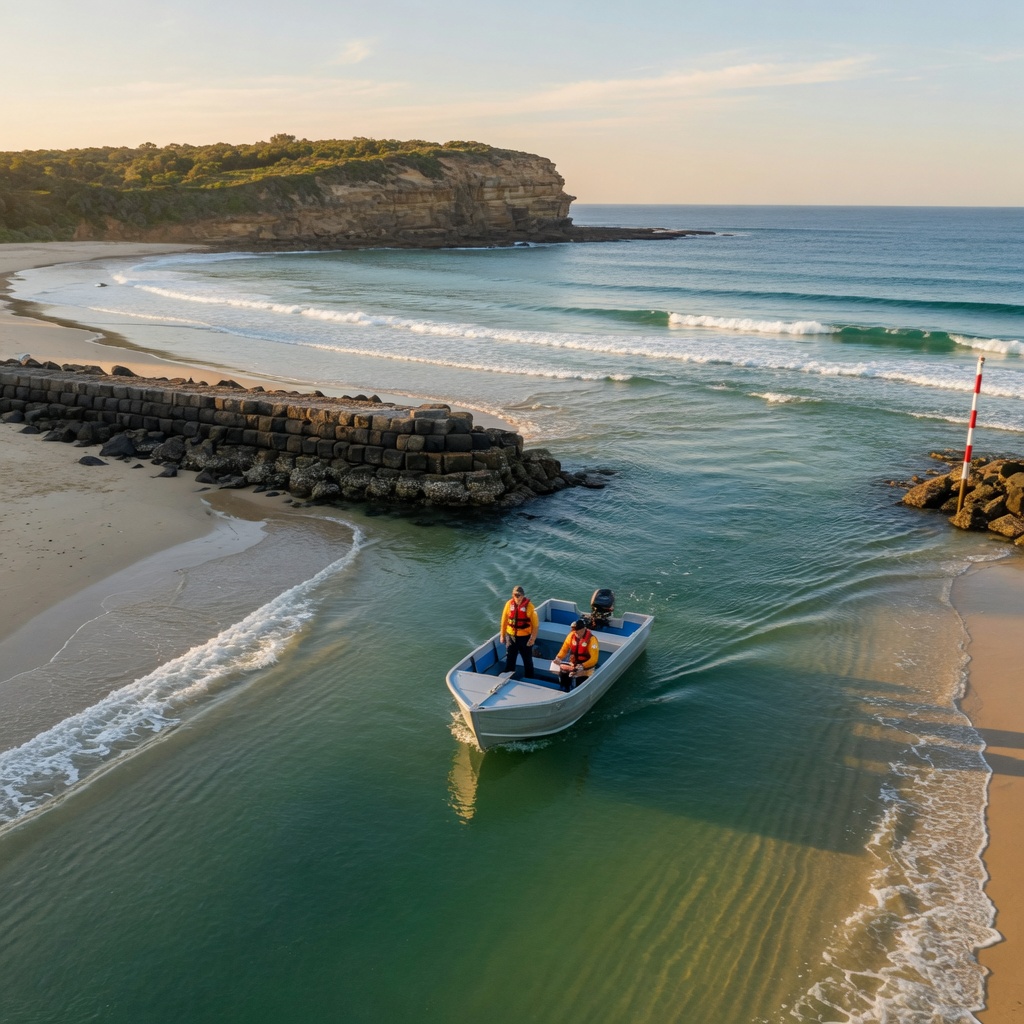
A coastal bar is the shallow sand bank that forms where a river or estuary meets the ocean. Sand shifts with every big swell, so the channel you used last summer may no longer exist. When ocean swell runs into that shallow water it steepens and breaks, and a wave that looks harmless from the beach can stand up into a wall of white water in front of a 5 m trailer boat. Bar incidents are one of the most common causes of serious recreational boating trouble in Australia, and almost all of them come back to the same three things: poor timing, too much swell, or a skipper who felt committed and pushed on anyway.
This guide is written for trailer boat owners running out of Sydney and the wider east coast, but the principles apply to any bar entrance in NSW, QLD, VIC, SA, WA, TAS or the NT. It is general guidance only — always check the current local advice and marine forecast before you launch.
Plan the Tide Before You Plan the Fishing
Tide is the single biggest lever you control. On an outgoing tide, water pouring out of the estuary meets incoming swell and makes waves shorter, steeper and far more dangerous. On the flood, the same swell rolls through with more water under it and much less bite.
- Best window: the last of the incoming tide through to high slack, when depth is greatest and outflow is weakest.
- Worst window: mid to late ebb, especially after heavy rain when the river is still running out hard.
- Plan both legs: work out your return crossing time before you leave. Many skippers get the outbound run right and then come home on a falling tide in a building sea breeze.
- Add a buffer: build in an hour of slack in your plan so a hot bite or an engine hiccup does not force a bad crossing.
Read the Swell, Wind and Bar Itself
Check the marine forecast for swell height, swell period and direction, not just wind. A 1.5 m swell at 14 seconds carries far more energy onto a bar than 1.5 m at 8 seconds. Direction matters too: a south-easterly swell can wrap straight into an entrance that is comfortable in a southerly.
Before committing, stop in deep water inside the entrance and watch for at least ten minutes. Waves arrive in sets with lulls between them, and you need to see a full cycle to understand the pattern. Look for:
- Where the water is green and unbroken — that is your deep channel.
- Discoloured, sandy or standing water, which signals shallow banks.
- Whether sets are closing right across the entrance, which means no safe line exists.
- The length of the lull between sets, which is your working window.
If you cannot see a clean line, or the sets are closing out, the answer is simple: do not go. Fish inside the estuary instead. Bream, flathead and whiting on the flats will keep you busy, and our species profiles and identification guides can help you make the most of a day spent in sheltered water.
Brief the Crew and Rig the Boat
Everyone aboard should know what is about to happen. A thirty-second briefing prevents panic.
- Lifejackets on and done up — before the crossing, not during it.
- Everyone seated low and holding on, no one standing forward.
- Hatches, cabin doors and bungs closed; loose gear, eskies and rods stowed or lashed.
- Nominate one person to watch behind on the return crossing and call sets.
- Log on with your local marine rescue or coast guard service and log off when you return.
Mechanically, a bar is no place for a marginal boat. Fresh fuel with enough reserve, a clean filter, a serviced battery, a working bilge pump, a kill cord in use and an anchor rigged and ready to deploy are all basics. Carry an EPIRB, flares, a marine radio and a torch, and know where they are without looking.
Technique: Going Out and Coming Home
Heading out, wait for the lull, then commit with steady, purposeful power. Meet oncoming waves close to square on, lifting the bow slightly as you climb and easing the throttle just before the crest so the boat does not launch and land hard. Between waves, keep moving. Hesitating in the impact zone is what gets boats into trouble.
Coming home is harder because the sea is behind you and harder to judge. Sit outside the break in deep water and watch. When a lull arrives, follow in behind the back of a wave and hold station on its rear face, matching its speed. Never let a breaking wave catch and pick up your stern — that is how boats broach or pitchpole. If you find yourself overtaking, ease off; if a set builds behind you, it is usually safer to turn out through the swell in a lull and start again than to accelerate and hope.
Making the Go / No-Go Call
Good skippers cancel trips. Write your own limits down and stick to them: a maximum swell height and period for your hull, a maximum wind speed, a tide window, and a rule that you will not cross in poor light or reduced visibility. If any one limit fails, the trip is off or moves inside.
Two extra habits pay for themselves. First, talk to local trailer boat owners and rescue volunteers about how a particular bar behaves — sand movement is local knowledge that no forecast captures. Second, if in doubt, sit and wait. Tides turn, sea breezes drop, and no fish is worth a rolled boat.
Questions and Local Conditions
Australian Fish Species publishes practical safety and technique guidance for Australian anglers, alongside species and destination content by state and region. If you have a question about conditions near Sydney or want a topic covered, contact us at [email protected] or +61295585271 during Mon–Fri: 09:00 – 17:00 (AEST). For official bar advice, marine forecasts and any changes to boating safety requirements, always confirm with the relevant state or territory maritime and fisheries authority before you launch.

Navigation
See also
FAQ