Deep Water Snapper on Soft Plastics, Micro Jigs and Berley
Knowing Your Fish Before You Drop
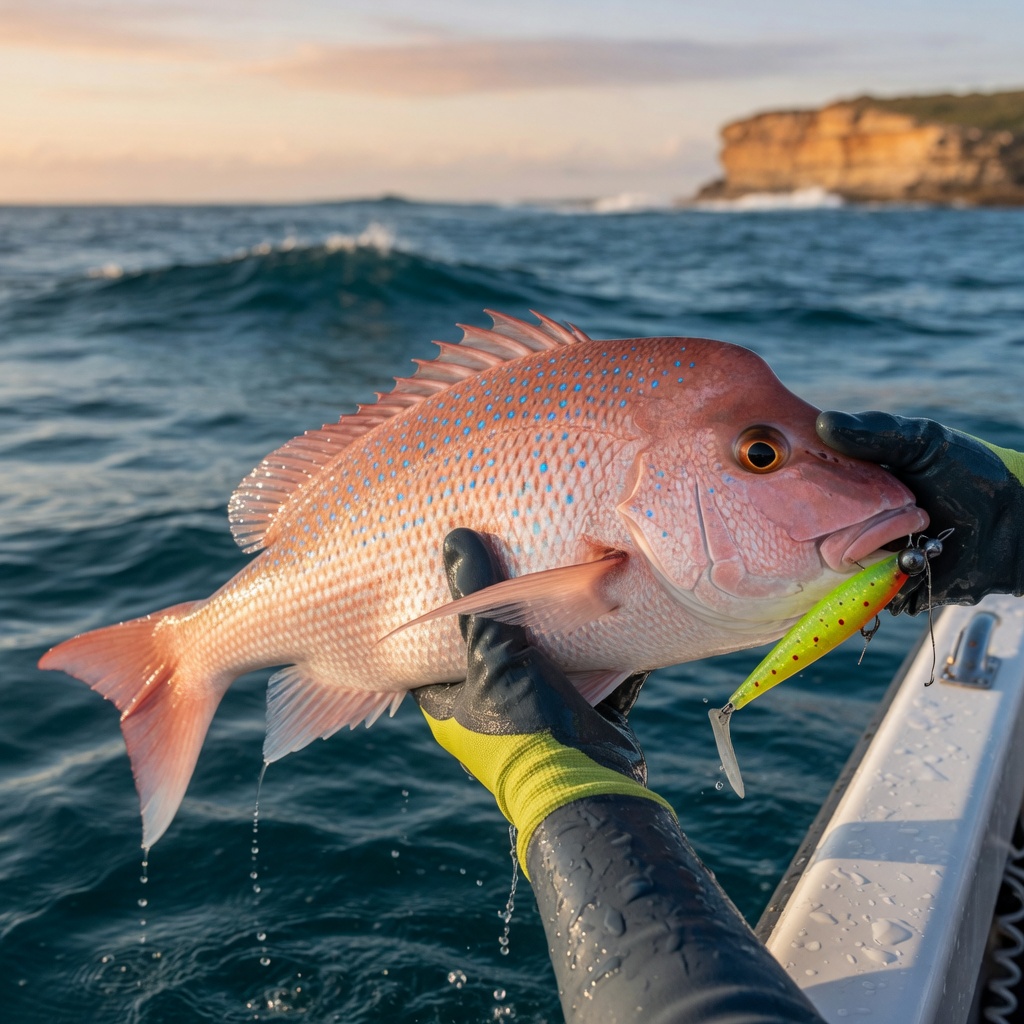
Snapper (Chrysophrys auratus, still called pinkies when small and knobbies or old man snapper when large) are one of the most widely chased reef and offshore species in southern Australia. Off Sydney they hold on broken reef, gravel patches, sand-to-reef edges and isolated pinnacles in anywhere from 25 to 90 metres. Identification is straightforward once you know the cues: a deep, compressed pink body scattered with electric blue spots, a steep forehead that develops a bony hump and nose bump with age, and a strong crushing dentition built for crabs, cunjevoi, squid and small baitfish.
Big snapper are not simply deeper versions of small ones. They feed in short, aggressive windows, hold tight to structure edges rather than sitting over the peak, and rise well off the bottom when a berley trail is working. Understanding that behaviour is what turns a slow deep drop into a productive session.
Reading Ground, Tide and Weather
Look for the change rather than the lump. A gravel or shell patch beside reef, a low ledge with a metre of relief, or the down-current edge of a pinnacle will out-fish featureless rock. Mark bait showings and any arches sitting one to five metres off the bottom, because those are the fish most likely to eat a moving lure.
- Tide: the first two hours of a run and the last of the ebb generally concentrate feeding. Slack water is a good time to reposition rather than to grind.
- Light: dawn, dusk and overcast days extend the window. In deep water, moon phase matters less than current strength, but big tides around the full and new moon push more water and more bait.
- Weather: a light breeze against a modest current gives a controllable drift. Two knots of drift with a swell on the beam makes vertical presentation almost impossible, so plan around the marine forecast rather than fighting it.
Soft Plastics in Deep Water
Soft plastics work in 40 to 70 metres provided you keep contact with the lure. Match jighead weight to drift speed, not depth alone: as a rule, use the lightest head that still lets you feel bottom on a semi-tight line.
- Profiles: 5 to 7 inch jerk shads, curl tails and paddle tails in pink, nuke, pilchard and bruised colours.
- Heads: 3/8 oz to 3 oz depending on current, on strong, wide-gape hooks.
- Retrieve: two or three lifts of a metre, a long controlled drop, then wind up ten metres and repeat. Most eats come on the drop, so watch the line for a stall.
- Tackle: a fast-taper 4 to 8 kg spin rod, 2500 to 4000 reel, 15 to 20 lb braid and a 20 to 30 lb fluorocarbon leader of roughly two rod lengths.
Micro Jigs and Slow Pitch
Micro and slow-pitch jigs of 40 to 150 g shine when current is strong or fish are sitting sullen on the bottom. Fish them with short one-turn lifts and a fluttering fall, keeping the rod tip low and letting the jig do the work. Assist hooks top and bottom improve hook-up rates on short-striking snapper, and a solid ring plus quality snap swivel saves rebuilding rigs all day. Slow-pitch also picks up welcome bycatch such as pearl perch, morwong, samsonfish and the occasional kingfish, so check your leader after every fish.
Berley: The Great Equaliser
A berley trail lifts deep snapper up the water column and shortens the distance between your lure and a feeding fish. Use minced pilchard, tuna oil and crushed shell in a weighted pot set a few metres above the bottom, or drip a slow trail from the transom while you drift. Keep it steady and sparing. Overfeeding produces full fish that ignore lures. Anchoring and floating unweighted baits back down the trail remains one of the most reliable methods for a big fish, and it pairs well with a plastic worked under the boat.
Handling, Barotrauma and Release
Snapper brought up from 50 metres or more often show barotrauma: a distended stomach, bulging eyes and inability to swim down. Use a release weight or venting tool correctly and get the fish back to depth quickly, minimise time out of the water, wet your hands or use a knotless net, and support the body horizontally for photos. Fish you intend to keep should be bled and iced immediately, which also protects the eating quality that makes snapper so prized.
Size limits, bag limits and closed areas differ between states and are reviewed over time. Before you head out, confirm current rules with the relevant state or territory fisheries authority. For related species identification notes and regional planning, see our fish species profiles and identification resources on Australian Fish Species.
A Simple Session Plan
- Check the marine forecast the night before and pick ground you can fish safely in the expected wind and swell.
- Arrive for the first of the run tide, sound the area and mark two or three edges before dropping.
- Start with plastics on the drift; switch to micro jigs if current builds past comfortable drift speed.
- If fish show but won't commit, set berley and slow everything down.
- Log depth, tide stage, drift direction and what worked so the pattern repeats next trip.
Questions about a specific patch of ground or a rig detail? Reach us at [email protected] or +61295585271 during Mon–Fri: 09:00 – 17:00 (AEST).
Navigation
See also
FAQ