Drag Settings and Fighting Big Fish Without Losing Them
Why Drag Is the Most Misunderstood Setting in Fishing
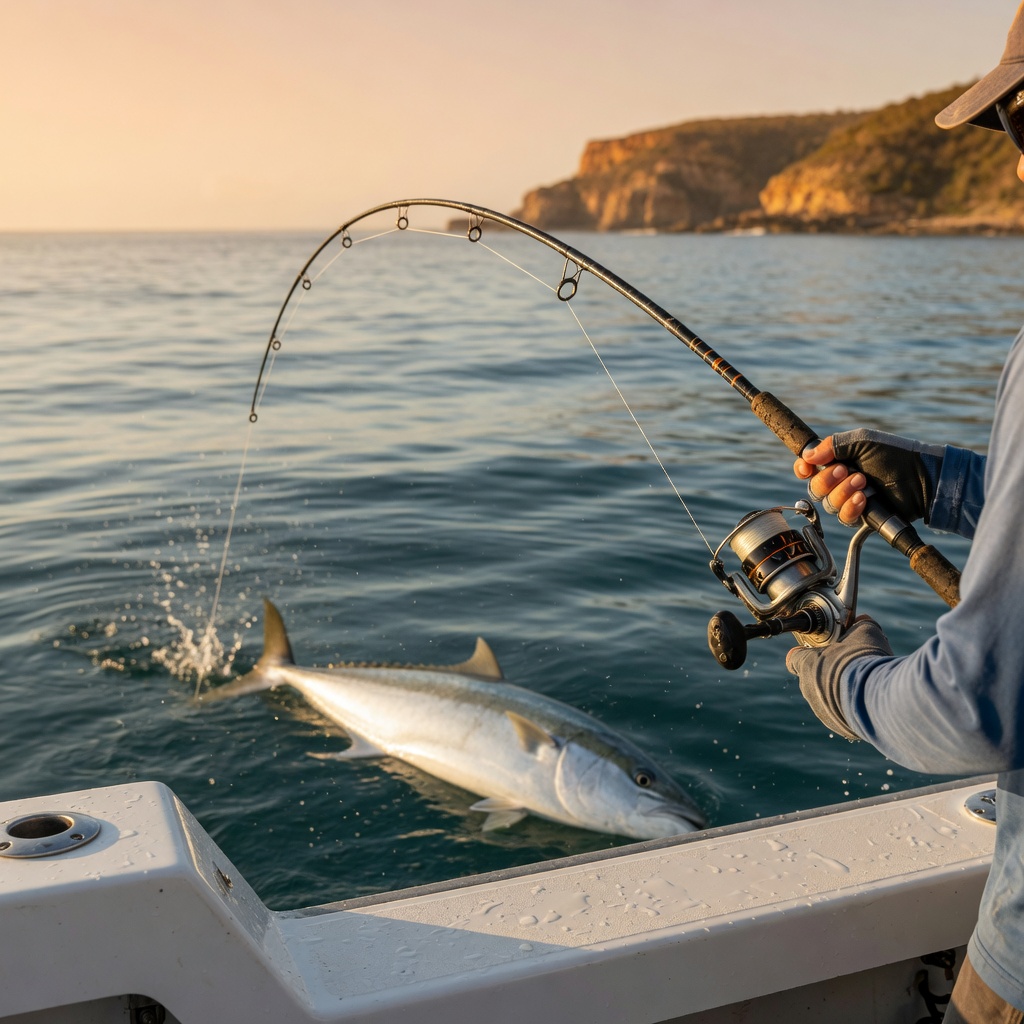
Most big fish are lost in the first ten seconds or the last two metres, and drag is usually the culprit at both ends. Too light and a mulloway buries itself in structure or a kingfish reaches the pylons; too heavy and the hook tears free, the leader knot pops, or the rod loads past its limit. The aim is not maximum pressure but consistent, predictable pressure that stays smooth from the first surge to the final circles beside the boat or the wash on the rocks.
Drag works as a system: line strength, knot strength, leader, hook gauge, rod curve and your own hands all share the load. The weakest link decides the outcome, so set drag to protect that link rather than to feel tough. On Australian Fish Species we treat this as core skill, alongside species knowledge in our fish species profiles and identification guides, because how a fish fights is part of knowing what it is.
Setting Drag by Percentage, Not by Feel
The workshop standard is to set strike drag at roughly 25 to 33 per cent of the breaking strain of your main line, measured at the rod tip with the rod loaded, not with the reel sitting flat on a bench.
- 10 kg braid: about 2.5 to 3.5 kg of strike drag for reef and offshore work.
- 6 kg mono on the beach: around 1.5 to 2 kg, allowing for wet line stretch and long, sweeping runs.
- Light estuary bream gear (3 to 4 kg): under 1 kg, closer to 15 per cent, because hooks are fine wire and mouths tear easily.
- Heavy jigging or barra in snags: 30 to 40 per cent, accepting the risk in exchange for stopping a fish before it reaches timber.
Use a simple set of scales hooked to your leader, a mate holding the rod at the angle you would actually fight at, and mark the drag knob position with a scratch or a pen line so you can return to it in the dark.
Spooled Line Diameter Changes Everything
Drag pressure rises as the spool empties. A reel set to 3 kg with a full spool can be pulling 6 kg or more when half the braid is gone, which is exactly when a tuna or Spanish mackerel is at its fastest. Back off a quarter turn during a long run, then reapply pressure as line comes back on.
Rod Angle, Pumping and the Low-Rod Lift
The rod is a shock absorber, not a lever for winching. Keep the blank loaded in its lower two-thirds, roughly 45 degrees to the line during steady pressure, and drop to a lower angle when a fish surges so the tip does not slam.
- Short pumps: lift 20 to 30 cm, wind down smoothly as you drop, never wind against a running fish.
- Change the angle: pulling side-on turns a fish off its course, which is how you steer kingfish away from structure or a Murray cod out of a snag.
- Never point the rod at the fish unless you are deliberately breaking off a snagged leader.
- Keep the line clear of the gunwale, rock ledge, or your own boots.
Situation by Situation Around Sydney and Beyond
Estuary Bream and Flathead
Light drag, soft rod tip and a slow, patient fight. Flathead thrash near the surface and throw lures; keep the rod low and let the drag give a little on each head shake. Big flathead should be supported horizontally, never hung by the jaw.
Kingfish and Reef Fish
Strike drag high, hands ready to add thumb pressure for two or three seconds only. The first run decides the fight. If a fish is winning the race to structure, adding pressure briefly is better than watching your leader saw across barnacles.
Beach Mulloway and Tailor
Long line out means huge stretch and little direct feel. Use lighter drag, walk the fish along the beach rather than dragging it through the shore break, and time the final landing with a wave.
Rock Ledges
Never let a fight pull you toward the edge. Set drag so you can hold position, wear a lifejacket and cleated boots, and be willing to lose the fish rather than your footing.
Common Reasons Big Fish Get Away
- Sticky drag washers from salt and old grease, causing a jerky start-up that snaps leaders.
- Worn knots and abraded leader from an earlier fish that were never checked.
- Blunt or bent hooks that need only a few kilos to straighten.
- Winding against the drag, which twists line and loosens hook holds.
- Rushing the last metre instead of letting the fish circle twice more.
Care After a Hard Fight
A long fight leaves fish exhausted. If you intend to release, shorten the battle with appropriate drag, keep the fish in the water, support it head-first into current or gentle forward movement until it swims off, and consider a release weight or venting technique for deep-water species showing barotrauma. Size and bag limits, plus seasonal closures, differ by state and change over time, so always confirm current rules with the relevant state or territory fisheries authority before keeping a fish.
Questions about gear, drag settings or a species you cannot identify? Contact the Australian Fish Species team at [email protected] or +61295585271 during Mon–Fri: 09:00 – 17:00 (AEST). We fish and write from Sydney, with reports and guidance spanning every mainland state and territory.
Navigation
See also
FAQ