Fish Care From Catch to Kitchen: Bleeding, Icing and Filleting
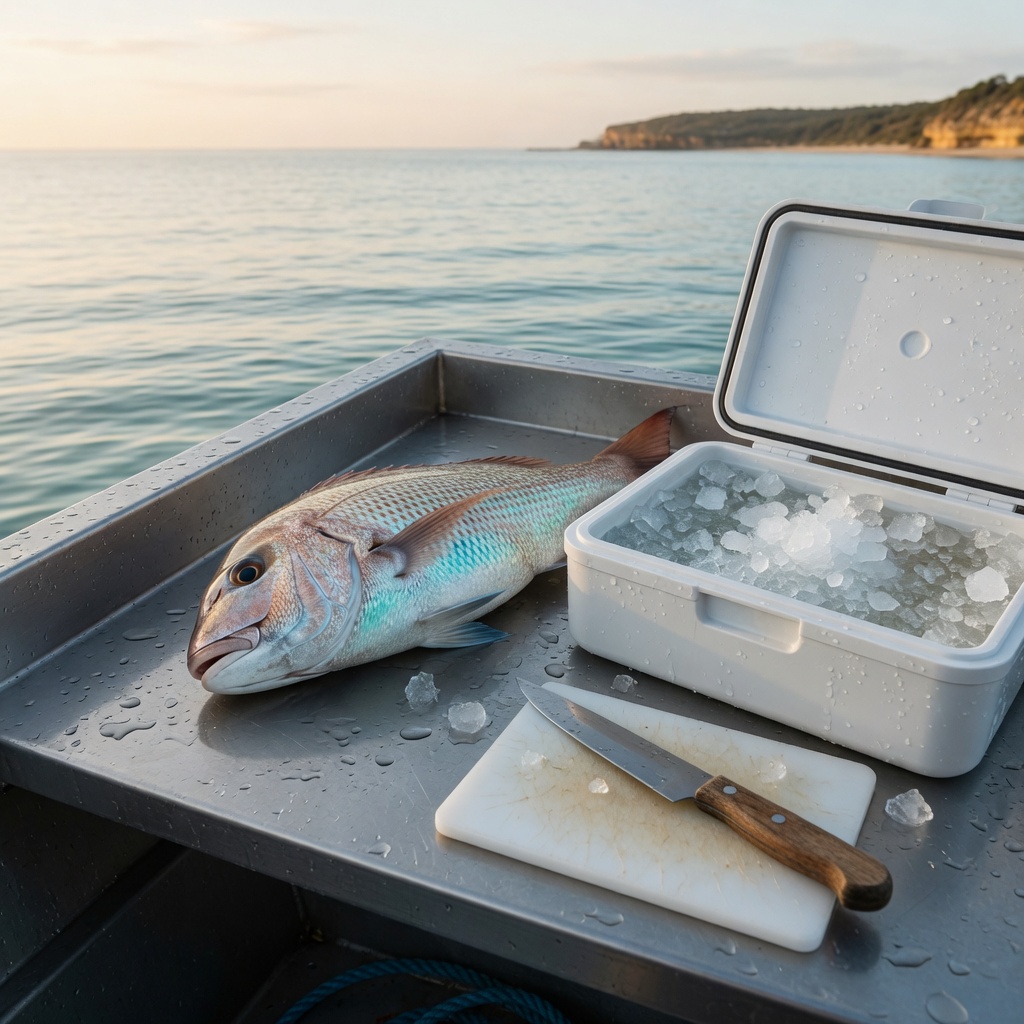
Why Fish Care Starts The Moment You Land It
Good eating fish is made in the first five minutes, not in the kitchen. Warm water temperatures around Sydney and along most of the Australian coast mean flesh quality drops quickly once a fish is out of the water. A snapper thrown into the bottom of the boat on a 28 degree February afternoon will never taste as good as one dispatched, bled and iced straight away, no matter how carefully it is cooked later. Muscle that stays warm and full of blood develops soft texture, a strong metallic taste and a much shorter fridge life.
The same principle applies in reverse for fish you do not intend to keep. Decide quickly: a fish that is going home gets dispatched immediately, and a fish that is going back gets handled with wet hands, supported under the belly and released with minimal air time. Sorting that decision before you unhook is the single biggest improvement most anglers can make to both table quality and release survival.
Dispatch and Bleeding on the Water
Dispatch should be fast and decisive. A firm blow to the top of the head, just behind and above the eyes, stops the fish struggling and prevents the stress-driven build-up of lactic acid that softens flesh. Many anglers follow with iki jime, driving a spike into the brain cavity at the same point, which is common practice on tuna, mackerel and larger reef species.
Bleed the fish next. Cut the gill arches on both sides, or make a short cut into the artery just behind the pectoral fin, then hold the fish head-down for 30 to 60 seconds so blood drains freely. On bigger pelagics such as Spanish mackerel or tuna, a cut at the base of the tail helps as well. Bled fillets are paler, firmer and hold their flavour far longer than unbled ones.
- Small estuary fish such as bream, whiting and flathead: dispatch, bleed, straight into the slurry.
- Medium reef and offshore fish such as snapper and coral trout: dispatch, bleed, consider gutting if the trip is long.
- Large pelagics: dispatch, bleed from gills and tail, gut and gill if you have room, then chill hard.
Ice Slurry: The Cheapest Upgrade in Fishing
An ice slurry is simply ice mixed with enough seawater to make a wet, sloshing brine. It cools fish several times faster than dry ice blocks because the liquid contacts every surface. Aim for roughly two parts ice to one part water and keep the slurry topped up through the day.
Rules of thumb worth following:
- Carry more ice than you think you need. One to two kilograms of ice for every kilogram of expected catch is a sensible start on hot days.
- Pre-chill the esky before you leave. A warm esky steals ice for the first hour.
- Do not leave fish soaking for many hours in fresh water slurry, as flesh can waterlog. Seawater slurry is preferable.
- Drain and re-ice if you are travelling home from a long trip, and never leave the esky in the sun on the trailer.
Fish that go from swimming to slurry in under two minutes will keep well in the fridge for two to three days and freeze noticeably better.
Filleting Without Waste
Work on a clean board with a sharp, flexible blade and a second knife for skinning. Rinse gear, not the fillets, wherever possible: excess washing removes flavour and adds moisture.
Basic Sequence
- Cut behind the pectoral fin down to the backbone, then turn the blade and run along the spine to the tail.
- Lift the fillet and free it over the rib cage, keeping the blade angled slightly down so you shave the bones rather than cutting into them.
- Trim the belly flap and rib bones, then skin by laying the fillet skin-down and running the blade between skin and flesh.
- Check for pin bones with your fingertips and trim any bloodline.
Larger fish often suit cutlets or loins instead. Mulloway, mackerel and tuna are commonly portioned into steaks, while flathead and whiting are quicker to fillet whole with the skin left on for pan-frying. Frames, wings and heads are excellent for stock or a fish curry, and keeping them reduces waste from the fish you have already taken.
Storage, Freezing and Transport
Pat fillets dry, wrap them in food-grade plastic with the air pressed out, then store in the coldest part of the fridge on a tray of ice if you plan to eat within 48 hours. For freezing, portion into meal-sized packs, double-wrap and label with species and date. Vacuum sealing or a light water glaze reduces freezer burn. Most lean white fish holds quality for around three months; oily species such as tailor, Australian salmon and mackerel are better eaten fresh or within about six weeks.
Taking Only What You Will Eat
Careful handling and honest bag management go hand in hand. Keep a feed, release the rest, and prioritise mid-sized fish over big breeding females where the species allows. Bag limits, size limits and closures vary by state and territory and change over time, so check the current rules with the relevant fisheries authority before every trip rather than relying on memory or on what a mate told you last season.
Fish that are released should never have been in the esky decision queue at all: minimise handling time, use a knotless landing net, and for deep-water species be ready to vent or use a release weight to manage barotrauma. Good catch care and good conservation are the same skill applied in two directions.
Questions about technique or gear for your local waters? Contact Australian Fish Species at [email protected] or +61295585271 during Mon–Fri: 09:00 – 17:00 (AEST).

Navigation
See also
FAQ