Fishing After Heavy Rain: Runoff, Turbidity and Fish Response
What Heavy Rain Actually Does to the Water
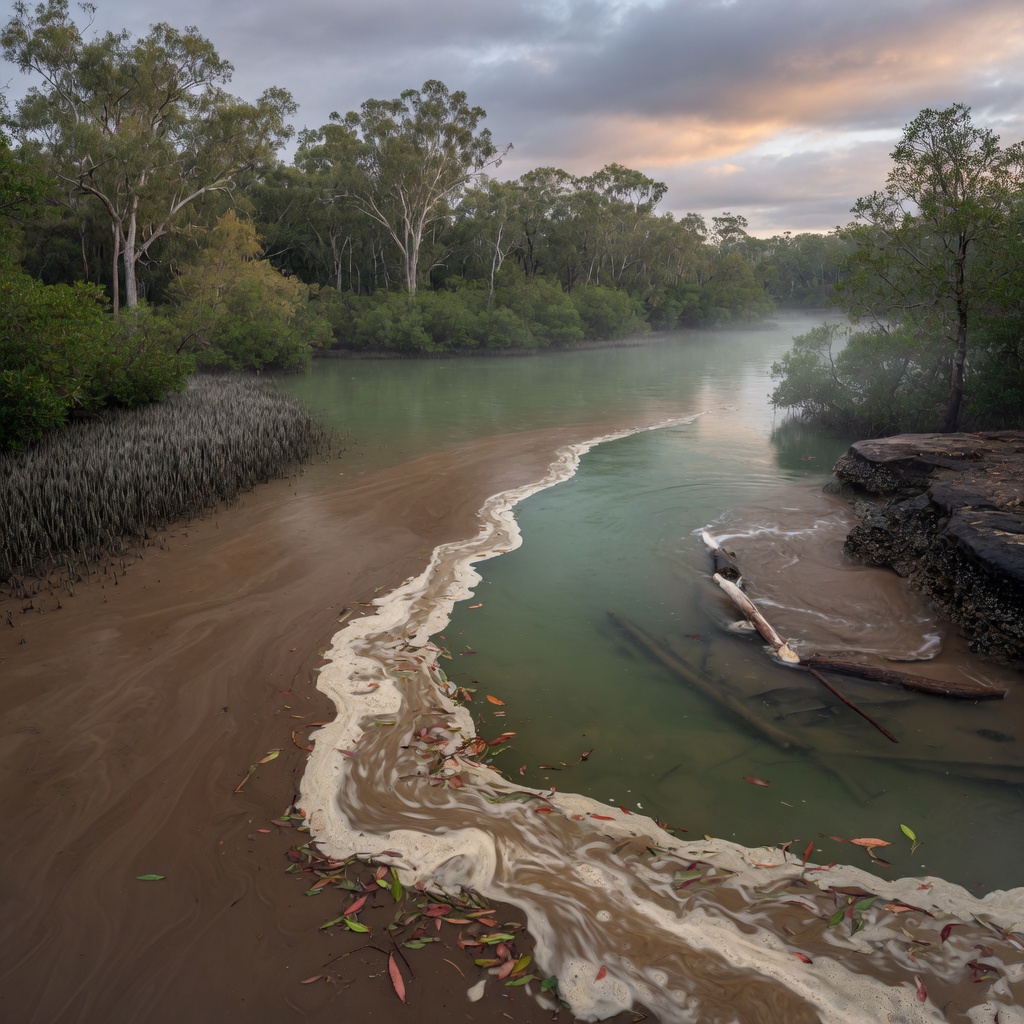
A big rain event changes far more than the colour of the water. Runoff pushes fresh, cooler water into the upper reaches of estuaries and swells inland rivers with sediment, leaf litter and paddock wash. Three things shift at once: salinity, turbidity and flow. Fish respond to each of them differently, so a blanket rule like "don't bother after rain" costs you some of the best sessions of the year.
In an estuary such as the Hawkesbury or Georges River near Sydney, fresh water sits on top of salt water for days, creating a distinct layer. Bream, flathead and mulloway usually drop downstream and hold deeper, under that fresh lid, where salinity is more stable. In inland systems on the western side of the divide, rising dirty water often triggers feeding rather than shutting it down, particularly for Murray cod and golden perch that evolved with boom-and-bust flows.
Turbidity: How Fish Hunt When They Cannot See
Turbid water reduces visibility to centimetres in the worst of it. Fish switch from sight-dominated feeding to a mix of vibration, smell and lateral-line detection. That has direct consequences for tackle choice:
- Vibration beats subtlety. Spinnerbaits, blades, rattling hardbodies and paddle-tail soft plastics with a heavy thump get found. A quiet natural-coloured plastic worked slowly may never be detected.
- Scent earns its keep. Fresh bait, mullet strips, prawn, worms and scented plastics all pull fish in dirty water. Bloody, oily baits work best.
- Contrast over realism. Dark silhouettes such as black, purple and dark green show up against a brown-lit water column; chartreuse and orange also cut through.
- Fish shorter and shallower. Light penetration collapses, so fish move to the top metre or two and hug edges where the water is marginally cleaner.
Timing: The Windows Worth Fishing
The rain event itself is rarely the best time. Look at the whole hydrograph.
- Before the front. Falling barometric pressure ahead of a system often produces an aggressive bite, especially for bass, cod and estuary predators.
- The dirty peak. Debris, logs and rubbish make this dangerous and usually unproductive in estuaries. Inland, the leading edge of a rise can be excellent right against the bank.
- The clearing phase, two to five days after. This is the prime window. Water drops, visibility improves to 30 to 60 cm and predators sit on the edges of colour changes ambushing displaced prey.
- Post-flush estuary bite. Once salinity re-establishes upstream, prawns and baitfish move back through and bream, flathead and mulloway follow them.
Where to Position Yourself
Structure matters more than usual because fish need current relief. Target the inside of bends, back eddies behind rock bars and fallen timber, drain mouths, creek junctions and the seam where dirty water meets cleaner water. In estuaries, the mouth end and any deep hole below a bridge or bend hold fish that have been pushed down. Drain and stormwater outlets flush worms, prawns and insects, and bream in particular will sit right in the wash of them.
In inland rivers and impoundments, floodplain edges and inundated grass become feeding grounds. Golden perch and cod will hunt in surprisingly shallow, muddy water when food is being washed in. Our guidance on native freshwater fish and inland fishing covers how these species use flow events through the Murray-Darling Basin.
Safety First: Rain Changes the Risk Profile
Flood water is genuinely hazardous. Submerged logs, unstable banks, strong unseen current and contaminated water are all real concerns. Do not wade in discoloured, fast-moving rivers, and do not cross flooded causeways. Boaters should be wary of debris rafts and of bar crossings, which can become dangerous when heavy river outflow meets ocean swell. Check the marine forecast and river height information before you leave, and tell someone your plan. After large sewage-affected runoff around urban catchments, consider releasing your catch rather than eating it, and follow any public health advice issued for the waterway.
Practical Rigs for Dirty Water
- Estuary bait: running sinker rig with just enough lead to hold, 8 to 12 lb fluorocarbon leader, fresh mullet or prawn, fished in eddies and holes.
- Inland natives: 3/8 to 1/2 oz spinnerbait or a lipless crank fished tight to timber, heavier leader of 20 to 30 lb to handle snags.
- Soft plastics: 3 to 4 inch paddle-tails on 1/6 to 1/4 oz jig heads, hopped along colour lines and drop-offs.
- Mulloway: live or fresh baits in the deeper downstream holes on the run-out, best in the days after the peak flush.
Conservation Notes
Fish are already stressed by low dissolved oxygen and shifting salinity after big rain, so handle them quickly, keep them wet and support them properly on release. Blackwater events can cause fish kills; if you see distressed or dead fish, report it to your state or territory fisheries authority. Bag limits, size limits and any temporary closures still apply during and after flood events, and they differ between states and change over time, so always verify the current rules with the relevant fisheries authority before you fish.
Questions about a specific catchment or a technique in this guide? Contact Australian Fish Species on +61295585271 or at [email protected] during Mon–Fri: 09:00 – 17:00 (AEST).

Navigation
See also
FAQ