Fly Fishing Basics for Australian Trout, Bass and Saltwater Flats
Why Fly Fishing Suits Australian Water
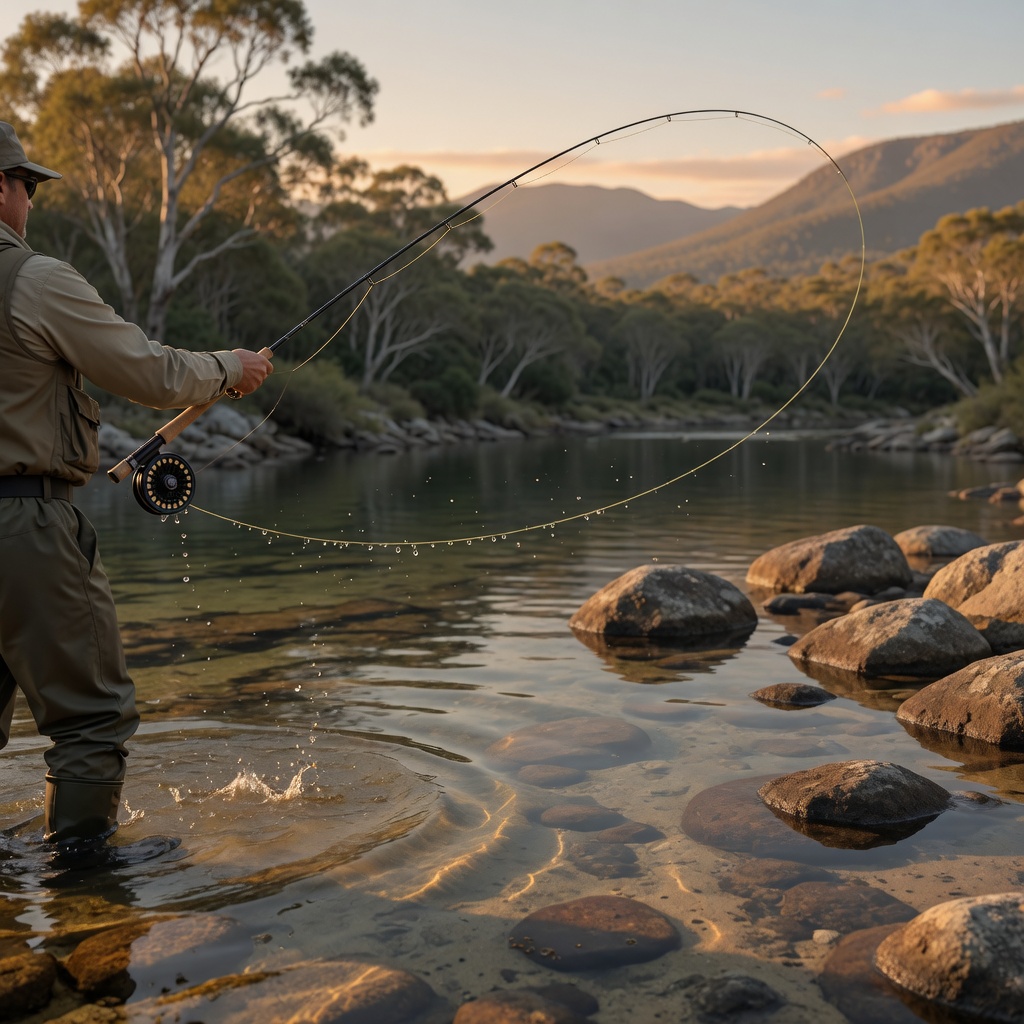
Fly fishing is often filed away as a cold-water pursuit, but in Australia it covers everything from tannin-stained bass creeks an hour from Sydney to snowmelt trout streams in the Snowy Mountains and Tasmania, and the shallow saltwater flats of the north. The method suits our water because so much of it is clear, shallow and full of fish that eat small prey: mayflies and mudeyes in highland lakes, cicadas and beetles over bass pools, prawns and baitfish across sand and weed flats. When fish are feeding in the top metre, a fly delivered softly and drifted naturally will frequently out-fish heavier hardware.
Australian Fish Species treats fly gear as one tool among many. It is not always the best answer — deep reef and offshore game fishing still belong to conventional tackle — but for sight fishing and surface feeding it is hard to beat.
Matching Outfits to the Job
Line weight, not brand, decides whether you enjoy the day. Three practical starting points cover most Australian fly fishing:
- Trout, 4 to 6 weight, 2.7 m rod: streams, tailwaters and highland lakes. A 5 weight is the all-round choice for rivers in NSW, VIC and TAS.
- Australian bass and estuary perch, 6 to 8 weight: enough backbone to throw a bulky popper or a weighted Clouser and to lift a strong fish away from timber.
- Saltwater flats, 8 to 10 weight: flathead, whiting and bream on the sand, plus queenfish, trevally and shots at barramundi in the tropics. Pick a reel with a sealed drag and at least 100 m of backing.
Floating weight-forward lines handle most work. Add an intermediate line for lakes and flats when wind ruffles the surface, and a short sink-tip for deeper river pools. Rinse everything in fresh water after a saltwater session — grit in a reel foot ends more trips than any snapped leader.
Leaders, Flies and Knots
Keep leaders simple. For trout, a 2.7 to 3.6 m tapered leader ending in 1.5 to 3 kg tippet suits most dry fly and nymph work. Bass fishing around snags calls for a shorter 1.8 m leader in 5 to 7 kg so you can steer fish clear of timber. On the flats, run 6 to 9 kg fluorocarbon, and add a short 20 to 30 kg bite section where mackerel, tailor or jacks are about.
A small fly selection covers plenty of situations: a parachute dry, a beadhead nymph and a woolly bugger for trout; a foam popper, a deer hair frog and a dark rabbit-strip streamer for bass; and shrimp patterns plus baitfish flies in tan, olive and chartreuse for salt. Learn four knots properly — nail knot or loop-to-loop for the butt, blood knot for tapers, improved clinch for the fly, and a double uni for adding bite tippet.
Casting That Actually Catches Fish
Distance matters far less than accuracy and timing. Most bass and flats fish are taken inside 12 m. Practise on grass with a piece of wool tied to the leader, aiming at a target the size of a dinner plate, and work on a single false cast then delivery. Two skills pay for themselves quickly: the roll cast, for banks with scrub behind you, and the reach cast, which lays line upstream so a dry fly drifts without dragging.
In wind, drop the rod tip low and cast on your downwind side. On the flats, keep the line stripped into a bucket or on the deck in loose coils and hold the fly ready in your fingers so you can present within two seconds of spotting a shape.
Reading Water and Timing the Bite
Fly fishing rewards patient observation. In rivers, target the seam where fast water meets slow, the head and tail of pools, and undercut banks with overhanging vegetation. Bass sit tight against timber, weed edges and rock walls, feeding hardest at dusk and through warm summer nights when cicadas and frogs are active. On saltwater flats, work the first two hours of a rising tide over sand and yabby banks, then the last of the fall as fish funnel back to deeper channels. Overcast light suits surface work; bright sun with a light breeze is best for sight fishing because you can see fish before they see you.
Seasonally, trout fishing peaks in spring and autumn, bass move to headwaters over summer and drop downstream to spawn in winter, and northern flats fish best through the dry season. Check the marine forecast before any coastal or flats session, and treat wading with the same respect you would give rock fishing — felt or rubber-studded soles, a wading belt and a plan for changing tide levels.
Handling and Releasing Fly-Caught Fish
Fly-caught fish are usually hooked in the jaw and release well, so make the most of it. Use barbless or crushed-barb hooks, keep fights short with appropriate tippet, wet your hands or use a knotless rubber net, and support larger fish horizontally. Trout in warm, low-oxygen summer water tire quickly, so avoid fishing warm afternoons in shrinking pools. For a wider look at inland species, seasons and access, see our guide to native freshwater fish and inland fishing.
Bag limits, size limits, closed seasons and permit requirements for trout and native species vary by state and territory and change over time. Always confirm current rules with the relevant state or territory fisheries authority before you fish. Questions about gear choices or local conditions are welcome at [email protected] or +61295585271 during Mon–Fri: 09:00 – 17:00 (AEST).
Navigation
See also
FAQ