Gear Rules: Nets, Traps, Crab Pots and Hook Restrictions
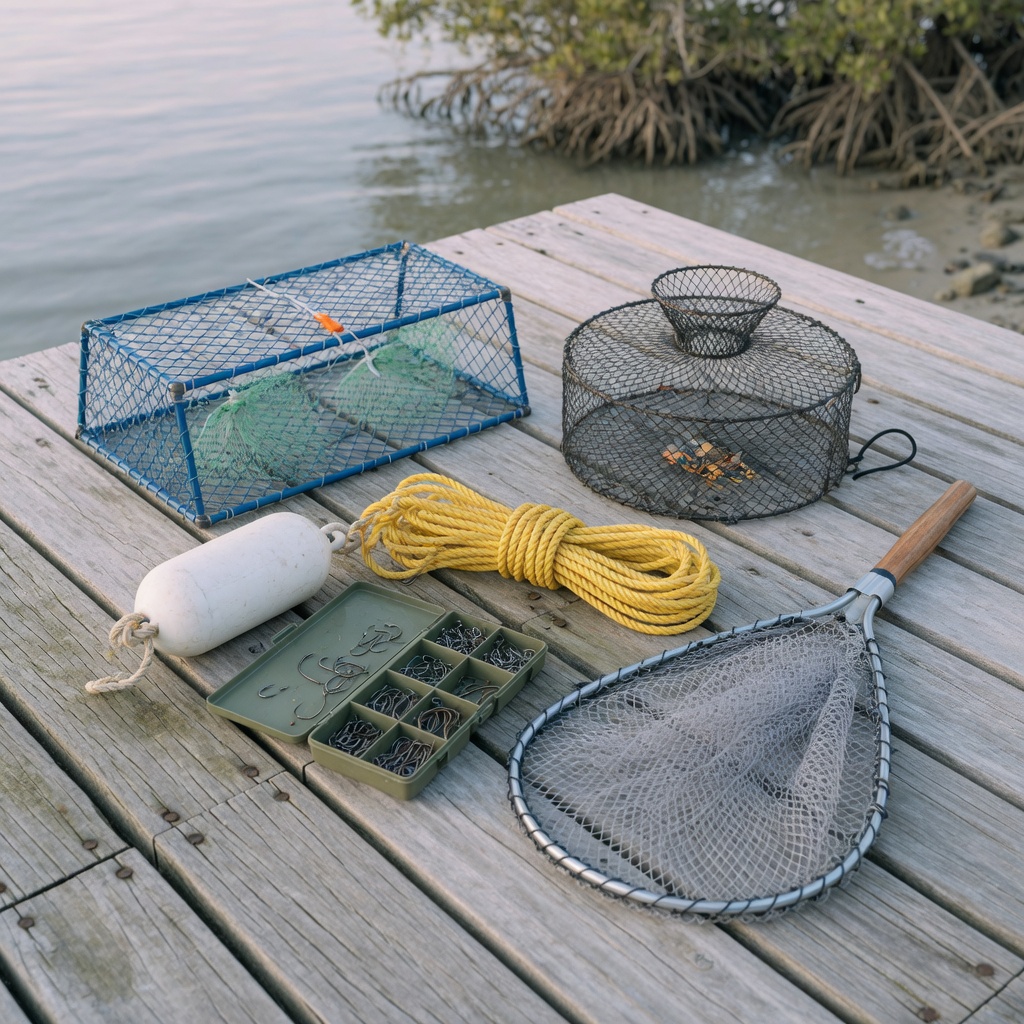
Why gear rules exist
Most anglers understand bag and size limits, but gear rules trip up just as many people. Nets, traps and certain hook types are regulated because they can take fish indiscriminately, damage habitat, entangle wildlife, or keep working long after the owner has gone home. Every state and territory sets its own list of permitted gear, the number of items one person may use, how each item must be marked, and where it may be used. Around Sydney and the wider NSW coast the rules differ again between ocean waters, estuaries, and closed or protected zones inside marine parks and aquatic reserves.
This guide explains the categories of gear regulation so you can read your local rules with confidence. It is not a substitute for the current published rules: gear lists, dimensions and closures change, so always confirm the detail with the relevant state or territory fisheries authority before you set anything in the water.
Nets: what is usually allowed and what is not
Recreational net use is tightly limited. The gear most commonly permitted for general recreational use includes:
- Landing nets and dip nets used to lift a hooked fish from the water. These are almost always legal, and a knotless, rubberised mesh does far less damage to scales and slime layers.
- Hand-thrown cast nets for bait, permitted in some jurisdictions and prohibited or restricted in others, often with limits on drop, mesh size and the waters where they may be used.
- Bait or push nets with prescribed maximum dimensions, generally for prawns, poddy mullet and similar bait species.
By contrast, mesh nets, gill nets and haul nets are commercial gear in most places and are either banned outright for recreational fishers or allowed only under specific regional permits. Setting a net across a creek mouth, tying one off and leaving it unattended is a serious offence in every state. If you plan to gather live bait for mulloway or flathead, check whether a hand-operated net is permitted in that exact waterway, because bait net closures are common in nursery estuaries.
Traps: yabby traps, bait traps and shrimp traps
Enclosed traps are a major focus of freshwater rules because they drown platypus, rakali (water rats) and turtles. Opera-house style traps with rigid entrance funnels have been prohibited in a growing number of inland waters, with open-top or hoop-style designs required instead. If you fish the Murray-Darling Basin for yabbies, treat this as a rule you must verify each season rather than assume.
Typical trap conditions to look for include the maximum number of traps per person, minimum entrance ring or funnel sizes, maximum trap dimensions, a requirement that the trap be tagged with your name and contact details, and rules on how often the trap must be checked. Some waters allow traps only for yabbies and shrimp and prohibit their use for finfish altogether.
Practical trap habits
- Set in shaded, weedy margins rather than open silt, and lift traps at least once a day.
- Use a float and a marked tag so the trap can be identified and retrieved.
- Never leave gear behind at the end of a trip; abandoned traps keep killing.
Crab pots, dillies and witches hats
Crabbing rules vary sharply between states, particularly for mud crabs in QLD and the NT and blue swimmer crabs in NSW, SA and WA. Common requirements include:
- A pot limit per person, often one to four items, counted per person rather than per boat in some jurisdictions.
- Surface marking: a solid, clearly visible float carrying your surname and address or a supplied identification tag, with rope kept as short as practical to reduce entanglement.
- Design limits: maximum pot dimensions and entrance funnel sizes, and restrictions on rigid versus collapsible designs.
- Placement rules: no setting in navigation channels, boat ramps, or within closed waters and marine park sanctuary zones.
- Species protections: female crabs and undersized crabs must be returned, and in most places it is illegal to remove eggs or to keep a crab in pieces.
Measure crabs across the carapace with a proper gauge, handle them from the rear of the shell, and return breeders quickly and gently. Setting pots in Sydney estuaries means also thinking about heavy boat traffic; a well-weighted pot with a bright, compliant float is safer for everyone.
Hook restrictions and why circle hooks matter
Hook rules generally cover the number of hooks per line, the use of gangs, restrictions on set lines and unattended lines, and the requirement for non-offset circle hooks when bait fishing for certain species or in certain waters. Circle hook conditions are increasingly attached to reef and offshore fisheries because they hook in the jaw rather than the gut, which dramatically improves survival of released fish.
Other common hook and line conditions include limits on the number of rods you may fish at once, bans on jagging or foul-hooking fish, restrictions on lures with more than a set number of hook points in some trout waters, and gear rules attached to artificial-only or fly-only sections of rivers. In game fishing, many tournaments and codes of practice go further than the law by requiring single hooks on lures and heavy leader limits.
Release-friendly rig choices
- Use circle hooks for soaked baits so fish hook themselves in the corner of the mouth.
- Crush or replace barbs on trout and bass lures to shorten handling time.
- Match hook size to mouth size: an oversized hook on a bream bait causes more damage than it prevents.
- Carry long-nose pliers, side cutters and a release weight for barotrauma-affected reef fish.
Where gear is banned outright
Even legal gear becomes illegal in the wrong place. Watch for aquatic reserves and marine park sanctuary zones, artificial reef and infrastructure exclusion areas, fish habitat protection areas, drinking water storages, and seasonal spawning closures on rivers and estuaries. Signage at popular ramps is helpful but not always current, so check zoning maps before you launch.
Staying compliant and current
Gear rules are the part of the rulebook most likely to change between seasons, especially trap designs and crab pot marking. Treat the official state or territory fisheries website as the single source of truth, keep a screenshot or the current guide on your phone, and read it alongside our overview of fishing rules, licences, bag and size limits. If in doubt about a specific waterway, ring the fisheries information line before you set gear rather than after an inspection.
Questions about a species guide or a technique covered on Australian Fish Species? Reach us at [email protected] or +61295585271 during Mon–Fri: 09:00 – 17:00 (AEST). We can point you to the right official source, but we cannot interpret the law for your situation.

Navigation
See also
FAQ