Golden Perch and Yellowbelly: Habits, Habitat and Peak Bite Times
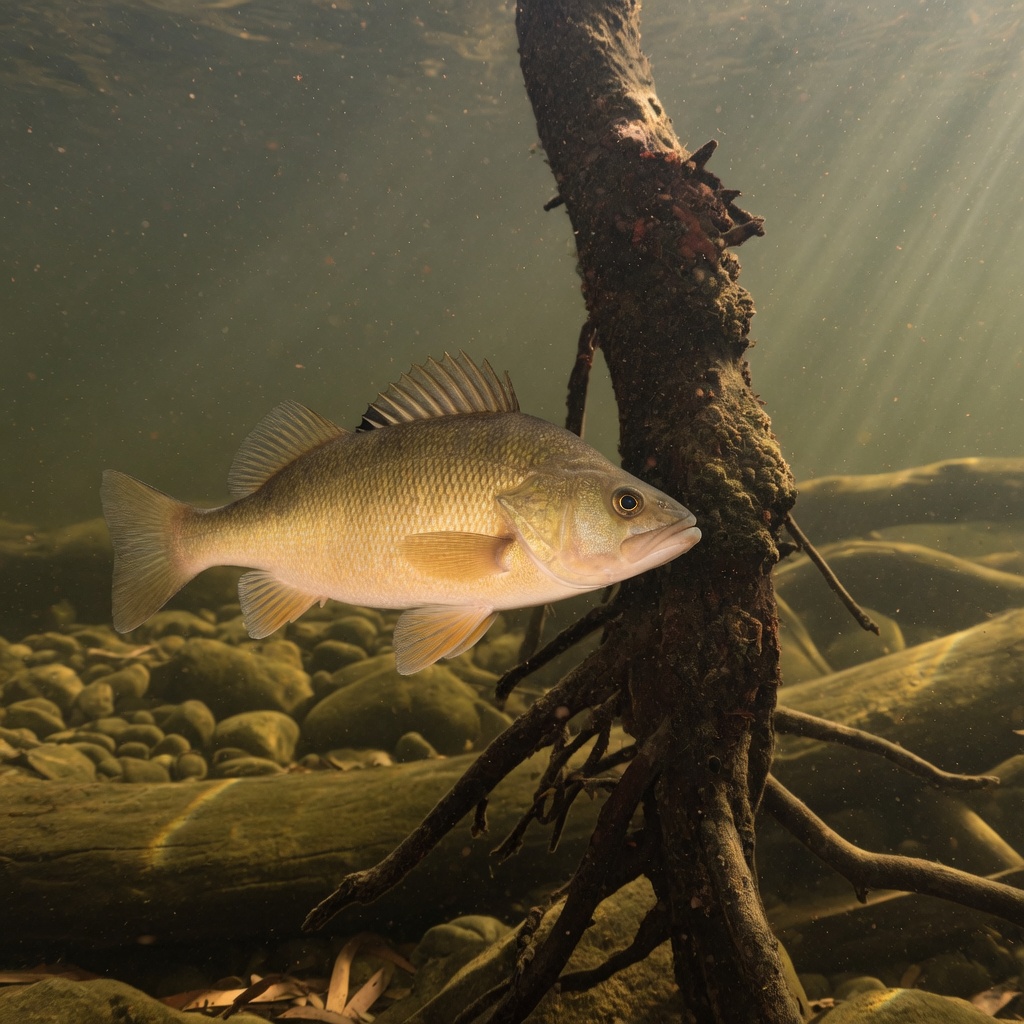
Knowing the Fish: One Species, Two Names
Golden perch (Macquaria ambigua) is the same fish anglers across the inland call yellowbelly, and in parts of Queensland simply callop. It is a deep-bodied native of the Murray-Darling Basin with a blunt forehead, small eyes set forward, and a colour range from olive-bronze in tannin-stained rivers to bright buttery gold in clear impoundments. Fish of 30 to 45 cm are common; larger specimens past 50 cm are prized and usually old, slow-growing females holding on structure they have used for years.
Unlike trout or bass, golden perch are built for turbid, warm, slow-moving water. They hunt largely by sound, vibration and lateral-line sensitivity rather than sight, which explains why they will still feed in coffee-coloured floodwater and why noisy lures, rattling blades and scent-heavy baits work so well.
Habitat: Where Yellowbelly Actually Sit
Golden perch are ambush feeders that hold tight to hard structure and edges. In rivers, look for snags, undercut banks, rock bars, bridge pylons and the slack water behind current breaks. In impoundments, they use standing timber, submerged creek beds, rocky points, weed edges and thermoclines, often suspending in open water in schools during summer.
- Rivers: deep holes below rapids, log jams, and the downstream side of weirs where food funnels through.
- Lakes and dams: timber lines in 4 to 12 m, points that drop quickly, and flats adjacent to deep water at dawn.
- Small creeks and billabongs: single fallen trees can hold several fish; work each snag from multiple angles.
Golden perch tolerate a wide temperature band but feed hardest between roughly 18 and 26 degrees. Below about 14 degrees they become sluggish, hold deep and require slow presentations worked almost on the spot.
Seasonal Behaviour Through the Southern Hemisphere Year
Spring is the awakening. As water climbs past 15 degrees, fish shift from deep winter holes onto structure closer to the bank and begin feeding aggressively on shrimp, yabbies and small fish. Rising water and a warming trend in spring can trigger upstream movement in river systems, with fish covering considerable distances.
Summer is the peak. Long daylight, warm water and abundant food mean multiple feeding windows each day, though the middle of hot, still afternoons is often flat. Autumn produces some of the heaviest fish of the year as they feed up before cooling water slows them. Winter is the hard season: fish school tightly in the deepest available water, bites are short and subtle, and vertical presentations dropped right on top of them out-fish casting.
Peak Bite Times and the Triggers Behind Them
Golden perch are not tidal fish, but the same principles that drive estuary feeding apply inland: fish respond to change. Predicting the bite means stacking as many favourable triggers as possible rather than relying on one.
- Light change: the first and last hour of daylight are reliable. In clear impoundments, night fishing around dark moon phases can be outstanding.
- Moon phase: many inland anglers rate the days either side of the new and full moon highest, with moonrise and moonset overlapping dawn or dusk being the pick.
- Barometric pressure: a falling barometer ahead of a change often sparks a short, intense feed. Sharply rising pressure behind a cold front usually shuts fish down for a day or two.
- Water level and flow: a small rise in a river, or environmental flows released from a weir, brings food into the system and switches fish on. Fast-falling water pushes them back to deep structure.
- Wind: a light breeze pushing into a rocky point or timber edge concentrates bait and makes those banks worth fishing first.
Keep a simple log: date, water temperature, level, moon, barometer and where fish came from. Two or three seasons of notes on your local water will out-predict any generic table.
Techniques That Match the Behaviour
Because golden perch hold hard against structure, accuracy beats coverage. Lipless crankbaits and metal blades hopped along timber lines suit lakes; small hard-bodied divers cast tight to snags and paused work well in rivers. Soft plastic paddle-tails and grubs on 1/8 to 1/4 oz jig heads let you slow right down in cold water. Bait anglers do well with live shrimp, yabbies, worms and scrub worms fished on light running sinker rigs close to structure, with just enough weight to hold position.
- Use fluorocarbon leader of 8 to 12 kg around timber; abrasion, not fish size, breaks most lines.
- Work each snag from three casts minimum before moving on.
- In winter, a lure that vibrates on the drop and can be shaken vertically often produces the only bite of the day.
Handling, Release and Rules
Golden perch are long-lived and slow to replace in wild river populations, so treat big fish carefully. Support the body horizontally, keep them wet, use knotless landing nets, and release quickly in warm water when oxygen levels are low. Fish brought up from deeper water in impoundments can show signs of barotrauma; venting or weighted release methods should follow current advice from your state fisheries authority.
Size limits, bag limits and closed seasons for golden perch differ between New South Wales, Victoria, Queensland, South Australia and the Australian Capital Territory, and stocked impoundments may have their own permit requirements. Rules also change over time, so always confirm the current limits with the relevant state or territory fisheries authority before you fish. For questions about the guides on Australian Fish Species, contact us at [email protected] or +61295585271 during Mon–Fri: 09:00 – 17:00 (AEST). Anglers based in Sydney typically travel west across the ranges to reach golden perch water, so plan for long drives, remote launch ramps and self-sufficiency in fuel, water and communications.

Navigation
See also
FAQ