Hardbody Lures for Barramundi and Murray Cod: Depth and Action
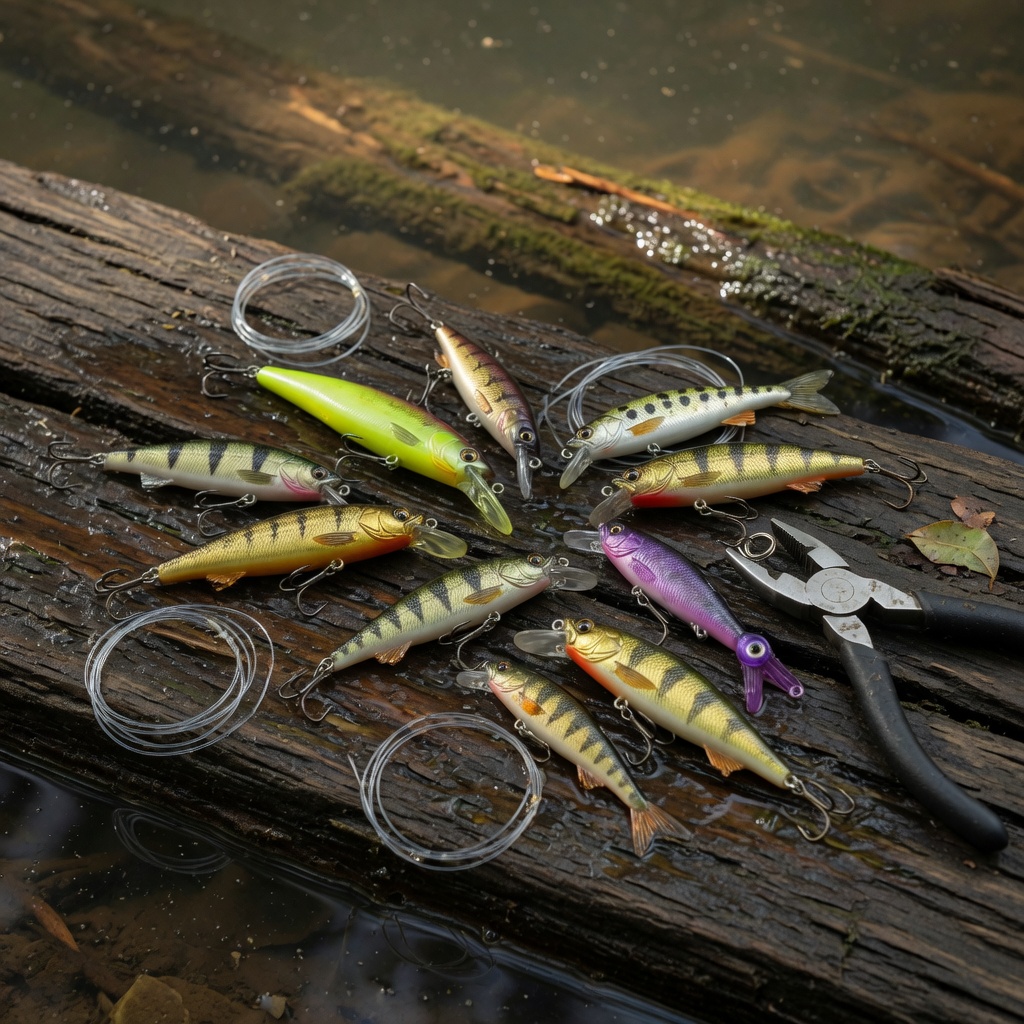
Why depth matters more than colour
Barramundi and Murray cod are ambush predators that hold tight to structure and rarely chase a lure far from cover. That means the single most important decision you make with a hardbody is how deep it runs, and how close that running depth sits to the snag, rock bar, drop-off or weed edge the fish is using. A lure working 300 mm above a submerged log will be ignored; the same lure ticking the timber will draw a strike. Choose the depth first, then worry about action, then colour.
Read the water before you tie anything on. In tidal barra country, note the height of rock bars, drains and creek mouths at the stage of tide you are fishing. In Murray cod water, sound out the base of log jams, undercut banks and rocky pools. Then match a lure that runs slightly shallower than the deepest structure so you make contact without wedging every second cast.
Reading a hardbody: bib, buoyancy and body shape
- Bib angle and length: a long bib set close to horizontal digs deep; a short, steep bib keeps the lure shallow and lets it deflect off timber.
- Buoyancy: floating lures back out of snags when you pause; suspending models hang in the strike zone, which suits cool water and lethargic fish; sinking models let you count down over deeper holes.
- Body profile: narrow minnows give a tight, fast roll that mimics mullet and bony bream; fat, short-bodied cod lures push more water with a slow, wide wobble that carries through turbid flows.
- Rattles versus silent: rattling chambers help in dirty water and low light; a silent lure often outfishes noisy models in clear, pressured pools.
Depth bands and where they fit
- Shallow, 0.5–1 m: flooded grass edges, snag tops, rock bars on a run-out tide, and shallow cod pools in summer. Fish these with a slow roll and long pauses.
- Mid, 1.5–3 m: the workhorse band for creek bends, drain mouths, timber-lined river banks and weir walls. Most barra and cod strikes come here.
- Deep, 3–6 m: deep holes, bridge pylons, dam timber and the base of rock bars in cold weather or bright midday conditions. Trolling or long casts with a steady grind are the usual answers.
Retrieves that trigger strikes
Neither species wants a lure cranked straight past its nose. Use the retrieve to hold the lure in the zone longer. A proven barramundi pattern is three or four fast winds to dig the lure down, then a long pause of two to five seconds, then a short twitch. The strike usually comes on the pause or the first move afterwards. For Murray cod, slow is the rule: a steady, almost lazy roll that lets the bib bump timber, with occasional stalls so the lure rises and hovers.
Deliberate deflection is a genuine technique, not an accident. Aim casts so the lure clips a log or rock and jumps sideways. That erratic change in direction imitates a panicked baitfish and is often the difference between a follow and a hook-up. Keep the rod tip low and the line tight enough to feel contact.
Tuning, hooks and leaders
Straight-tracking lures catch more fish. If a hardbody swims off to one side, gently bend the tow point the opposite way in tiny increments. Upgrade split rings and trebles on anything you intend to throw at big barra or cod, and check hook points after every snag contact. Barramundi mouths and cod gill plates destroy soft wire.
Leaders should be heavy enough for structure, not for the fish alone. Around 40–60 lb fluorocarbon or hard nylon suits most barra work, stepped up for heavy timber, while cod anglers commonly run similar or heavier leaders when casting into log jams. Keep leaders short enough to cast cleanly and re-tie whenever you feel abrasion. For more on knots, terminals and rig selection across other species, see our baits, lures, rigs and leaders guides.
Seasonal and water-clarity adjustments
In the northern wet-season build-up, warm water and dirty run-off favour larger, louder, mid-depth lures worked with pauses near drain mouths. In the cooler dry months, downsize, slow everything and lean on suspending models. Murray cod feed hardest in the warmer months from spring through autumn, with dawn, dusk and warm overcast afternoons the best windows; in winter, deep, slow presentations in holes are more productive than shallow casting.
Colour is your last variable. Natural silver, gold and bony bream patterns suit clear water; high-contrast purple, black-and-gold or bright chartreuse patterns help in tannin-stained or flooded water. Carry a small spread of depths in each colour family rather than a huge box of one depth.
Handling and conservation
Both species are heavily valued and both benefit from careful release. Use knotless landing nets, wet hands, support the fish horizontally and avoid lifting large cod by the jaw. Unhook in the water where possible and let the fish swim off under its own power. Size limits, bag limits and closed seasons for barramundi and Murray cod differ by state and territory and change over time, so always confirm the current rules with the relevant fisheries authority before you fish. Australian Fish Species publishes technique guidance only, not regulatory advice. Questions or local reports from around Sydney and beyond are welcome at [email protected] during Mon–Fri: 09:00 – 17:00 (AEST), or by phone on +61295585271.

Navigation
See also
FAQ