Kayak Fishing Setup for Estuaries and Inshore Waters
Why Kayaks Suit Australian Estuaries
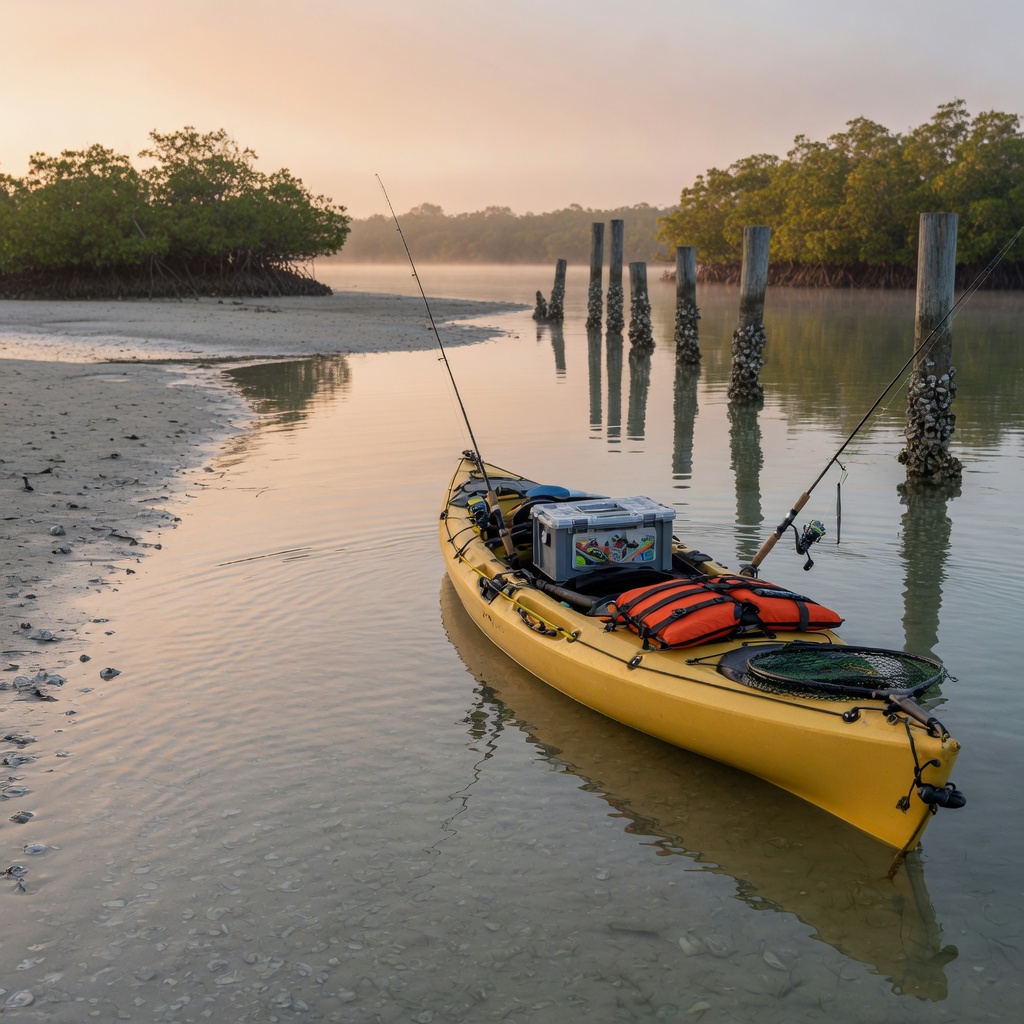
A kayak puts you in water that boats cannot reach and land-based anglers cannot cast to: shallow sand flats, snaggy mangrove edges, oyster racks, weed beds and the skinny back reaches of a creek. Around Sydney, systems such as the Hawkesbury, Georges River, Pittwater and Botany Bay all hold bream, flathead, whiting and the occasional mulloway within a short paddle of a public ramp. Drifting quietly with the tide also means less noise and pressure on fish that spook easily in less than a metre of water.
The trade-off is exposure. A kayak has no cabin, limited freeboard and a small margin for error when wind, tide and boat wash line up against you. Setting the craft up properly is as much about safety and comfort as it is about catching fish.
Choosing a Hull for Sheltered Water
Most estuary anglers do best on a sit-on-top hull between 3.2 and 4.2 metres. Shorter hulls turn quickly and suit tight creeks; longer hulls hold a straighter line and cover distance faster when you are chasing a short feeding window.
- Stability first. A wider hull (roughly 75 to 90 cm beam) lets you stand to cast at flathead and whiting on the flats, which is a real advantage in clear shallows.
- Pedal or paddle. Pedal drives free your hands for casting and help you hold position against tidal flow. Paddle craft are lighter, cheaper to maintain and simpler to carry over a rock ledge or through mangroves.
- Sealed hatches and scupper plugs. Keep gear dry and reduce water sloshing around your feet on choppy crossings.
- Weight you can actually lift. If you cannot load it alone, you will use it less. Consider a trolley for long carries from the car park.
Tackle That Earns Its Space
Space is limited, so choose combos that cover several species rather than a rod for every scenario. Two rods is plenty for most sessions.
- Light spin combo: 2.1 m rod rated 2 to 4 kg with a 2500 size reel, 4 to 8 lb braid and a 6 to 10 lb leader. This handles bream, whiting and small flathead on soft plastics, blades and small hardbodies.
- Medium combo: 2.1 m rod rated 4 to 8 kg with a 4000 size reel, 15 to 20 lb braid and a 20 to 30 lb leader for bigger flathead, mangrove jack around structure, school mulloway and stray kingfish near the moorings.
- Compact tackle tray: jig heads from 1/16 to 1/4 oz, a few 2.5 to 4 inch paddle-tail and curl-tail plastics, one shallow and one deep hardbody, a vibe, and a small selection of hooks and sinkers for bait.
- Landing gear: a short-handled net, long-nose pliers, a hook cutter, a measuring brag mat and a wet cloth for handling fish you intend to release.
Leash everything. A rod or paddle that goes over the side in a running tide is usually gone. Simple bungee leashes on rods, paddle and net solve most losses.
Safety Setup Before You Launch
Treat the kayak as a small vessel and rig it accordingly. Requirements vary by state and waterway, so confirm what applies where you paddle.
- Wear a lifejacket, not stow it. A slim inflatable or Level 50 style vest is comfortable enough to wear all day.
- Carry communication. A phone in a waterproof pouch on your person, plus a whistle. For open inshore water, a handheld VHF and a personal locator beacon add a real margin.
- Be seen. A high-visibility flag, bright shirt or hat, and a white all-round light if there is any chance of low light. Ferry and boat traffic in Sydney harbours does not expect a low, dark object.
- Check the forecast twice. Wind speed, direction, gust strength and any change during your session matter more than swell in an estuary. An offshore breeze that pushes you away from the launch is the classic trap.
- Have a plan B landing. Know two or three beaches or ramps you can reach downwind if conditions turn.
Avoid bar crossings and exposed rock platforms in a kayak unless you are highly experienced with the specific location. Our wider estuary and inshore fishing guidance covers reading tide lines and structure once you are safely on the water.
Anchoring, Drifting and Holding Position
Controlling drift is what separates productive kayak sessions from frustrating ones.
- Drift with the flow. Cast ahead of the kayak into likely water and let the tide carry you over new ground. Ideal for long sand flats and drop-offs.
- Drogue or drift chute. Slows you down in wind so lures stay in the strike zone longer.
- Stake-out pole. In under 1.5 m of sand or mud, a simple pole pushed through a scupper holds you silently over a hole or an oyster rack edge.
- Anchor trolley with a light folding anchor. Lets you set the anchor point at bow or stern so you sit side-on or nose into the current. Never anchor from the side of the hull in fast flow, and always be able to release the line instantly.
Timing the Session Around Tide and Light
Plan launches so the paddle out works with the tide and the paddle home does not fight it. In most Sydney estuaries, the last two hours of a rising tide and the first two of the fall concentrate bream and whiting on flats and drains, while flathead sit in the deeper edges waiting for bait pushed off the shallows. Dawn and dusk in spring and summer bring the best surface activity; winter mornings often fish better once the sun has warmed the shallows. For a deeper look at moon, tide and weather windows, see our species and technique articles alongside this estuary and inshore section.
Handling and Releasing Fish from a Kayak
Fish handled at water level suffer less damage than fish lifted into a boat. Keep the fish in the net beside the hull, wet your hands, support the belly, and unhook with pliers while the fish stays low. Measure quickly on a wet brag mat and return it head-first. Deep-hooked fish are often better released with the hook cut and left in place.
Size limits, bag limits and closed seasons differ by state and territory and change over time. Check the current rules with the relevant fisheries authority before you keep anything, and carry a measuring device you trust.
Questions About Gear or Local Waters
Australian Fish Species builds these guides for anglers working real Australian systems, from Sydney estuaries to remote northern creeks. If you want clarification on a rig, a species or a launch point, reach us on +61295585271 or [email protected] during Mon–Fri: 09:00 – 17:00 (AEST).
Navigation
See also
FAQ