Land-Based Game Fishing for Longtail Tuna and Mackerel
Why Land-Based Game Fishing Rewards Patience
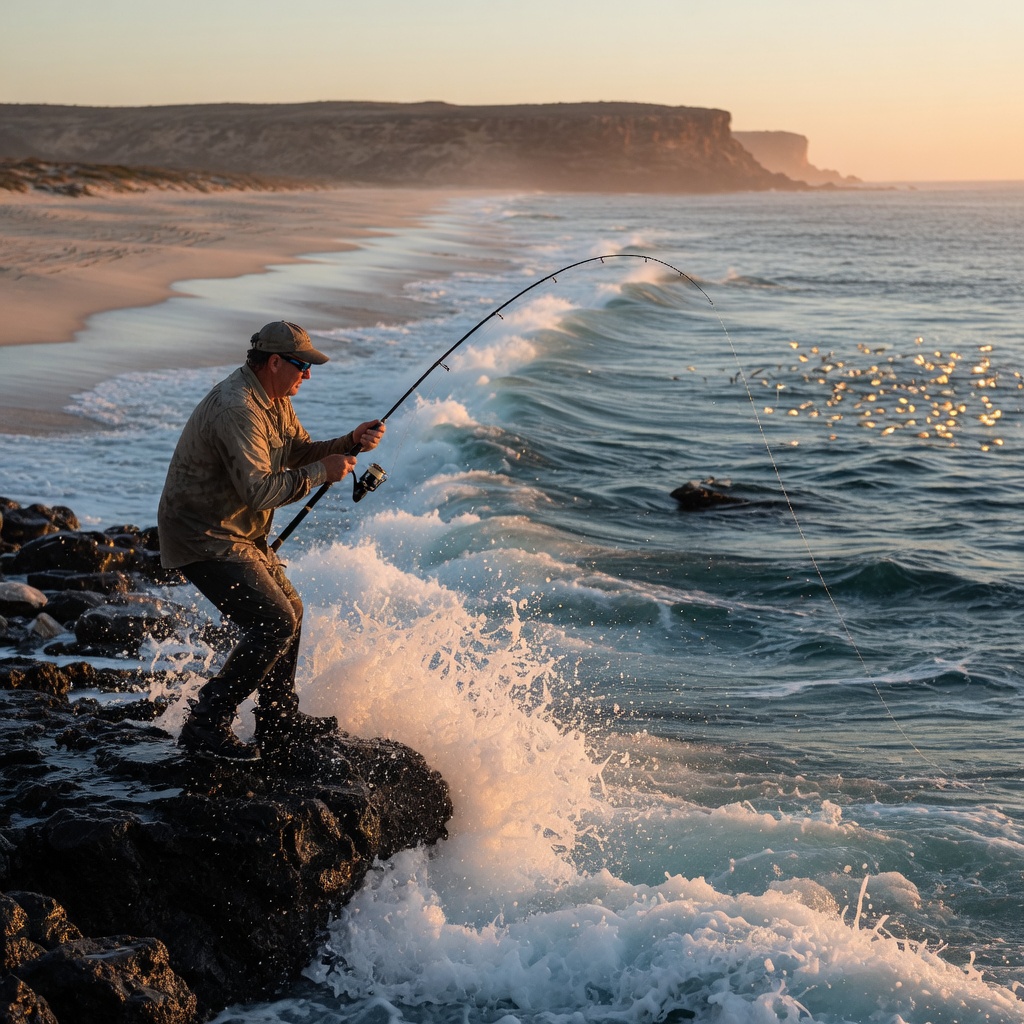
Land-based game fishing, or LBG, is the art of hooking pelagic fish from a fixed platform of rock or sand. Longtail tuna and Spanish mackerel are the two headline targets for most Australian shore-based anglers, and both can be taken without a boat when bait, current and season line up. The trade-off is simple: you cannot chase the school, so you must position yourself where the fish already travel. That means reading the water, learning a handful of ledges or beach gutters properly, and turning up repeatedly rather than sampling twenty spots once each. Australian Fish Species treats LBG as a long-game discipline built on observation.
Reading the Season and the Water
Longtail tuna typically move down the east coast with warming water from late spring into autumn, following whitebait, small pilchards and hardyheads. Around Sydney and the wider NSW coast, the best windows tend to open once inshore temperatures push past the low twenties and the current pushes clean blue water hard against the rocks. Spanish mackerel prefer warmer tropical and subtropical water and are most reliable from the Queensland, NT and northern WA coastlines, often through the drier, clearer months.
On the day, look for these signals before you rig up:
- Bait presence. Terns and gannets working tight, or nervous bait flicking on the surface, beat any tide table.
- Water colour and clarity. Clean, dark blue water sliding along a headland is worth hours; dirty green wash rarely holds pelagics.
- Current edges. A visible line where current meets back-eddy concentrates bait and gives predators an ambush lane.
- Tide phase. The last of the run-in and the first two hours of the fall often move bait past prominent points; add the hour either side of dawn and dusk for feeding intensity.
- Swell and wind. A moderate swell can help, but onshore wind chop kills casting distance and safety alike.
Tackle That Survives a Big Fish From the Rocks
Land-based pelagics are lost to gear failure more often than to bad luck. A workable spin outfit is a 9 to 10 foot rod rated around 15 to 24 kg, matched to a large spinning reel with at least 300 metres of 30 to 50 lb braid and a smooth, sealed drag. For longtail tuna, a 40 to 60 lb fluorocarbon leader of two to three metres is a fair compromise between bite shyness and abrasion resistance on barnacled rock.
Spanish mackerel change the equation because of their teeth. Use a short single-strand wire trace of about 30 to 40 lb, kept as short as practical so lure action is not ruined, or a heavier fluorocarbon bite section if the fish are fussy. Carry a long-handled gaff or a cliff gaff with rope on high ledges, and always check hooks, split rings and knots before each session rather than after a bust-off.
Lures, Baits and Presentation
Longtail tuna feed by sight and are famously selective when locked onto small bait. Match the hatch:
- Metal slugs and stickbaits of 20 to 60 g, retrieved fast and flat, for busting schools.
- Slim floating stickbaits worked with long sweeps when fish cruise without smashing bait.
- Small soft plastics on jig heads when the bait is tiny and the tuna refuse everything larger.
For Spanish mackerel, a live or fresh dead bait suspended under a float or balloon is the classic land-based approach. Rig a pilchard, garfish or slimy mackerel on a two-hook wire rig set to swim two to four metres down, and let the current carry it out along a headland edge. High-speed spinning with heavy metals also works when mackerel are chopping bait against the stones. Bleed and ice every fish you intend to keep immediately; both species have soft, rich flesh that spoils quickly in the sun.
Landing, Releasing and Handling
Landing is where LBG sessions succeed or fail. Plan the landing before you cast: identify a wash zone, a gaffing platform or a beach corner, and know how you will get the fish up without standing in the strike zone of a surging swell. On beaches, use the wave energy, timing a set to slide the fish onto wet sand.
If you intend to release a longtail, keep the fight short, avoid dragging the fish over dry rock, support it in the water facing into current and let it swim off under its own power. Tuna that have been fought to exhaustion in warm water release poorly, so make an honest decision early about whether the fish is going home with you or going back.
Rock Fishing Safety Comes First
Every land-based game session should begin with a safety plan, not a tackle list. Check the marine forecast and swell period, not just wave height, because long-period swell produces sets far larger than the average. Wear a lifejacket and non-slip boots, fish with a mate, tell someone your location and expected return, and spend the first ten minutes watching the ledge before you commit. Never fish a platform that is already washing, and never turn your back on the sea to unhook a fish.
Carry a rope and float, a torch for pre-dawn walks in, and a charged phone in a waterproof pouch. For more on platform selection, swell interpretation and beach access, see our broader guidance on beach, rock and land-based fishing.
Rules, Limits and Local Knowledge
Bag limits, minimum sizes, closures and gear restrictions for tuna and mackerel differ between states and territories, and they change over time. Some headlands sit inside marine park zones with additional restrictions, and certain platforms in NSW carry mandatory lifejacket requirements. Always confirm current rules with the relevant state or territory fisheries authority before you fish, and treat any printed or online summary, including ours, as background rather than the final word.
Beyond the regulations, the most valuable asset is a notebook. Record date, tide, wind, water colour, bait type, temperature and result for every session. After a season or two the pattern for your local ledge becomes obvious, and that pattern is worth more than any new lure. Questions, corrections or local observations are welcome at [email protected] or +61295585271 during Mon–Fri: 09:00 – 17:00 (AEST).

Navigation
See also
FAQ