Light Tackle Whiting and Bream from the Beach
Why light tackle beats heavy gear in the surf
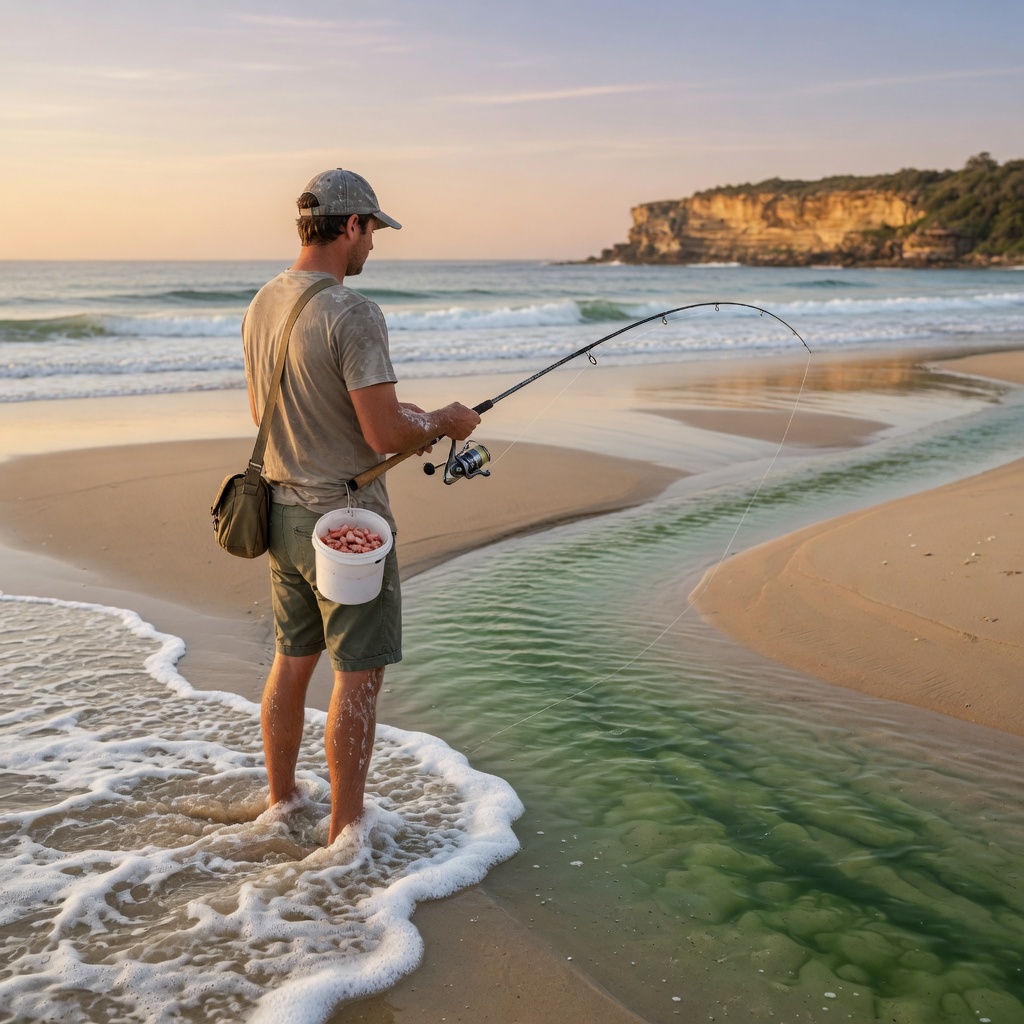
Most anglers turn up to a Sydney beach with a 12 ft surf rod and a 60 g star sinker, then wonder why the bites feel like nothing at all. Sand whiting and bream in the wash are close-range, fast-moving feeders. They work the shallow foam within 10–30 m of your boots, picking at worms, nippers and small crabs turned over by each wave. A rod of 2.1–3.0 m rated 2–4 kg, a 2500 size reel, 4–6 kg braid and a metre of 3–5 kg fluorocarbon leader will cast far enough, hold bottom with 15–25 g of lead, and let you feel every tap. The lighter the rig, the more bites you convert.
Keep the whole outfit mobile. A shoulder bag, a bait bucket on a belt and a single rod means you can walk a kilometre of beach and fish six gutters in a session instead of sitting behind a sand spike for three hours.
Reading the beach: gutters, banks and corners
Ten minutes spent reading the water is worth more than any bait. Walk up a dune or headland at low tide and look for the darker, calmer strips of water running parallel to the sand — these are gutters, and whiting patrol them as the tide pushes in. Look for:
- Cut-throughs where water drains off a bank back to sea, concentrating food into a funnel.
- Corner gutters against a rock platform or headland, which hold bream, tarwhine and the occasional trevally.
- Discoloured, sandy water after a small swell — this is prime whiting territory because the surf has stirred up worms and small crustaceans.
- Shell grit and worm holes on the wet sand, showing that food is actually present.
Avoid flat, featureless beaches with a straight, dumping shorebreak and no gutter structure. If you cannot see where the fish would feed, they probably are not there.
Tide, moon and time of day
The strongest feeding window on most Sydney beaches is the last two hours of the flood tide through the first hour of the ebb, especially when that coincides with dawn or the last light of the afternoon. Whiting move up with the water to feed over freshly covered sand; bream tend to bite better in low light and slightly dirty water.
Around the new and full moon, bigger tidal range moves more food and often produces better sessions, though it also means faster run in the gutters and a need for slightly more lead. Overcast days extend the bite well past sunrise. A gentle 0.8–1.2 m swell with a light offshore or side-shore breeze is close to ideal; anything above 2 m turns most surf gutters into an unfishable, weed-filled mess.
Rigs that work in the wash
Keep it simple and let the bait move naturally.
- Running sinker rig: ball sinker of 15–30 g running straight down to a small swivel, then 50–80 cm of 3–5 kg fluorocarbon to a size 4 to 1/0 long shank or circle hook. This is the standard whiting rig.
- Paternoster rig: a single dropper above a bomb sinker, useful when the run is strong or you want the bait held just off the bottom for bream.
- Unweighted or lightly weighted bait: in shallow, calm foam, a single split shot and a whole beach worm drifting with the wash will out-fish anything.
Use small hooks. Whiting have modest mouths, and a size 1/0 long shank buried in a worm hooks far more fish than a 4/0 with a lump of bait on it. Refresh baits every few minutes — the smell trail is doing half the work.
Baits and lures
Live beach worms are the benchmark bait for sand whiting, followed by nippers (bass yabbies), pink nippers, peeled prawn and squid strips. Bream will take all of the above plus pilchard fillet, mullet strip and half-pilchards in the corner gutters. Pump nippers in the estuary before you head to the beach, or learn to pump and pull beach worms on the low tide with a mesh bait bag and a piece of pilchard.
Surface lure fishing for whiting has become a genuine option on calm, shallow beaches and lagoon entrances. Small 40–70 mm walkers and poppers worked with a fast, constant wrist-flick draw savage strikes in knee-deep water. Small 2–3 inch soft plastics on 1/12–1/8 oz jig heads, hopped through a gutter, will pick up bream, whiting and flathead in the same session. Explore more approaches on our beach, rock and land-based fishing hub.
Handling, size limits and release
Both species handle release well if you are quick. Wet your hands, support the fish, and use pliers on small hooks. Circle hooks reduce deep hooking on soaked baits. Bream over about 30 cm are slow-growing breeding stock and worth letting go.
Bag limits, minimum legal lengths and closed areas differ by state and change over time. In New South Wales, check the current rules with the state fisheries authority before you fish, and note any aquatic reserve or marine park zoning on the beach and adjacent rock platforms. Carry a measuring device — guessing is not a defence.
Safety on the sand
Beach fishing is far safer than rock fishing, but the surf still deserves respect. Never wade beyond knee depth in a gutter with a strong sweep, watch for rips forming beside sandbars, and keep an eye behind you for larger sets. Fish with a mate at night, carry a headtorch and a phone in a dry bag, and check the marine forecast for swell height, period and wind direction before you leave home. Long-period swell of 10 seconds or more can produce surprise sets far bigger than the average wave height suggests.
A simple session plan for Sydney
- Pick a beach with a defined gutter and plan to arrive two hours before high tide, ideally at first or last light.
- Pump nippers or worms on the way, or on the low tide before the session.
- Start with a running sinker rig and a small long shank, cast into the gutter, not over it.
- Move every 15–20 minutes if there are no bites. Cover water; whiting travel in schools.
- Keep only what you will eat, bleed and ice fish immediately, and take all rubbish and old line home.
Questions about a specific stretch of coast? Get in touch with Australian Fish Species at [email protected] or +61295585271 during Mon–Fri: 09:00 – 17:00 (AEST), and always confirm current fisheries rules with your state or territory authority before heading out.

Navigation
See also
FAQ