Live Baiting Mulloway in Deep Estuary Holes at Night
Why Deep Holes Hold Mulloway After Dark
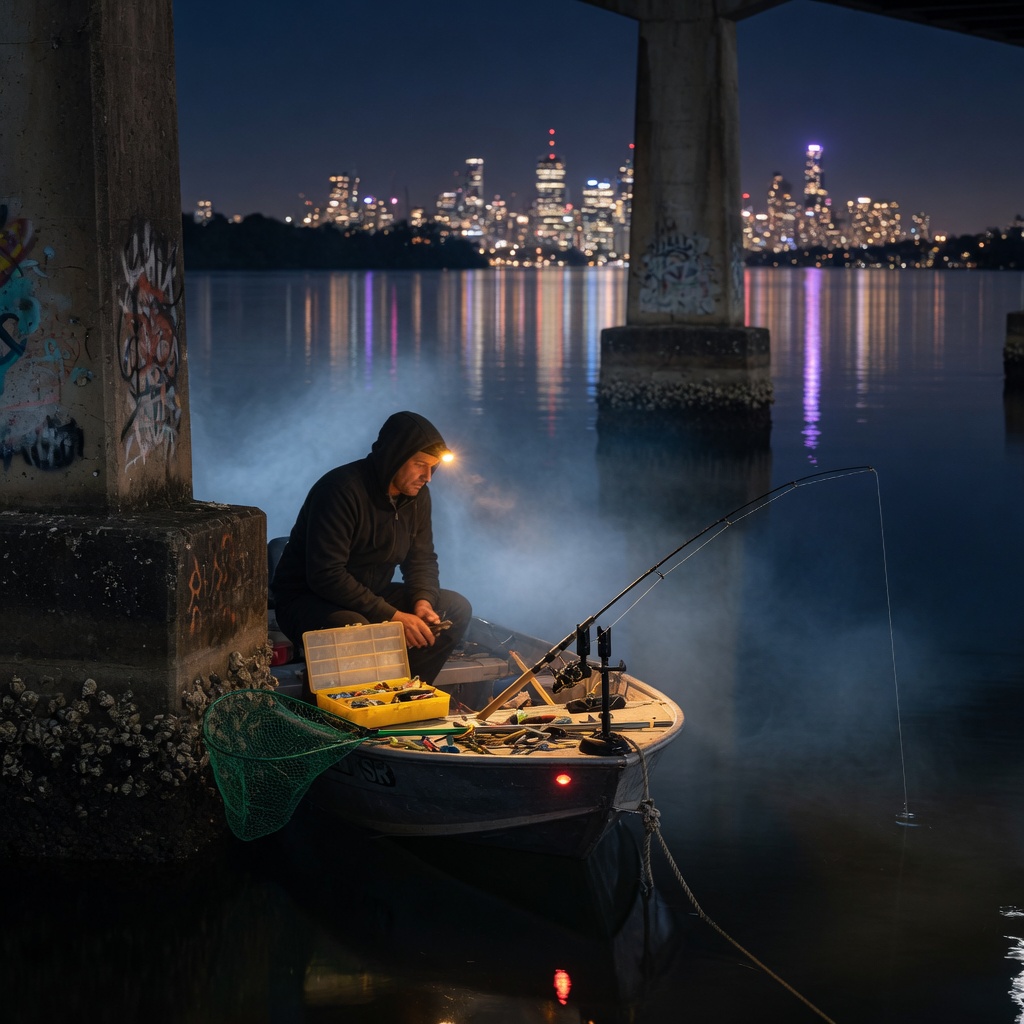
Mulloway (jewfish) are ambush predators that use structure and depth to their advantage. In Sydney systems such as the Hawkesbury, Georges River, Port Hacking and the Parramatta River arms of Sydney Harbour, the fish sit in scoured holes, bridge pylon gutters and the deep edge of drop-offs, waiting for baitfish and prawns to be swept past by current. Depths of 6 to 15 m are typical, though a 4 m hole beside a 2 m flat can be just as productive if the bait is thick.
At night the fish lose their caution. Bright estuary lights create shadow lines where mulloway hold facing the flow, and prawn runs after summer rain trigger some of the most reliable feeding of the year. Australian Fish Species treats night work as a specialist discipline: fewer casts, better placed baits, and far more patience than daytime estuary and inshore fishing.
Reading Tide, Moon and Weather
Feeding windows matter more than hours on the water. Build your session around these patterns:
- Tide: the last two hours of the run-out and the first hour of the flood often fire, because bait is flushed out of side creeks and over the lip of a hole.
- Slack water: the change of tide can produce a short, sharp bite as fish reposition. Be rigged and ready before it arrives.
- Moon: the darker nights around the new moon suit close-range bait presentation, while big full-moon tides move more water and can spread fish along a longer stretch of bank.
- Weather: a few warm, humid nights after heavy summer rain in the upper catchment usually mean prawns on the move and mulloway following them down.
Choosing and Keeping Live Baits
Live bait quality decides the session. The best options in southern NSW estuaries include yellowtail scad, slimy mackerel, mullet (poddy and larger), squid, tailor and live herring. Big baits catch big fish, but a lively 15 cm mullet swimming naturally will out-fish a stressed 30 cm bait every time.
- Gather bait in daylight or early evening with bait jigs, a poddy trap or a small berley trail.
- Run an aerated tank or a large bucket with regular water changes. Crowding kills baits fast in warm summer water.
- Handle baits with wet hands or a soft net and hook them quickly, then get them straight into the water.
- Keep a few fresh dead baits, such as squid strips or a whole slab of mullet, as a backup for the tide change.
Rigs That Work
Simplicity wins in current and structure. Three proven setups:
- Running sinker rig: ball sinker running to a swivel, then 60 to 100 cm of 40 to 60 lb fluorocarbon leader and a 6/0 to 8/0 circle or suicide hook. Use only as much lead as needed to hold the bottom edge of the hole.
- Snelled twin-hook rig: two hooks snelled for longer baits like mullet or tailor, pinned once in the nose and once ahead of the tail.
- Float or unweighted drift: for shallower lips, pylon shadow lines and prawn-run situations where a bait needs to swim freely with the current.
Pair this with a 3 to 4 kg or 6 to 10 kg rated rod around 2.1 m, a 4000 to 6000 size reel, and 20 to 30 lb braid. Set the drag firm enough to turn a fish away from pylons but soft enough to absorb the head shakes that throw hooks.
Working a Hole Properly
Anchor or use spot lock up-current and place baits at the head and along the edge of the hole rather than dumping them in the middle. Fish two rods at most so you can manage tangles in the dark. Leave baits alone: mulloway often mouth a live bait for several seconds before committing, so with circle hooks let the rod load up before lifting into the fish. Move only if the tide stage passes with no sign of bait or fish on the sounder, then work the next hole rather than burning the whole night in one spot.
Safety and Fish Care at Night
Night estuary work carries real risk. Carry a torch and spare batteries, wear a lifejacket in the boat, check the marine forecast before you leave, and tell someone your plan and return time. From land, avoid slippery rock ledges and unlit oyster racks, and never wade unfamiliar channels in the dark.
Mulloway are slow growing and vulnerable to over-harvest. Keep one fish for the table at most, support larger fish horizontally in the water, use a knotless landing net, and release quickly with wet hands. Size limits, bag limits and closures for mulloway differ between states and change over time, so verify current rules with NSW DPI Fisheries or the relevant state or territory authority before you fish.
Questions about a local hole or rig detail? Contact Australian Fish Species on +61295585271 or at [email protected] during Mon–Fri: 09:00 – 17:00 (AEST). Our Sydney coverage keeps growing as readers share what is working season by season.

Navigation
See also
FAQ