Mangrove Jack Tactics: Casting Tight to Timber and Rock Bars
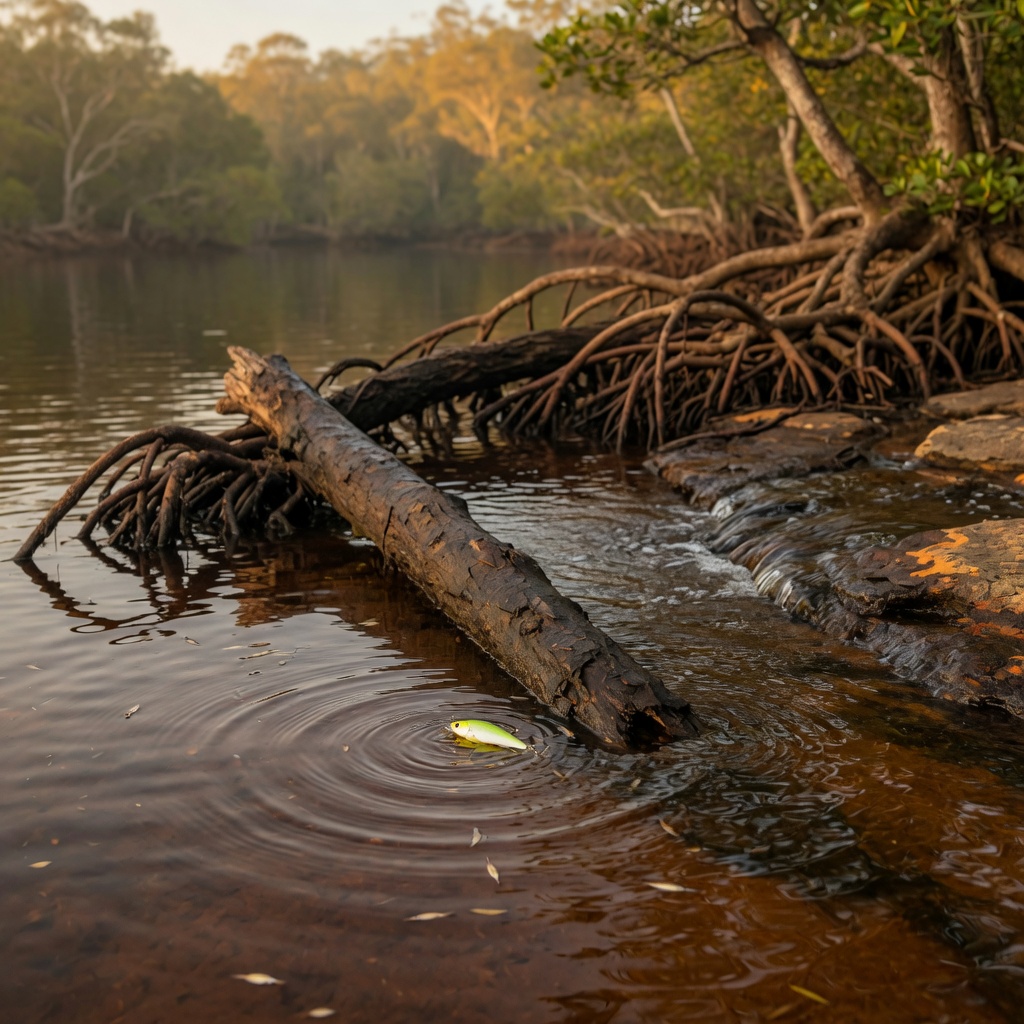
Know the Fish Before You Cast
Mangrove jack (Lutjanus argentimaculatus) are a tropical and subtropical lutjanid that spend their juvenile and sub-adult years in estuaries, creeks and brackish upper reaches before moving offshore to reef country as mature fish. In Australia they are common from about the mid-north coast of New South Wales through Queensland, the Northern Territory and the Kimberley, with the best estuary fishing in the warmer months. For anglers based in Sydney, jacks are usually a travel target rather than a local one, so it pays to arrive with rigs pre-tied and a plan for the tides you have.
Estuary jacks are ambush predators built for short, brutal bursts. They sit inside a snag, under a rock ledge or beside a pontoon pile, watch the current, and take the shortest possible path to a passing bait. That single behaviour dictates almost every tactical decision that follows: you must present close, you must be ready instantly, and you must be able to stop a fish that is trying to return to cover.
Reading Timber, Rock Bars and Structure
Not all snags hold jacks. Look for structure that combines cover with moving water and a depth change. The best spots share a few features:
- Fallen timber on the outside of a bend, where the current has cut a deeper hole against the bank.
- Rock bars that run across or along a creek, especially where the run-out tide funnels bait over the lip into deeper water.
- Undercut mangrove banks with root systems submerged on the top half of the tide.
- Rubble edges, oyster racks, pontoons, bridge pylons and drainage outflows in urbanised estuaries.
Work a piece of structure properly before moving. Jacks may need several casts before they commit, and the first cast should be the most accurate one you make. Approach quietly, stay off the electric or oars where possible, and cast well upstream so the lure swims naturally into the strike zone rather than landing on the fish's head.
Tides, Moon and Feeding Windows
Jacks respond strongly to water movement. In most creek systems the last two hours of the flood and the first two of the ebb are prime, because bait is pushed against the structure and the fish can hold station without fighting heavy flow. Bigger tides around the new and full moon can produce standout sessions in the lower reaches, while smaller neap tides often fish better in tight, shallow snag country where clarity matters.
Warm, humid, overcast afternoons rolling into dusk are classic. Water temperature is the other key variable: jacks become noticeably more aggressive above roughly 24°C and go quiet in cooler winter water, when they retreat to deeper holes and feed sparingly. Night fishing with the tide running over a rock bar can be extremely effective, though it demands more caution and better preparation.
Lures, Baits and Presentation
Lure selection is about depth control and durability rather than variety for its own sake:
- Shallow-diving hard bodies (50–75 mm, running 0.5–1.5 m) for casting parallel to timber and mangrove edges.
- Deeper divers (2–3 m) for rock bars, bridge pylons and deeper bank holes.
- Soft plastic paddle-tails and prawn imitations on 1/4–3/8 oz jig heads, hopped along rubble and rock edges.
- Surface walkers and poppers at first and last light over shallow flats and snag tops.
- Vibes and small blades for vertical work in deep holes when the fish are sulking.
Bait fishers do very well with live mullet, herring, prawns or small whiting fished on a lightly weighted running sinker rig, pinned just outside the snag and allowed to swim in. Fresh strip baits and butterflied pilchards work at night. Upgrade split rings and trebles on hard bodies before you fish; factory hardware often fails on the first serious hook-up.
Tackle and Leaders That Hold
A 2–4 kg or 4–6 kg baitcaster or spin outfit with a fast taper, 15–30 lb braid and 30–60 lb fluorocarbon or hard nylon leader covers most estuary work. Use the heavier end of that range in rock bars and oyster country where abrasion is constant. Set your drag firm from the outset, keep the rod low and angled away from the structure, and apply pressure immediately: the first three seconds decide the outcome. Check the last metre of leader after every fish and after any contact with structure.
Land-Based Access and Safety
Plenty of good jack structure is reachable on foot from bridges, breakwalls, causeways, rock bars and mangrove tracks. Land-based sessions need a little more planning: know your escape route on a rising tide, wear grippy footwear on wet rock and oyster-covered ledges, carry a headlamp plus a spare, and never fish exposed rock platforms without checking the marine forecast for swell and period. Tell someone your plan and expected return time. If you are crossing a bar to reach creek mouths by boat, check conditions on both the outgoing and returning tide.
Handling, Release and Rules
Jacks are robust but they have serious teeth and gill plates, so use long-nose pliers, support the fish horizontally and keep handling brief. Fish taken from deeper reef country can suffer barotrauma; a release weight or venting tool used correctly improves survival. In shallow estuaries, a quick photo and a controlled release beside the boat or bank is best practice, especially with larger breeding-size fish.
Size limits, bag limits, closures and gear rules for mangrove jack differ between New South Wales, Queensland, the Northern Territory and Western Australia, and they change over time. Treat the guidance here as technique only and confirm current limits with the relevant state or territory fisheries authority before you keep a fish. Questions about content on Australian Fish Species can be sent to [email protected] or +61295585271 during Mon–Fri: 09:00 – 17:00 (AEST).

Navigation
See also
FAQ