Moon Phases and Barometric Pressure in Bite Prediction
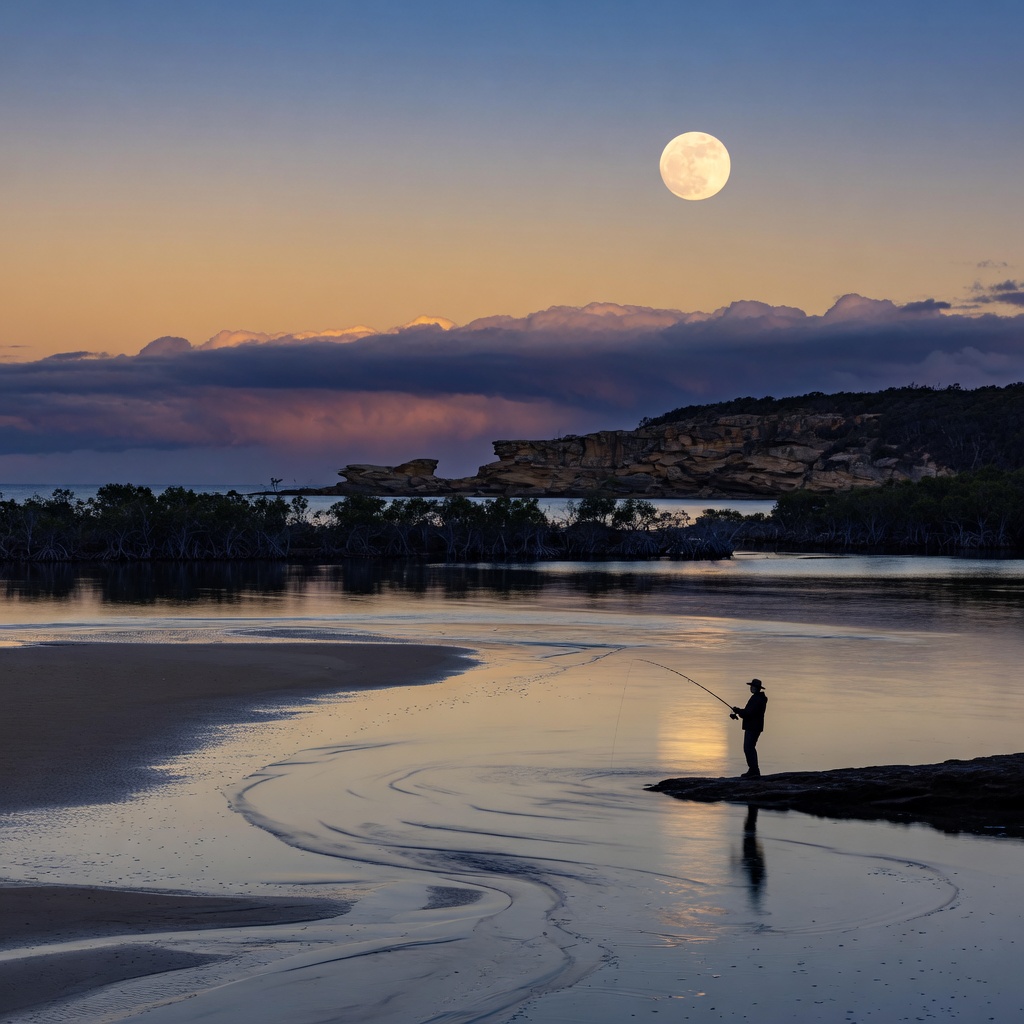
Why Fish Feed in Windows, Not All Day
Most Australian sportfish are opportunists that feed hardest when conditions make prey easy to catch. Those conditions arrive in windows: a run of tide over a sand flat, a low-light hour at dawn, a pressure drop before a front, or a big spring tide flushing prawns out of a mangrove drain. Understanding moon phase and barometric pressure will not guarantee a full esky, but it will help you choose which two hours of a Sydney weekend are worth fishing hard, and which are better spent driving between spots.
At Australian Fish Species we treat bite prediction as a stacking exercise. One favourable factor is interesting; three or four overlapping factors are worth planning your week around.
How the Moon Actually Works on Fish
The moon influences fishing in three separate ways, and it pays to keep them apart.
- Tidal range. New and full moons produce spring tides with bigger range and faster current. That extra water movement drags bait off flats, loads up estuary channels and switches on structure-based feeders such as bream, flathead and mulloway.
- Night light. A full moon lights up shallow water, which can spread fish out and lift feeding into the small hours. Dark nights around the new moon often concentrate predators near lit wharves, bridge lights and drop-offs.
- Spawning triggers. Many species time aggregations to moon phase and water temperature. Snapper, whiting and several reef species show phase-linked behaviour, and mangrove jack and barramundi respond strongly to big moon tides in the north.
Moon Rise, Set and Overhead
Moon rise, moon set and the moon's overhead and underfoot passages are often reported as minor bite peaks. Treat them as tiebreakers. If a moon-overhead period lands on top of a rising tide at first light, that is a session worth setting an alarm for.
Barometric Pressure: Reading the Trend
Absolute pressure matters less than the direction and speed of change. Australian coastal pressure typically sits near 1013 hPa, ranging roughly from 1000 to 1030 hPa in normal weather.
- Falling pressure (front approaching): often the best window. Fish tend to feed aggressively in the 12 to 24 hours before a cold front or east coast low reaches Sydney.
- Bottom of the low: fishing can stay decent but conditions turn dangerous. Wind, swell and rain matter more than the bite.
- Rising pressure behind a front: usually the slowest phase. Water is often cold and dirty; slow presentations and deeper water help.
- Steady high pressure: stable, clear and predictable. Fish early and late, go lighter on leader and downsize baits and lures.
Deep-bodied fish with closed swim bladders, such as snapper and many reef species, appear more sensitive to rapid pressure change than surface-oriented pelagics like tailor, Australian salmon and tuna, which are driven more by bait movement and water temperature.
Stacking the Factors for a Sydney Session
- Check the tide chart first. Choose a stage that suits the spot: last of the run-out for a creek mouth, first of the flood for a sand flat, top of the tide for rock ledges.
- Overlay low light. Dawn, dusk and the hour either side beat the middle of a bright day almost everywhere.
- Look at the moon. Spring tides for current-dependent spots, neaps for shallow, clear-water sight fishing and lighter presentations.
- Read the barograph trend over 24 to 48 hours, not a single number.
- Check water temperature and colour. A one to two degree shift, or a clean water line pushing in, can override everything above.
- Confirm the marine forecast and swell before committing to rocks, bars or offshore ground.
Keeping a Log That Actually Teaches You Something
Prediction improves fastest when you record outcomes. For each session note date, location, tide stage and height, moon phase, pressure and its trend, wind, water temperature and clarity, method used and what you caught or didn't. After a season you will see personal patterns that no general rule can give you, such as a favourite bream flat that only fires on the second hour of a run-in tide two days after the new moon.
Safety and Rules Come First
A falling barometer often means rising wind and swell. Never let a promising bite window push you onto exposed rock platforms, across a coastal bar or offshore in deteriorating weather. Check the latest marine forecast, wear a lifejacket on the rocks and in small boats, and tell someone your plan and return time.
Bag limits, size limits, gear rules and seasonal closures differ by state and change over time. Verify current rules with the relevant state or territory fisheries authority before you fish, and release surplus fish carefully, venting or using a release weight where barotrauma is a risk.
Questions about a particular estuary, beach or moon-tide combination around Sydney? Contact Australian Fish Species on +61295585271 or [email protected] during Mon–Fri: 09:00 – 17:00 (AEST).

Navigation
See also
FAQ