Northern Territory: Top End Barramundi Rivers and Coastal Flats
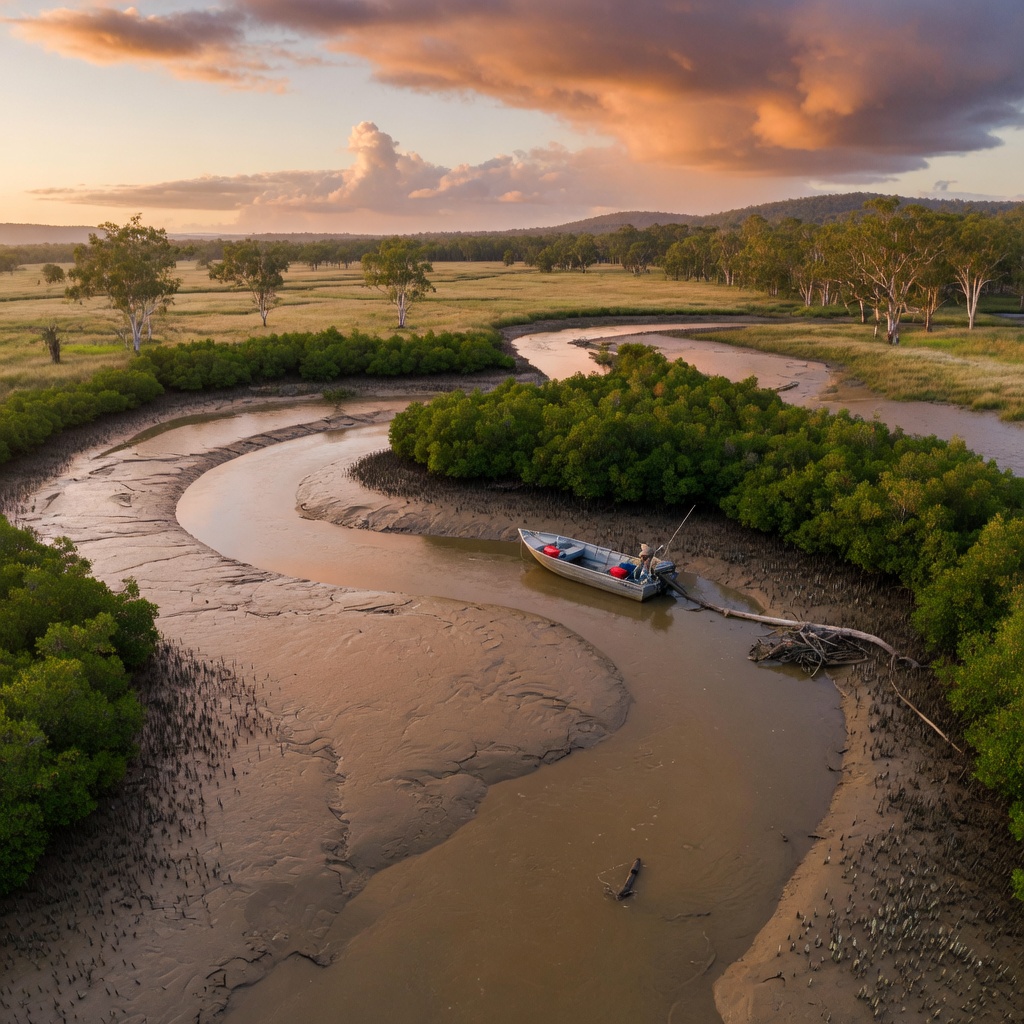
Why the Top End Reads Differently to Southern Estuaries
Anglers who learn their craft in Sydney estuaries arrive in the Northern Territory expecting the same rules to apply, then find the water behaves like a different sport. Top End tides can swing six to eight metres on the bigger springs, wet season monsoon rain reshapes river mouths each year, and the barramundi themselves move between fresh, brackish and salt water depending on rainfall. Instead of fishing a set spot, you fish a stage of tide on a structure that only works for an hour or two, then shift.
The core Top End barramundi water falls into three broad types: tidal river systems such as the Daly, Adelaide, Mary and South Alligator drainages; coastal creeks and mangrove-lined bays around Darwin Harbour, Bynoe and the Tiwi coast; and the shallow mud and sand flats that fringe them. Each demands a different approach, and understanding which one you are on is the single biggest factor in a productive day.
Tidal Rivers: Reading Structure and Current
Tidal rivers concentrate barramundi at current breaks. The classics are snag piles on outside bends, rock bars that go dry on the bottom of the tide, drain mouths where a feeder creek dumps into the main channel, and the eddy behind any point that splits flow. Barra sit in the slack pocket facing the current and ambush prawns, mullet and small baitfish pushed past them.
- Rock bars fish best on the last two hours of the ebb and the first of the flood, when water funnels over the bar and bait has nowhere to hide.
- Drain mouths peak on a falling tide as water drains off the floodplain carrying prawns and small fish.
- Snags and timber are most reliable on a slow, gentle tide movement, particularly on neaps when clarity improves.
- Creek junctions hold fish across most of the tide, making them useful when you need a fallback.
Lure selection follows depth and flow. Suspending and shallow hard bodies in the 80–120 mm range cover the top two metres; deep divers and 20–30 g soft vibes reach fish holding in four to eight metres against a rock bar. Soft plastic paddle tails on 3/8 to 1 oz jig heads let you hop the bottom in current without constant snagging. Weedless-rigged prawn and mullet profiles are the pick for casting hard into standing timber.
Coastal Flats and Creek Mouths
The flats game is visual and shallow. On a building flood, barramundi and threadfin salmon push over mud banks in half a metre of water, often pinning schools of hardyheads against the mangrove edge. Look for nervous bait, muddy trails and the distinctive boof of a surface feed. Long casts with shallow-running hard bodies, walk-the-dog surface lures at dawn, and unweighted plastics fished slowly all work. Fly anglers do well with baitfish patterns on intermediate lines.
Coastal creek mouths reward patience. Anchor or hold position well back from the mouth and cast into the drain rather than motoring across it. Noise and prop wash on shallow flats will empty a spot in seconds.
Seasons: Building, Wet, Run-Off and Dry
Top End fishing runs on a wet–dry rhythm rather than four even seasons.
- Build-up (October to December): hot, humid and unstable. Barra feed hard before the rains, but heat and storms make timing and hydration critical.
- Wet (January to March): heavy rain, discoloured water and difficult access. Many roads and ramps close.
- Run-off (roughly March to May): the premier window. Floodplain water drains through creeks and drains, and barra stack up in the outflow to intercept food.
- Dry (June to September): clear water, settled weather, and fish concentrated on permanent structure such as rock bars, deep holes and snag piles.
Moon phase matters as much as calendar month. Big spring tides around new and full moon stir sediment and create ferocious current, which suits rock bars and drains. Neap tides give clarity and are better for flats sight fishing and working timber slowly.
Tackle That Holds Up
Top End barra are strong and often caught in heavy cover, so gear leans harder than southern estuary outfits. A 4–8 kg or 6–10 kg baitcast or spin rod around 2.0–2.1 m, reels holding 200 m of 20–30 lb braid, and 40–60 lb leader is a sensible standard. Around heavy timber and for larger metre-plus fish, step up to 50 lb braid and 80 lb leader. Upgrade split rings and use strong single or treble hooks; standard factory hardware on cheaper lures frequently fails. Carry long-nose pliers, a knotless landing net or lip grips, and a measuring mat.
Safety First: Crocodiles, Bars and Distance
Estuarine crocodiles inhabit every tidal system in the Top End and many freshwater reaches. Treat all water as croc water. Do not clean fish at the ramp, do not wade or swim, stand well back from the water's edge, avoid repeating the same routine at the same spot, and keep arms and legs inside the boat. Camp at least 50 m from the water on high ground.
Bar crossings at river mouths, remote ramps and long runs across open water add further risk. Check the marine forecast, log your trip, carry an EPIRB and a marine radio, and never cross a bar you have not assessed on a rising tide with a clear view of the swell pattern. Mobile coverage disappears quickly outside Darwin.
Rules, Limits and Handling
Barramundi in the Northern Territory are managed with size limits, possession limits and seasonal closures on some rivers, and these settings change over time. Always verify current limits, closed waters and gear rules with the NT fisheries authority before you fish, and note that rules differ substantially from Queensland or Western Australia.
Release handling is straightforward if you plan it. Keep the fish in the water where possible, support the body horizontally, avoid the gills, minimise air exposure and use a wet mat if you must lift it. Fish taken from deeper rock bars may show signs of barotrauma; vent or release-weight techniques and a quick return to depth improve survival. For more on species identification and comparison with southern targets, see our fish species profiles and identification guides.
Planning a Trip
Allow travel time for tides rather than daylight; a good run-off session might start at 4 am or finish after dark. Book accommodation and boat hire early for the run-off, carry spare fuel, insect repellent, sun protection and far more drinking water than you think you need. If you are new to remote tropical fishing, a day with a local guide shortens the learning curve considerably.
Questions about Top End planning or species ID can be sent to [email protected] or +61295585271 during Mon–Fri: 09:00 – 17:00 (AEST). Australian Fish Species publishes regional guides across all states and territories so you can match technique to water wherever you travel.

Navigation
See also
FAQ