Queensland: Barramundi Rivers, Reef and Game Fishing Hotspots
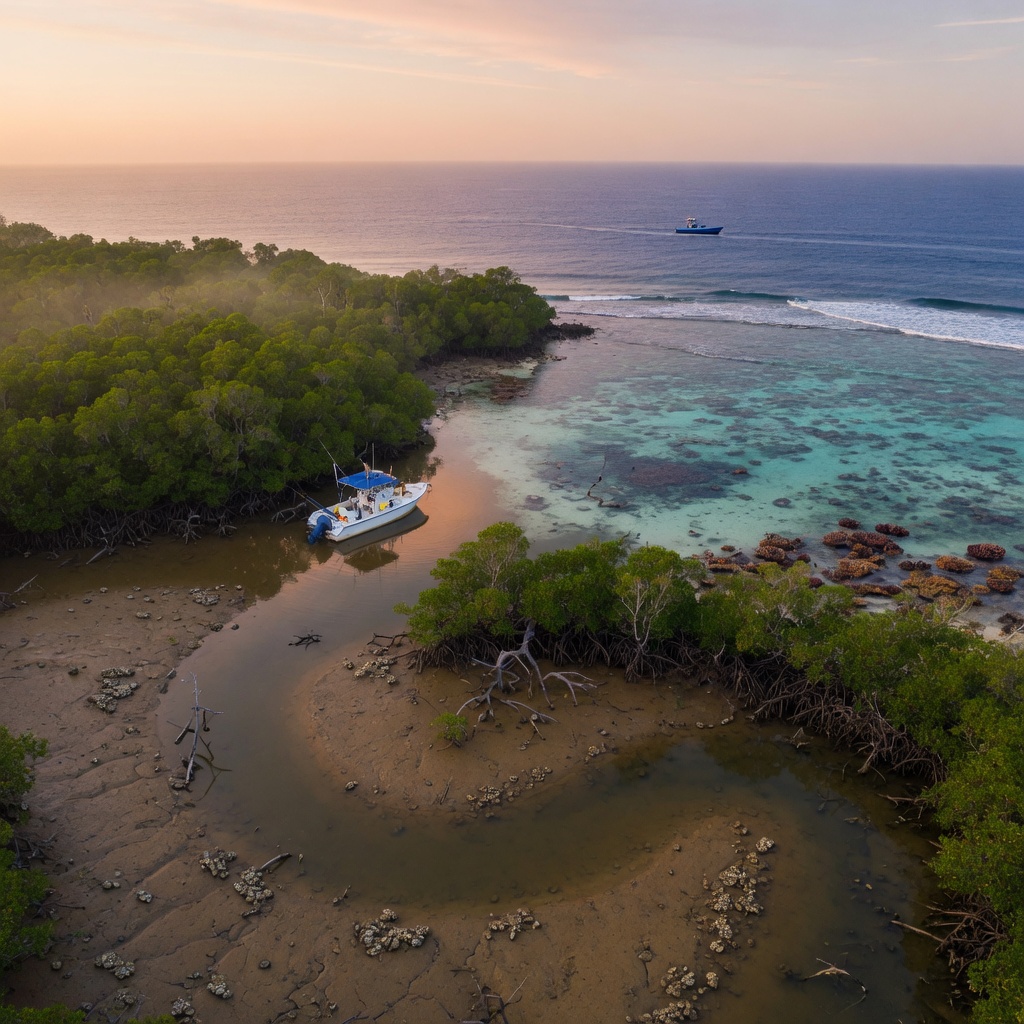
Why Queensland Offers Three Fisheries in One State
Queensland stretches from the subtropical border rivers near the New South Wales line to the tidal wilderness of the Gulf and Cape York. That range gives anglers three distinct fisheries within a single state: tannin-stained barramundi rivers, coral reef country holding coral trout and red emperor, and blue-water game grounds where marlin, Spanish mackerel and yellowfin patrol current lines. Understanding which of the three you are targeting shapes everything else, from boat choice to leader strength.
Readers planning trips from Sydney should allow travel time and remember that northern conditions are driven by the wet and dry seasons rather than the four-season pattern familiar further south. Build itineraries around water temperature, run-off and wind, not the calendar alone.
Barramundi Rivers and Estuary Systems
Barramundi are ambush predators that hold on structure and let the tide deliver food. Focus on snags, rock bars, drain mouths and creek junctions, and fish the last two hours of the run-out when baitfish and prawns are flushed from the mangroves. Neap tides suit clearer upstream reaches; bigger spring tides push fish onto the flats and into feeder creeks.
- Rigs: 20-30 lb braid, 40-60 lb leader, single strong-hook soft plastics or shallow hard-bodies around timber.
- Timing: Warmer months and the build-up produce the most aggressive surface feeding; cooler dry-season months call for slower presentations near deeper holes.
- Closures: Queensland applies a seasonal barramundi closure and both minimum and maximum size limits, so verify current dates and lengths with the state fisheries authority before you launch.
Companion Species
The same water holds mangrove jack, threadfin salmon, grunter and fingermark. Jacks demand heavier drag and short casts tight to cover, while threadfin respond to soft vibes worked slowly along mud edges.
Reef Country: Coral Trout, Red Emperor and Nannygai
Inshore fringing reefs and offshore shoals reward anglers who read structure carefully. Drop baits or jigs on the up-current edge of bommies, pinnacles and rubble patches, and move on if you cannot get a bite within a few drifts. Coral trout prefer hard coral and ledges; red emperor and nannygai favour deeper gutters and isolated lumps on sand.
- Use enough lead to hold bottom without dragging, and lift fish quickly away from cover.
- Release deep-caught reef fish with a release weight or venting technique to manage barotrauma.
- Observe green zone boundaries in the Great Barrier Reef Marine Park and check coral reef fin fish closures each year.
Game Fishing Grounds and Blue Water
Continental shelf edges, current lines and bait schools concentrate Spanish mackerel, wahoo, sailfish and marlin. Trolling skirted lures and swimming baits over temperature breaks works well, while live-baiting near headlands and shoals suits mackerel through the cooler dry-season months. Our broader offshore reef and game fishing notes cover tackle balance, drag settings and tag-and-release handling in more detail.
Safety, Bar Crossings and Weather
Many Queensland estuaries drain across coastal bars that become dangerous on an outgoing tide with a swell running. Study the marine forecast, wait for a rising tide where possible, wear a lifejacket, and log on with the local volunteer marine rescue service. In the far north, respect crocodile habitat: keep away from water edges, avoid repeated activity at the same landing, and never clean fish at the ramp waterline.
Rules, Limits and Planning
Bag limits, size limits, gear rules and closures vary by region and change over time. Treat any figure you read online as a prompt to check the current Queensland fisheries publication before fishing, and note that federal marine park zoning adds a second layer of rules offshore. For trip questions or content suggestions, contact Australian Fish Species on +61295585271 or at [email protected] during Mon–Fri: 09:00 – 17:00 (AEST).
Keep a simple logbook of tide, moon, wind and water temperature for every session. Over a season that record becomes more useful than any hotspot list, because it tells you exactly when your local system fires.

Navigation
See also
FAQ