Reading Beach Gutters and Holes for Tailor and Australian Salmon
Why Beach Reading Matters More Than Casting Distance
Most beach sessions are won before the first cast. Tailor and Australian salmon are mobile, schooling predators that hunt structure created by moving water, not open flat sand. A long cast into a featureless bank will usually beat the water for nothing, while a short lob into the mouth of a gutter can put your bait or lure straight into the feeding lane. Learning to read the surf is the single highest-value skill for land-based anglers around Sydney and along every open coast in Australia.
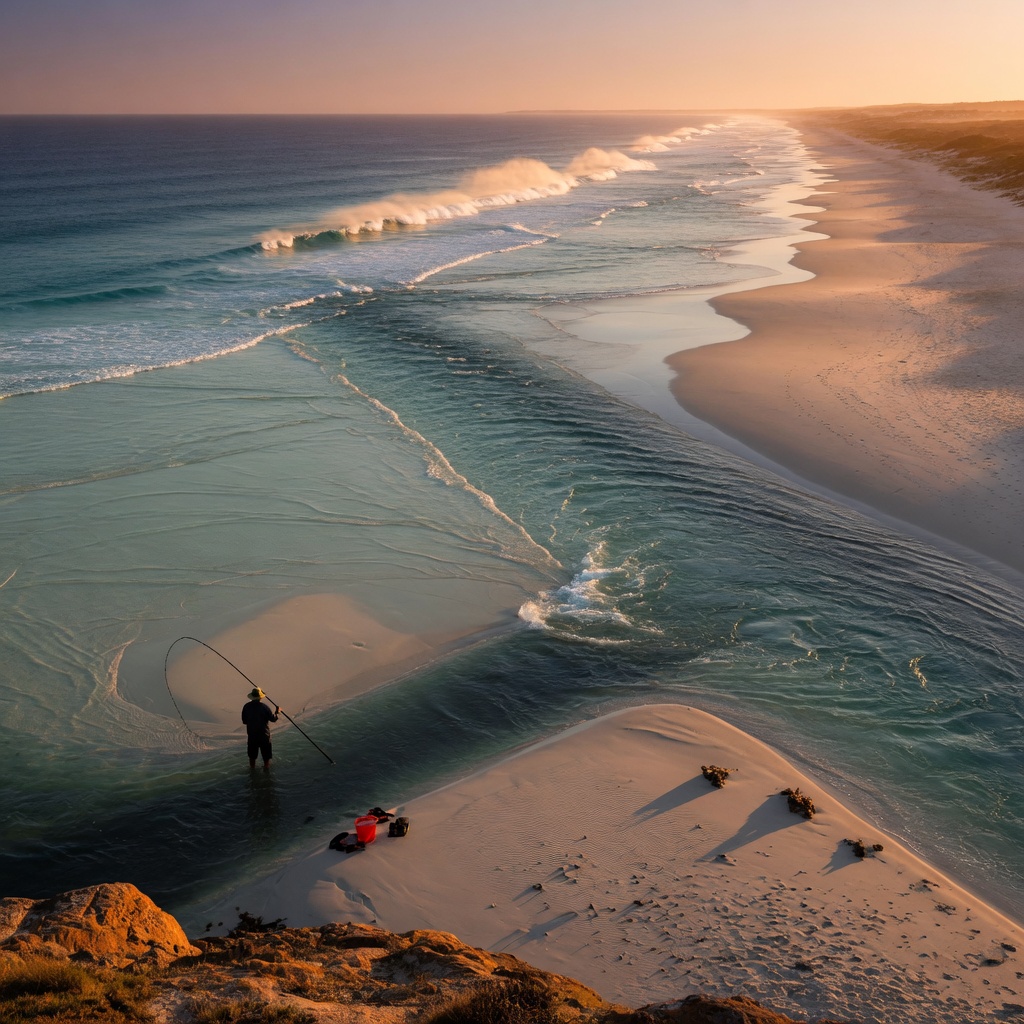
Start by walking, not fishing. Climb a headland, dune or track above the beach in the last hour of daylight the evening before, or arrive early enough to watch a full set of waves roll through. From height, the colour and texture of the water tells you everything: pale green or brown means shallow sand, dark blue-green means depth.
How to Identify Gutters, Holes and Rips
- Gutters are elongated troughs running roughly parallel to the beach between the sand bank and the shore. Look for a strip of darker, calmer water where waves stop breaking, then re-form closer in.
- Holes are deeper depressions, often at the end of a gutter or against a rock ledge. Foam and weed tend to swirl and hold in them rather than wash straight out.
- Rips are the drains. Watch for a gap in the breaking waves, discoloured water pushing seaward, and floating weed tracking out. Fish sit on the edges of the rip, where the current meets slower water.
- Banks are the raised sand where waves break heavily and continuously. They are the walls that funnel fish, not the places to cast into.
Small features count. A gutter only 1.5 to 2 metres deep and 20 metres long will hold salmon if it has a clean entry and exit for water. Steep, coarse-sand beaches with a sharp shore dump often have a deep close-in trough that you can fish with a 20 metre cast.
Timing: Tide, Light and Swell
Tailor and salmon feed best when water is moving and light is low. The two hours either side of dawn and dusk are prime, and a rising tide over the top of a bank into a gutter usually beats a dead low. On smaller beaches, the last of the run-out through a rip can concentrate baitfish beautifully.
Swell height matters more than swell direction on many beaches. A moderate 1 to 1.5 metre swell keeps sand stirred, prawns and worms moving, and gives fish confidence in shallow water. Very small swell can leave gutters lifeless; very large swell fills them with foam and weed and makes the beach dangerous. Check the marine forecast before you commit, and reassess on arrival.
After a big blow, banks and gutters shift. A hole that fished well last month may be gone, so treat every session as a fresh read. Seasonally, salmon are strongest through the cooler months in southern waters, while tailor often run in schools along the coast from autumn into spring, with local variation.
Signs Fish Are Present
- Terns, gulls or gannets working tight over a single patch of water.
- Nervous bait flicking at the surface inside a gutter.
- Dark, shifting patches under the wave face as a set lifts.
- Bust-ups and spray at the rip mouth, especially in low light.
Rigs, Baits and Lures That Suit Gutter Fishing
Keep it simple and mobile. A 9 to 10 foot rod with a 4000 to 5000 size reel, 6 to 9 kg braid or mono and a metre of 15 to 20 kg leader covers both species.
- Metal lures: 20 to 65 gram slugs and slices cast well into wind and let you cover a gutter quickly. Retrieve fast with occasional pauses for tailor; a steady, slightly slower wind suits salmon.
- Ganged pilchards: three or four 4/0 hooks on a gang, fished on a running ball sinker just heavy enough to hold. Deadly on tailor, especially at dusk.
- Bait rigs: a paternoster with two hooks and a star sinker for holding a hole in current; a running sinker rig for a more natural drift in the gutter.
- Baits: pilchards, whitebait, garfish, bluebait, beachworms and fresh strip baits all work. Fresh beats frozen every time.
- Wire or heavy leader: tailor have sharp teeth, so a short single-strand trace or heavy 30 to 40 kg mono ahead of the hook saves lures and gangs.
Work the whole feature rather than one spot: cast to the top of the gutter, then fan across the middle and the drain. If nothing responds in fifteen minutes, walk to the next gutter. Covering ground finds fish faster than sitting still.
Handling, Eating Quality and Release
Tailor and salmon are both best bled and iced immediately if you are keeping them. Salmon in particular has a strong reputation as bait, but a bled, chilled fillet with the dark bloodline trimmed is far better eating than most anglers expect. Release fish you do not need quickly, wet-handed and low to the water, and avoid dragging them up the dry sand.
Take only what you will eat, and be mindful that schooling species are easy to over-harvest from a hot gutter. For more on presentations and terrain across surf and stone, see our beach, rock and land-based fishing guides.
Safety on Open Beaches
Surf beaches are less dramatic than rock platforms but still deserve respect. Never wade past knee depth in a rip, keep your back to the sea only when you have to, and watch sets for several minutes before stepping onto a low sand ledge. Fish with a mate in low light, carry a torch, tell someone your plans, and wear footwear you can swim in. If the beach has a strong shore dump and steep drop-off, fish from higher, drier sand and lengthen your cast instead.
Local Notes and Getting in Touch
Bag limits, size limits and any local closures for tailor and Australian salmon differ between states and change over time. Always confirm current rules with the relevant state or territory fisheries authority before you keep a fish. Australian Fish Species explains how the rules work rather than repeating numbers that may date.
Questions about a particular stretch of coast near Sydney? Contact us on +61295585271 or [email protected] during Mon–Fri: 09:00 – 17:00 (AEST) and we will point you to the right guide.

Navigation
See also
FAQ