Reading Structure: Weed Beds, Drop-Offs, Bait Schools and Reef Edges
Why Structure Matters More Than Spots
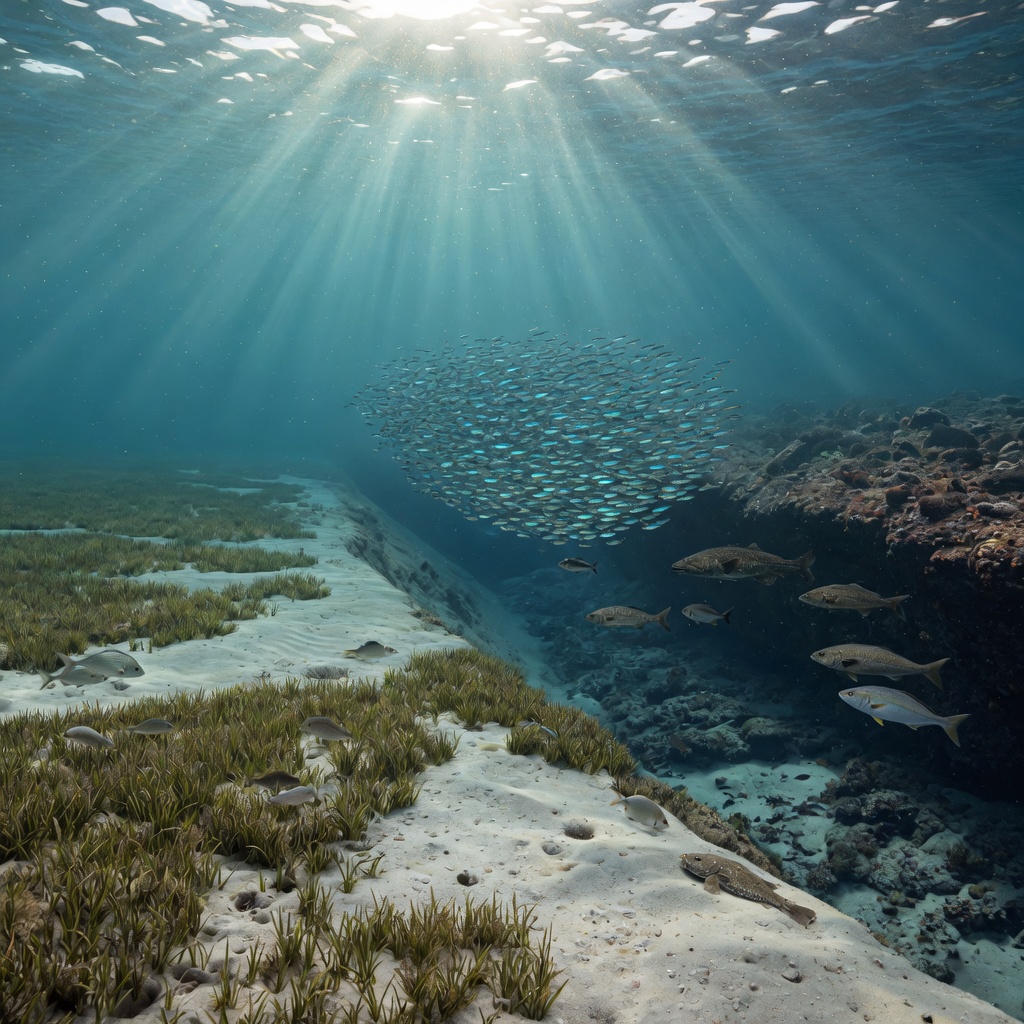
Marks in a GPS go stale. Structure does not. Fish sit where food, cover and current meet, so once you learn to read those features you can find fish on unfamiliar water anywhere from Sydney Harbour to the shelf edge. Structure works on the same logic in 1.5 m of estuary weed as it does on a 60 m reef ledge: something interrupts the flow, bait gets pinned, and predators wait in the slack behind it.
The four features below cover most of what Australian Fish Species readers will encounter across NSW and the wider Australian coast. Learn the signature of each on the sounder, on the surface and underfoot, and your catch rate lifts without buying a single new lure.
Weed Beds: Nursery, Pantry and Ambush Cover
Seagrass beds in estuaries such as Pittwater, Botany Bay and the Georges River hold prawns, nippers, small crabs and juvenile baitfish. Bream, whiting and flathead all work them, but they use them differently.
- Bream and whiting feed over the top of the weed on a rising tide, nosing into the canopy for prawns and worms.
- Flathead sit on the sand patches and edges, not in the thick weed, so cast along the seam where sand meets grass.
- Falling tide pulls fish off the flat and stacks them at the first deeper edge or drain.
Fish weed with something that stays clean: lightly weighted soft plastics, unweighted baits on a long trace, or shallow-running hardbodies that tick the tops. Polarised sunglasses and a mid-morning sun angle make the sand patches obvious from the boat or while wading.
Drop-Offs and Ledges: The Fish Highway
A drop-off is any sudden change in depth: a channel edge, a scoured bank, a rock bar, or the lip of a beach gutter. Fish use them as travel routes and ambush points because current concentrates along the break.
- Find the edge with the sounder, then note which side the current pushes.
- Position up-current and let baits or lures drift down the face rather than casting into dead water.
- Work the top of the break first, then the base, where heavier fish like mulloway often hold.
On the beach the same rule applies to gutters: the darker water, the gap in breaking waves and the sideways run of foam all mark a drop-off worth casting into. Mulloway, tailor and Australian salmon patrol these edges at first and last light.
Bait Schools: Follow the Food
Bait is the single most reliable indicator on open water. Watch for terns and gannets working tight circles, oily slicks, nervous water, or dense sounder returns holding at a set depth. Predators usually sit under or behind the school, not inside it.
- Balled bait with a clean gap beneath often means kingfish or tuna pushing from below.
- Scattered, high-in-the-column bait suggests fish are already feeding hard and a fast retrieve may out-fish a slow one.
- Bait pinned against a reef edge or headland is the best of both worlds and worth several passes.
Never drive through a working school. Approach from the down-current side, cut the throttle early and let the boat drift into range.
Reef Edges and Offshore Structure
Reef systems are read by their edges, not their middles. The productive zone is usually the first few metres where hard bottom meets sand or gravel, plus any pinnacle, bommie or wash that rises off the flat. Snapper, kingfish and coral trout all favour these transitions, and pelagics such as Spanish mackerel and tuna use them as feeding stations when current runs.
Drift with the current, use only enough lead to hold bottom, and note where the bites come as you pass so you can repeat the drift. Bring fish up steadily rather than in bursts to reduce barotrauma damage, and carry a release weight for any deep-caught fish you intend to return. For more on rigs, drifts and safety planning offshore, see our offshore, reef and game fishing guides.
Tide, Moon and Weather Overlays
Structure only fires when water moves. The last two hours of a rising tide and the first two of the fall are prime on estuary flats and weed edges; the full run of tide suits deeper drop-offs and reef ledges. Bigger tides around new and full moon increase current and can turn a quiet ledge on. Onshore wind against an outgoing tide will chop up bar and headland areas fast, so check the marine forecast before committing to any exposed mark.
A Simple Session Plan
- Pick one structure type that matches the tide stage you will fish.
- Scout it with the sounder or from a high vantage point before casting.
- Fish the edge, the current seam and the deeper base in that order.
- Log depth, tide stage, wind and result so the pattern repeats next trip.
Rules for bag limits, size limits and closures vary by state and change over time, so confirm current limits with the relevant fisheries authority before you keep a fish. Questions about a specific Sydney system or reef edge can be sent to [email protected] or +61295585271 during Mon–Fri: 09:00 – 17:00 (AEST).

Navigation
See also
FAQ