Rock Fishing for Drummer, Luderick and Blue Groper
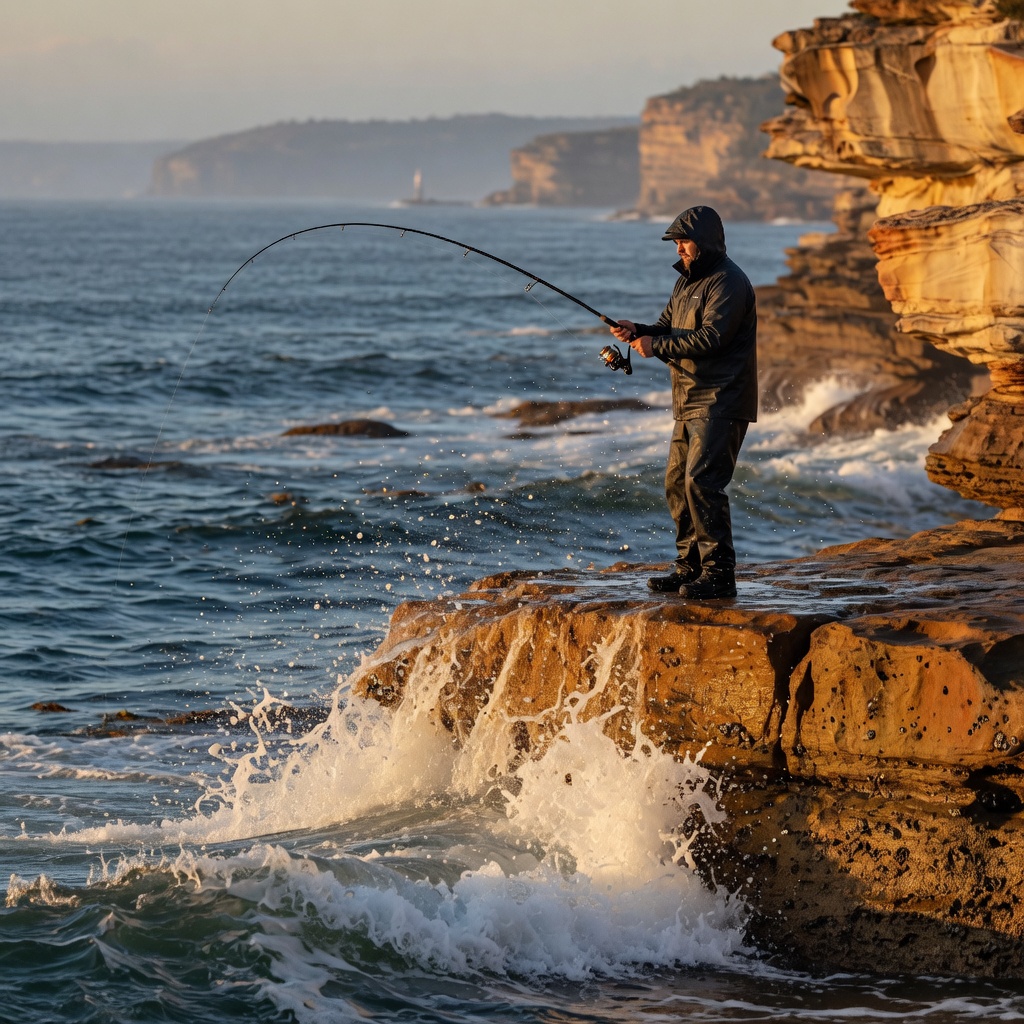
Why These Three Species Define Sydney Rock Fishing
Along the sandstone headlands from Cronulla to Palm Beach, three species dominate the winter rock ledge: eastern rock blackfish (drummer), luderick and eastern blue groper. All three live in the whitewater zone, all three feed hardest when the swell is stirring food off the rock, and all three demand a different mindset to bait-soaking on a beach. This guide from Australian Fish Species covers identification, feeding behaviour, rigs and the safety habits that matter most around Sydney.
Drummer are thick-shouldered, blue-grey fish with a small mouth and a powerful tail built for surging back into caves. Luderick are darker with vertical barring and a delicate bite, feeding almost entirely on weed. Blue groper are wrasse: the males a striking cobalt blue, the females and juveniles brick red to brown. Groper are curious, slow-growing, territorial and highly vulnerable to overfishing, so many rock anglers now treat them as a photograph-and-release fish or leave them alone entirely.
Reading the Wash and the Tide
The feeding window on a rock ledge is created by water movement, not the clock. Look for aerated white water with a defined edge, foam lines that drift along the rock face, and cunjevoi beds being washed by every second or third wave. That is where drummer graze. A rising tide over the last two hours to high, or the first hour or two of the drop, usually turns the bite on because bait and weed are being dislodged.
- Drummer: heaviest bite in a 1–2 m swell with dirty foam; autumn through to early spring is prime.
- Luderick: prefer cleaner water beside the wash, along kelp edges and in gutters; winter is peak season, and they also run hard in estuaries.
- Blue groper: hold near boulder fields, caves and sponge gardens; they often follow you along a ledge once berley starts drifting.
Wind matters as much as swell. A light westerly flattens the surface and lets you see the wash structure; a strong onshore easterly stacks swell onto ledges and turns a workable platform into a hazard. Always check the marine forecast, swell period and tide before committing to a spot.
Baits, Berley and Rigs
Drummer
Bread is the classic Sydney drummer bait: a compressed doughy lump on a strong 1/0 to 3/0 short-shank hook, fished unweighted or with a single ball sinker so it tumbles in the foam. Peeled prawn, cunjevoi and green weed all work. Berley with mashed bread, bran and a little tuna oil, thrown in small handfuls, to hold the school in the wash. Use 10–15 kg line straight through on a light spin or side-cast reel, and expect the first ten seconds to decide the fight — drummer bolt for cover and rarely give a second chance.
Luderick
Float fishing is the technique. Set a stemmed or quill float so the bait swims 1.5–3 m down, run a light sinker under the float and finish with a small size 8 to 10 hook loaded with green weed or cabbage weed twisted around the shank. Watch for the float to dip and slide sideways, not just bob. A 3.6–4.2 m float rod and a light reel with 5–8 kg line gives the control needed to steer fish out of kelp.
Blue Groper
Groper crush crustaceans, so crab, cunjevoi and whole prawn on a heavy hook is standard, fished tight to the boulders. If you intend to release, use a single strong hook, keep the fight short, support the fish horizontally, avoid dropping it on rock and return it quickly to the water. Groper are a keystone grazer on urchins, so releasing large fish protects the kelp habitat that feeds every species on the ledge.
Rock Fishing Safety Is the Real Skill
Rock fishing is the highest-risk form of recreational angling in Australia, and headlands around Sydney account for a grim share of incidents. Treat safety as tackle, not an afterthought.
- Wear a lifejacket rated for rock fishing — in several NSW locations it is a legal requirement, so check current rules for your ledge.
- Wear cleated or felt-soled boots; smooth soles on wet sandstone and algae are lethal.
- Watch the platform for a full fifteen minutes before stepping down, and note the largest wave in that period, not the average.
- Never fish alone, tell someone your location and expected return time, and carry a charged phone in a waterproof pouch.
- Identify your escape route uphill before you cast, and never turn your back to the sea to unhook a fish.
- Fish light and mobile so you can move fast; leave the esky and the folding chair in the car.
If someone is washed in, do not jump in after them. Throw flotation, call emergency services and keep visual contact.
Rules, Limits and Where to Check
Bag limits, minimum sizes, gear restrictions and closures for drummer, luderick and blue groper vary by state and change over time. Blue groper in particular carry special protections in New South Wales, including restrictions on how they may be taken. Before you fish, verify the current limits and any location-specific lifejacket or closure rules with the relevant state or territory fisheries authority. For more on where these techniques fit alongside beach and estuary approaches, see our beach, rock and land-based fishing section.
Questions about a particular Sydney headland, rig or seasonal pattern? Contact Australian Fish Species on +61295585271 or [email protected] during Mon–Fri: 09:00 – 17:00 (AEST).

Navigation
See also
FAQ