Rock Fishing Safety: Lifejackets, Swell and Escape Routes
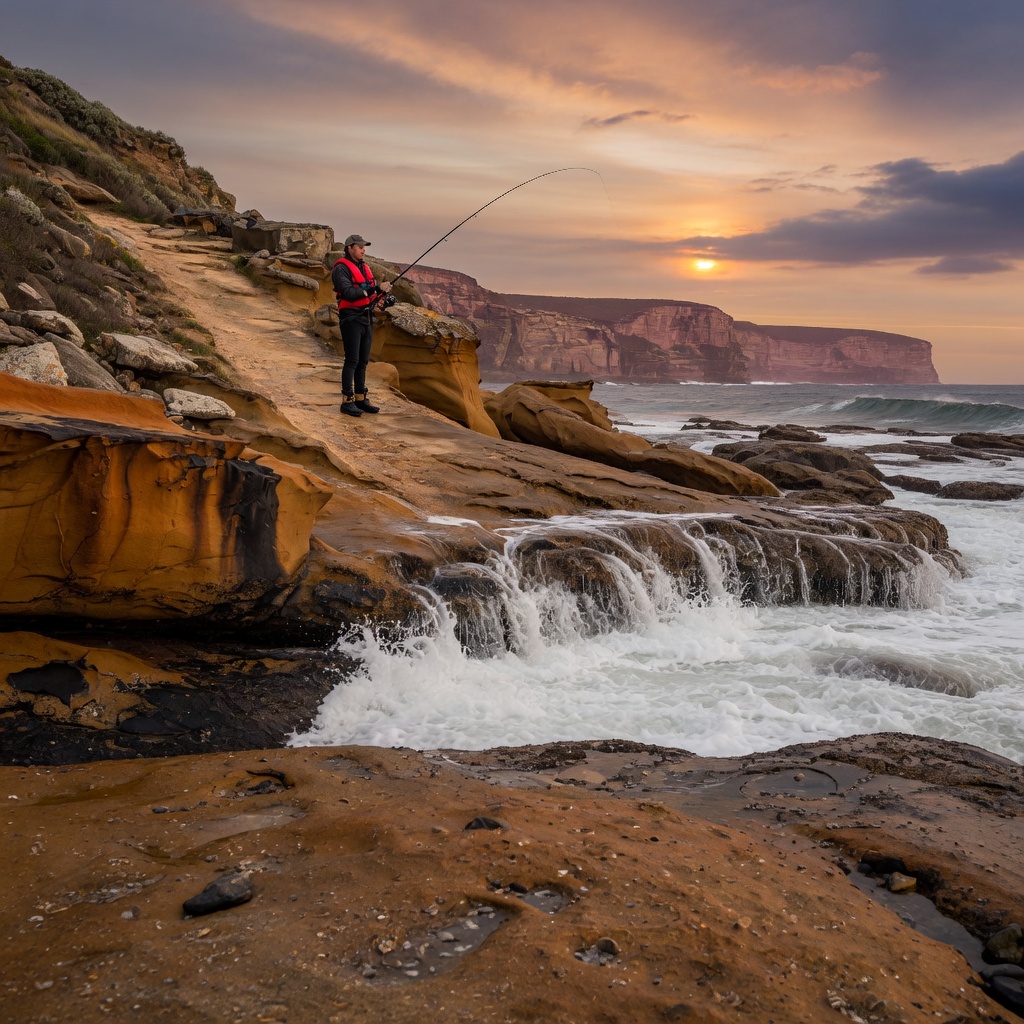
Why Rock Fishing Demands a Safety Plan
Land-based rock fishing produces some of the best fish available to anglers without a boat — tailor, Australian salmon, drummer, groper, mulloway and, on the right day, kingfish. It is also the most dangerous form of recreational fishing in Australia. The hazards are simple and repeatable: a wave larger than the ones before it, wet sloping rock, no lifejacket, and no clear path to high ground. Around Sydney, the open ocean ledges from the northern beaches through to the Royal National Park catch southerly and easterly groundswell with very little to slow it down, so conditions can change from workable to lethal inside a single set.
Treat every session as a plan, not a gamble. Before you leave home you should know the swell height and period, the swell direction, the tide times, the wind, and where you will stand if a wave washes the ledge. If you cannot answer those five things, you are not ready to fish that spot.
Lifejackets: The Single Biggest Difference
A lifejacket keeps your head above water while you are winded, disoriented and being pushed by whitewater. In NSW, lifejacket use is mandatory for rock fishing in declared high-risk locations, and rules differ between states and change over time — check the current requirements with the relevant state or territory fisheries or maritime authority before you fish.
- Choose a jacket rated for the job. A slim inflatable or a foam vest designed for rock fishing lets you cast and move; a bulky general-purpose jacket often ends up left in the car, which protects nobody.
- Wear it from the car park. Most washes happen while walking on, setting up or packing down, not while fishing.
- Service inflatables. Check the cylinder, the indicator and the bladder regularly, and know whether yours is manual or automatic inflation.
- Fit it snug. A loose jacket rides up over your face in surf. Do the crotch or waist straps up properly.
Pair the jacket with cleated boots or rock plates, clothing that will not drag you down, a lanyard-free approach to heavy gear, and a whistle. Leave the waders at home on ocean rock.
Reading Swell, Period and Tide
Swell height alone is a poor guide. A 1.5 m swell at 14 seconds carries far more energy up a ledge than 2 m at 7 seconds, because long-period swell arrives with more water behind it and surges much higher. Look at three numbers together:
- Height — the significant wave height; individual waves can be well over 1.5 times that figure.
- Period — anything from roughly 11 seconds up should make you cautious on low ledges.
- Direction — a south swell wrapping into a south-facing platform is very different to the same swell on a sheltered northern corner.
Add tide. A ledge that is comfortable two hours either side of low can be washing green water at the top of a spring high. Rising tide plus building swell is the classic trap, because your safe zone shrinks while the waves grow. Check the marine forecast and coastal waters warnings the morning you fish, not the night before, and re-check for any hazardous surf warning.
Escape Routes and Standing Positions
Before the first cast, stand still and watch the water for a minimum of 15 minutes. Sets often come in groups, and the biggest wave of a cycle may be many minutes apart. While you watch, work out the following:
- The high-water mark. Wet rock, fresh weed and cunjevoi tell you where waves have already reached today. Never fish below that line.
- Two escape routes. One primary path to high ground and one alternative if the first is cut off. Walk them before you fish so your feet know the steps.
- A wash-off exit. If you do go in, where will you swim to? Usually the answer is away from the rocks into deeper water, then along to a beach, gutter or a spot where you can be pulled up between sets. Do not try to climb back up where you fell in.
- Gear placement. Keep bags, buckets and spare rods above your standing position so you are never tempted to chase them down the slope.
Fishing With Others and Calling for Help
Fish in pairs or groups and keep each other in sight. Tell someone on shore where you are going and when you will be back. Carry a charged phone in a waterproof pouch, and know the access track name or nearest landmark so emergency services can find you. In an emergency call 000 and ask for Marine Rescue or the Police; if someone is in the water, throw them anything that floats — an esky lid, a bucket, a spare lifejacket — and keep pointing to them so rescuers can track their position. Do not enter the water to attempt a rescue from a wave-swept ledge unless you have flotation and a clear exit.
Deciding Not to Fish
The most useful skill in land-based fishing is walking away. Swell forecast climbing through the day, a strong onshore wind, a big spring tide, poor light, slippery rock, or a ledge you have never fished before all stack the odds against you. There will always be a sheltered estuary, a beach gutter or a headland corner that fishes safely on a big day — often better, because the wash concentrates baitfish. Our wider guide to beach, rock and land-based fishing covers those alternative options, rigs and reading gutters when the open ledges are out.
A Quick Pre-Session Checklist
- Lifejacket on, correctly fitted, before leaving the car.
- Non-slip footwear and clothing that will not weigh you down.
- Swell height, period and direction checked, plus wind and any surf warnings.
- Tide times noted and the plan matched to the safest part of the tide.
- Fifteen minutes of watching the water before setting up.
- Two escape routes identified and walked.
- Phone in a waterproof pouch, someone ashore knows your plan and return time.
- Bag and size limits and any closures confirmed with the relevant state fisheries authority.
Australian Fish Species publishes species, technique and destination guides for anglers across every state and territory. If you have questions about a section of coast near Sydney or want to suggest a topic, contact us at [email protected] or +61295585271 during Mon–Fri: 09:00 – 17:00 (AEST). Safety information here is general guidance only — conditions on the day and current local rules always take priority.

Navigation
See also
FAQ