Saratoga: Surface Fishing for an Ancient Native
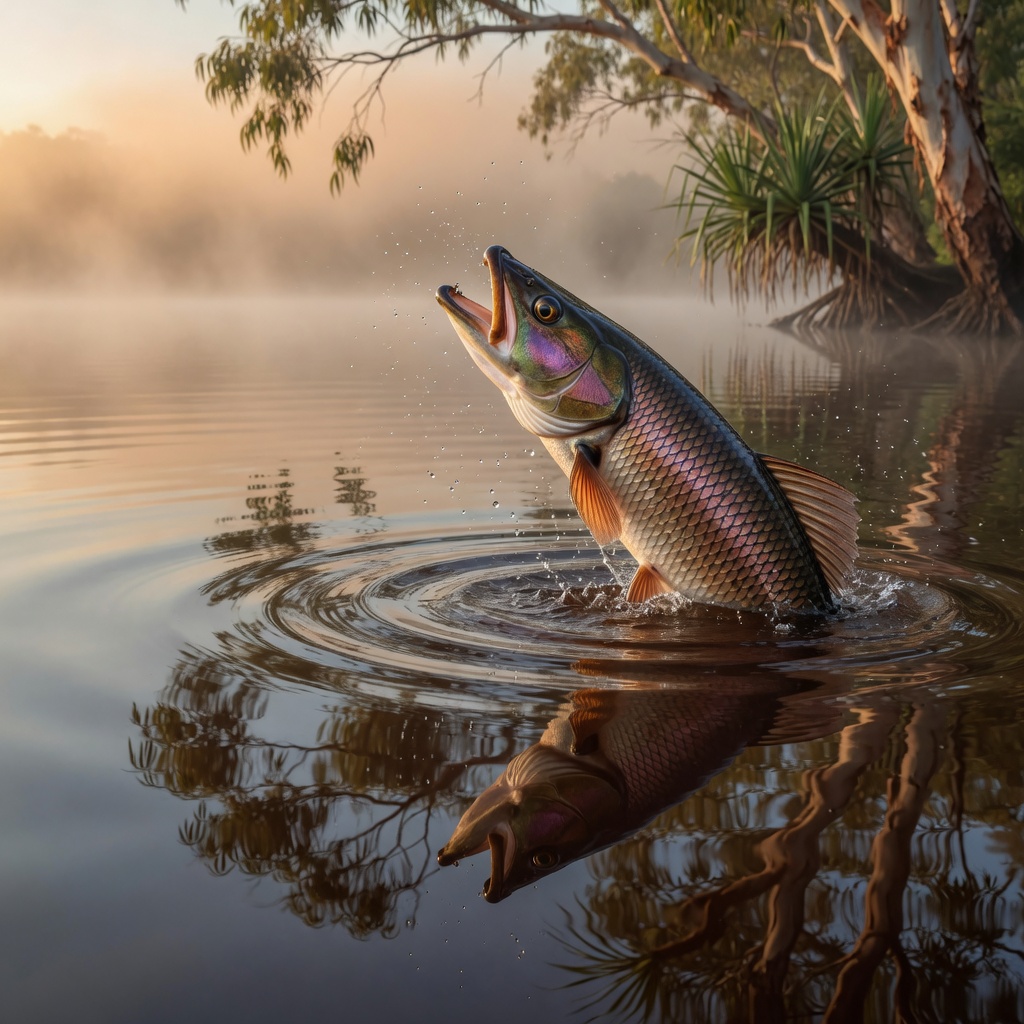
An ancient fish with a modern following
Saratoga are among the most distinctive native freshwater fish in Australia. Long, laterally compressed and armour-plated with large scales, they carry an upturned mouth built for one job: taking prey off the surface. Anglers know two forms, the Gulf saratoga of the Northern Territory and Gulf of Carpentaria drainages, and the spotted saratoga of the Fitzroy and Burnett systems in Queensland, plus stocked impoundments where they have been established. Both belong to an old lineage of bony-tongued fishes, and both are mouth brooders, with adults carrying eggs and fry inside the mouth until the young can fend for themselves.
For visitors from Sydney used to chasing bream and flathead in estuaries, saratoga fishing is a change of pace. It is visual, quiet and often slow, then explosive. This guide from Australian Fish Species explains where to find them, how they feed, and the tackle and technique that convert strikes into landed fish.
Identification and biology
- Body: elongated and slab-sided, with a straight back and a long dorsal and anal fin set well back toward the tail.
- Head and mouth: bony, hard-jawed and hinged upward, with two small barbels on the lower jaw.
- Colour: olive to bronze with a pearl sheen; spotted saratoga show pink or red spots on the rear scales, Gulf fish are typically plainer.
- Size: commonly 40 to 70 cm; larger fish occur in productive systems and impoundments.
- Diet: insects, frogs, shrimp, small fish and anything that lands or struggles on the surface film.
Because saratoga are slow growing, late maturing and highly localised, they respond poorly to heavy harvest. Treat them as a catch and release species by default and check current rules for the state or territory you are fishing, since size and bag limits, closed waters and stocked impoundment conditions differ and are revised over time.
Habitat: reading a saratoga water
Saratoga hold in clear to lightly stained fresh water with structure and shade. Look for lily pads, weed edges, submerged timber, pandanus and paperbark overhang, rock bars and the still corners of billabongs and lagoons. In impoundments they patrol standing timber, points and windblown weed lines. They rarely sit deep for long; most fish are within the top metre or two, and often sit motionless under cover waiting for something to fall in.
Approach matters more than casting distance. Saratoga spook easily in flat, clear water, so use an electric motor or paddle, keep noise and shadow off the target, and cast past the structure rather than onto it.
Best conditions and seasonal windows
Warm water drives activity. The build-up and wet season months from spring through to early autumn are usually strongest in the tropics, with water temperatures above roughly 24 degrees producing the most consistent surface feeding. Cooler winter mornings can shut the surface bite down completely, in which case slow subsurface presentations do better.
- Time of day: first and last light are prime, and overcast days extend the window.
- Weather: humid, still conditions with insect activity are ideal; heavy wind and cold fronts push fish deeper.
- Water level: after a rise, fish move into newly flooded edges to hunt displaced insects and frogs.
- Moon: bright nights can produce good dawn feeding and, in some systems, genuine night surface action.
Techniques, lures and rigs
Surface fishing is the classic method. Small walk-the-dog stickbaits, cup-faced poppers, cicada and frog imitations and paddle-tail surface lures around 45 to 80 mm all work. The key is a slow, teasing retrieve with long pauses; saratoga often follow and then hit on the stop. Fizzers worked barely fast enough to make a bubble trail are deadly over weed.
When the surface goes quiet, switch to shallow-running hard bodies, unweighted or lightly weighted soft plastics, and suspending minnows twitched beside timber. Fly anglers do well with size 2 to 1/0 poppers, foam frogs and Dahlberg-style divers on a floating line.
- Rod: 2 to 4 kg or 3 to 5 kg spin or light baitcast, 1.8 to 2.1 m, with enough tip to work a walker.
- Line: 6 to 10 kg braid with a 9 to 12 kg fluorocarbon or mono leader, around a metre long.
- Hooks: sharp, strong trebles or singles; saratoga have bony mouths and throw lures with head-shaking jumps.
- Strike: resist striking at the splash. Wait until you feel weight, then sweep sideways rather than lifting up.
Handling, release and habitat care
Saratoga jump hard and their large scales bruise easily. Use knotless landing nets, wet hands, and support the fish horizontally with one hand under the belly. Keep them in the water where possible, minimise air exposure to under thirty seconds for photos, and use long-nose pliers to back out hooks without prying against the jaw. Crushing or replacing barbs on trebles speeds release and reduces damage.
Protect the habitat that holds them: avoid running an outboard through lily beds, do not move fish, plants or water between systems, and clean gear between waters to limit the spread of pests and disease. Where saratoga share water with barramundi and sooty grunter, the same shaded edges and timber are nursery habitat for all three.
Safety on inland waters
Northern freshwater systems within crocodile range demand real caution. Stay well back from the water's edge, never clean fish or camp at the same access point repeatedly, and treat every murky bank as occupied. Add remote-area basics: tell someone your plan, carry drinking water and sun protection, watch for afternoon storms in the build-up, and check road and river access after rain. Snags, submerged timber and shifting sandbars are a hazard to hulls and props in unfamiliar water, so travel slowly on the first pass.
Plan your trip
Before you travel, confirm current fisheries rules, closures and stocked impoundment requirements with the relevant state or territory authority, as they change and vary by water. For further guidance on gear choice, seasonal timing or regional options, contact Australian Fish Species on +61295585271 or at [email protected] during Mon–Fri: 09:00 – 17:00 (AEST).

Navigation
See also
FAQ