Snowy Mountains Trout Waters: Rivers, Lakes and Season Timing
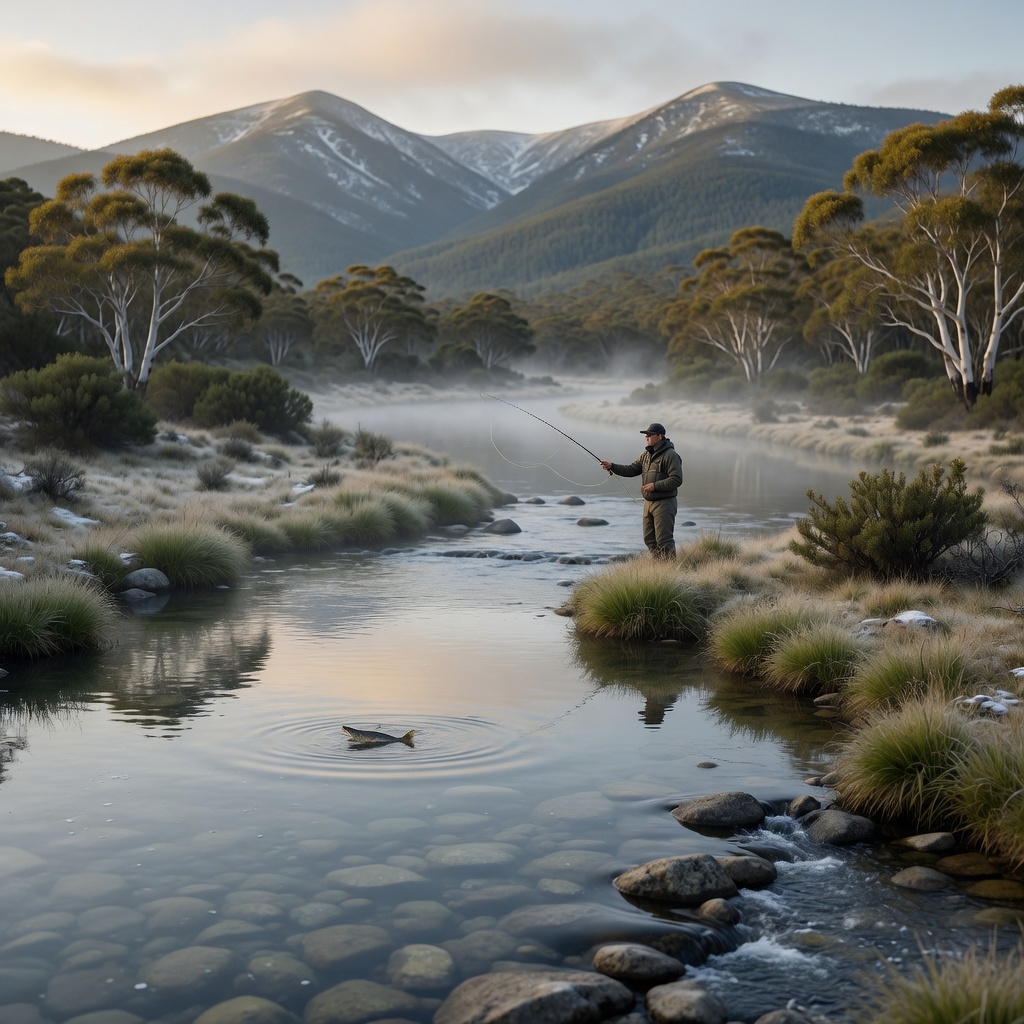
Why the Snowy Mountains Matter to Trout Anglers
The Snowy Mountains region of southern New South Wales holds the most consistent trout water in mainland Australia. Cold tailwater releases, snowmelt-fed rivers and two large impoundments create habitat where brown and rainbow trout grow well and hold year round. For anglers based in Sydney, the drive south puts alpine streams, dam edges and tailraces within a long weekend, and the mix of water types means there is almost always somewhere fishable regardless of wind direction or river height.
This guide from Australian Fish Species focuses on three things that decide success here: knowing which species you are actually looking at, matching water type to conditions, and timing your trip against the season and the closures that protect spawning fish.
Identifying the Trout You Catch
Brown Trout
Brown trout are the dominant wild fish in most Snowy rivers. Look for a buttery to olive-brown flank with scattered black spots and, usually, some rust-red or orange spots ringed by pale halos. The tail is square with few or no spots. Browns from lake edges often show heavier shoulders and a darker back; small stream fish can look almost golden. They are generally more nocturnal and more structure-bound than rainbows.
Rainbow Trout
Rainbows carry a pink to magenta lateral stripe, dense fine black spotting over the back, flanks and the whole tail, and a more silvery ground colour. Fresh lake rainbows may show only a faint stripe and look very chrome, which is where the spotted tail becomes the reliable clue. Rainbows tend to sit higher in the water column and feed more readily through the middle of the day.
Other Fish You May Encounter
Redfin perch and carp appear in some warmer, lower waters, and native species occur in connected systems downstream. Correct identification matters because rules differ by species and water, and because a mistaken release or retention can breach local regulations. If you also fish inland warmwater country, our notes on species profiles and identification cover the natives you are most likely to confuse with stocked fish.
The Main Water Types and How to Read Them
Alpine Rivers and Small Streams
High-country streams run clear and cold, and the fish are spooky. Work upstream, keep low, and cast to the edge seams, plunge pool tails and the shaded undercuts. Fish here are usually smaller but plentiful, and light lines with small nymphs, dry flies or tiny hard-bodied lures do the work.
Tailwater Rivers
Rivers below dam walls run at temperatures controlled by releases rather than air temperature, which keeps insect life active. Flow changes are the key variable: a rising release pushes food and can switch fish on, while a sudden drop scatters them. Check release information before committing to a long walk in.
Lakes and Impoundments
Big water rewards mobility. Trout patrol shorelines where wind-blown food collects, so the windward bank is often better than a comfortable sheltered one. Focus on rocky points, weed edges, drowned timber and inflowing creek mouths. Polaroiding sighted fish along shallow margins on bright days is a productive way to fish, as is trolling or casting along the drop-off at first and last light.
Season Timing Through the Year
Spring
Water is cold and often high with snowmelt. Fish are recovering from spawning, hungry and willing. Look for rising water temperatures, insect hatches on calmer afternoons and trout pushing into shallow bays.
Summer
Early morning and the last hour of light are the prime feeding windows. Terrestrial insects blown onto the water matter enormously in the high country, and warm afternoons can produce good surface activity in the rivers while lake fish shift deeper.
Autumn
Often the most consistent period. Cooling water, aggressive pre-spawn behaviour and fish stacking near tributary mouths make autumn the classic Snowy season. Larger browns become far more catchable.
Winter
Many rivers are closed to protect spawning fish, while lakes commonly remain open. Expect cold conditions, ice on gear and slower fishing, but lake shorelines near spawning tributaries can hold big fish.
Closures, Limits and Verifying the Rules
Trout waters in New South Wales are subject to an annual closed season on many rivers and streams, along with bag limits, size limits, gear restrictions and special provisions for particular waters. Some waters are fly and lure only. These rules exist to protect spawning runs and are reviewed over time, so dates and limits do change.
- Confirm whether the specific river, stream or lake you plan to fish is open before you travel.
- Check current bag and size limits, and any species-specific or water-specific conditions.
- Hold the correct recreational fishing fee or licence for the state you are fishing in.
- Note gear restrictions, including bait bans on certain trout waters.
Australian Fish Species explains how these frameworks work, but always verify current limits and closure dates directly with the relevant state or territory fisheries authority before you fish.
Tackle and Technique Checklist
- Spin: 1.8 to 2.1 m light rod, 1000 to 2500 size reel, 2 to 4 kg braid with a fluorocarbon leader, small spoons, spinners and 40 to 60 mm minnows.
- Fly: 4 to 6 weight outfit, floating line for rivers and an intermediate for lake edges, plus nymphs, wet flies, mudeyes and terrestrial dries.
- Bait where permitted: keep rigs light and unweighted or lightly weighted so presentations drift naturally.
- Release care: wet hands, minimal air exposure, barbless or crushed barbs, and support the fish until it swims off strongly. Warm water means shorter fights and faster releases.
Safety in Alpine Country
Mountain weather changes quickly in every season. Carry layers and wet weather gear, tell someone your plan, and expect limited mobile coverage in valleys. Wading in cold, fast tailwater is genuinely risky: use a wading staff, felt or studded soles, a belted wader system and never wade above comfortable footing. In winter, black ice on access roads is a bigger hazard than the fishing itself.
Questions about a particular water or season window? Contact Australian Fish Species at [email protected] or +61295585271 during Mon–Fri: 09:00 – 17:00 (AEST).

Navigation
See also
FAQ