Soft Plastic Shapes, Sizes and Jig Head Weights Explained
Why Shape, Size and Weight Matter More Than Colour
Most anglers agonise over colour and barely think about profile and sink rate. In practice, the three decisions that change your catch rate are the shape of the plastic (what movement it makes), the length (what the fish thinks it is eating) and the jig head weight (whether the lure ever reaches the strike zone and stays there). Get those right and colour becomes a fine-tuning exercise.
Around Sydney, the same handful of combinations cover an enormous range of fishing: bream and flathead on the sand flats, mulloway in the deeper river holes, tailor and Australian salmon along the beaches, and kingfish around the harbour structure. Understanding the logic below lets you adapt rather than memorise.
The Main Soft Plastic Shapes and What They Do
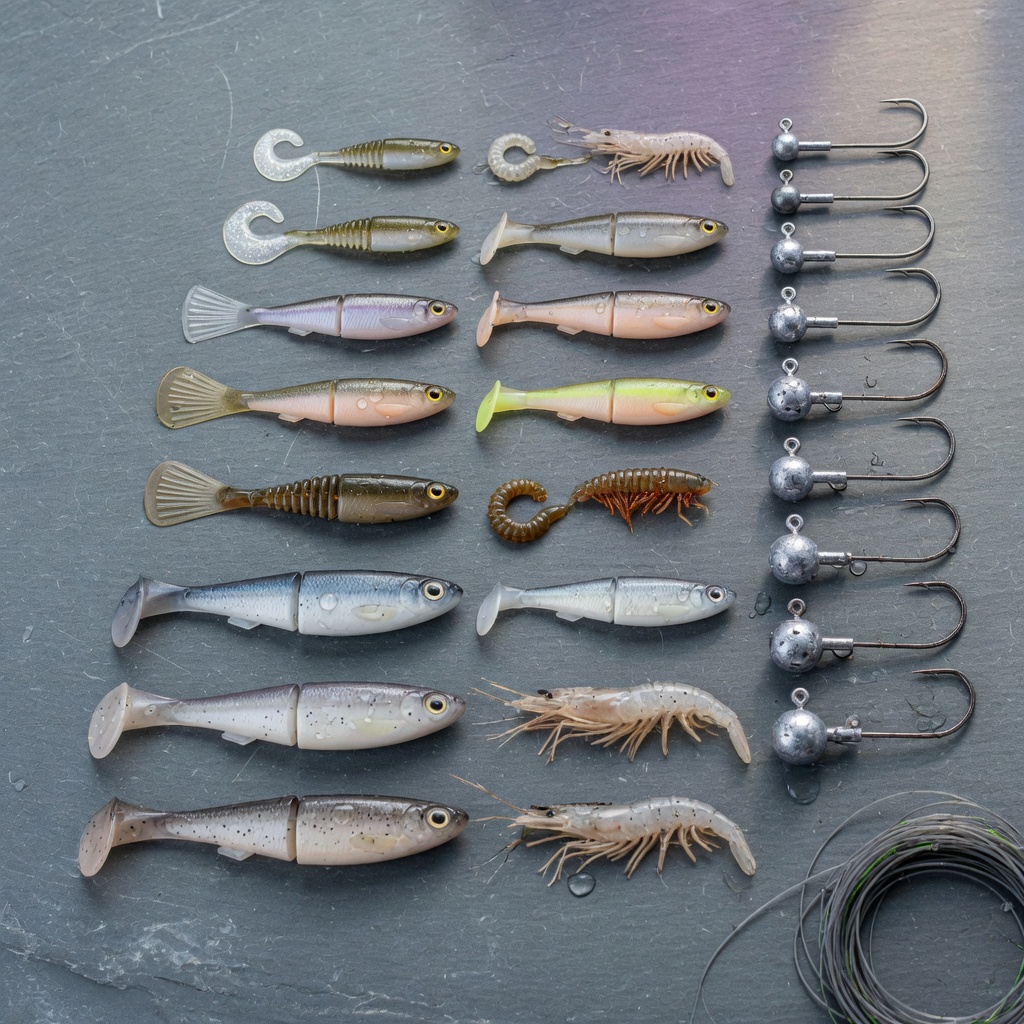
- Paddle tails — a flat tail blade that thumps on the drop and on the wind. Best all-round choice for flathead, tailor, salmon and mulloway because the vibration draws fish from a distance in dirty or moving water.
- Curl tails (grubs) — a ribbon tail that rolls at very slow speeds. Excellent when fish are lethargic in winter, or for Murray cod and golden perch fished slowly along timber.
- Jerk shads / minnows — slim baitfish profile with little inherent action. You supply the action with rod twitches. Deadly on kingfish, bass and mulloway when the bait is small pilchard or hardyhead.
- Prawn and shrimp imitations — segmented body, flicking legs or antennae. Ideal for bream and whiting in estuaries, hopped along sand or bounced past oyster racks.
- Worms and stick baits — subtle, low-vibration options for clear shallow water and pressured fish. Often the last resort that works on wary bream.
- Creature and craw baits — bulky, high-drag profiles for freshwater natives around structure, where a slow fall and big silhouette matter more than casting distance.
Choosing a Length
Match the bait present, then adjust. As a working guide: 2 to 2.5 inch for bream, whiting and small estuary fish; 3 to 4 inch as the universal estuary size for flathead, bass and mangrove jack; 5 to 7 inch when chasing mulloway, big flathead, tailor and kingfish; 7 inch and up when you are deliberately filtering out smaller fish. If you are getting hits without hook-ups, drop a size. If you are catching only undersized fish, go up.
Long, thin profiles cast further and appeal to fish feeding on slender baitfish. Short, fat profiles fall slower and stay in the strike zone longer over shallow sand or weed. Learning to read what the fish are actually eating is the same skill used in species identification and biology — stomach contents, bait schools on the sounder and birds working the surface all tell you the size to tie on.
Jig Head Weight: The Real Variable
Jig head weight controls sink rate. The aim is the lightest head that still lets you feel the bottom and maintain contact with the lure. Too heavy and the plastic drops like a stone with no natural glide; too light and the current sweeps it away from the structure you are targering.
- 1/16 to 1/8 oz (approx. 1.8 to 3.5 g) — shallow flats, 0.5 to 2 m, slack tide, bream and whiting.
- 1/6 to 1/4 oz (approx. 4.5 to 7 g) — general estuary work in 2 to 5 m, moderate tidal flow, flathead and bass.
- 3/8 to 1/2 oz (approx. 10 to 14 g) — deeper channels, bridge pylons, beach gutters and wind-affected drifts in 5 to 10 m.
- 3/4 to 1.5 oz (approx. 21 to 42 g) — mulloway in river holes, kingfish on structure, and any situation with strong current or drift.
- 2 oz and heavier — offshore and reef work where depth and current dominate.
A simple field test: cast, count the seconds to the bottom, and note the number. In 4 m of water a 1/6 oz head might take five to seven seconds. If you cannot feel the tap of the lead hitting sand within about ten seconds, go heavier. If it hits instantly and you snag constantly, go lighter.
Hook Size and Gauge
Hook gape should be roughly as wide as the plastic body so the point clears on the strike. Fine wire hooks suit light lines and soft-mouthed estuary fish; heavy gauge hooks are essential for kingfish, mangrove jack and cod where the fish will straighten cheap wire. Keeper barbs, wire coils or a dab of glue keep the plastic seated after repeated casts.
Rigging Alternatives
- Standard jig head — the default. Fast to change, good hook-up rate.
- Weedless / worm hook — for snag-ridden timber, weed beds and mangrove edges.
- Weighted swimbait hook — a slow fall through the water column with strong snag resistance.
- Jig head plus assist — heavier applications where fish nip at the tail.
Matching to Tide, Wind and Depth
Tide direction and speed change the effective weight of every head you use. On a running tide you may need double the weight you used at the turn, in the same spot. Wind creates boat drift, which lifts the lure and flattens the presentation, so an extra 1/8 oz often restores bottom contact. Plan your session around the softer parts of the tide if you want to fish light, and carry a spread of weights across at least three sizes for every plastic in your box.
A Simple Starting Kit
Three shapes (paddle tail, curl tail, prawn), three lengths (2.5, 4 and 6 inch), and jig heads in 1/8, 1/4 and 1/2 oz will cover most estuary and inshore fishing near Sydney. Add heavier heads and longer jerk shads as you move offshore or start chasing mulloway at night.
Always check current size limits, bag limits and closures with your state or territory fisheries authority before you keep a fish — rules differ between jurisdictions and change over time. For questions about the guides on Australian Fish Species, contact us at [email protected] or +61295585271 during Mon–Fri: 09:00 – 17:00 (AEST).
Navigation
See also
FAQ