Sooty Grunter and Jungle Perch in Tropical Freshwater Streams
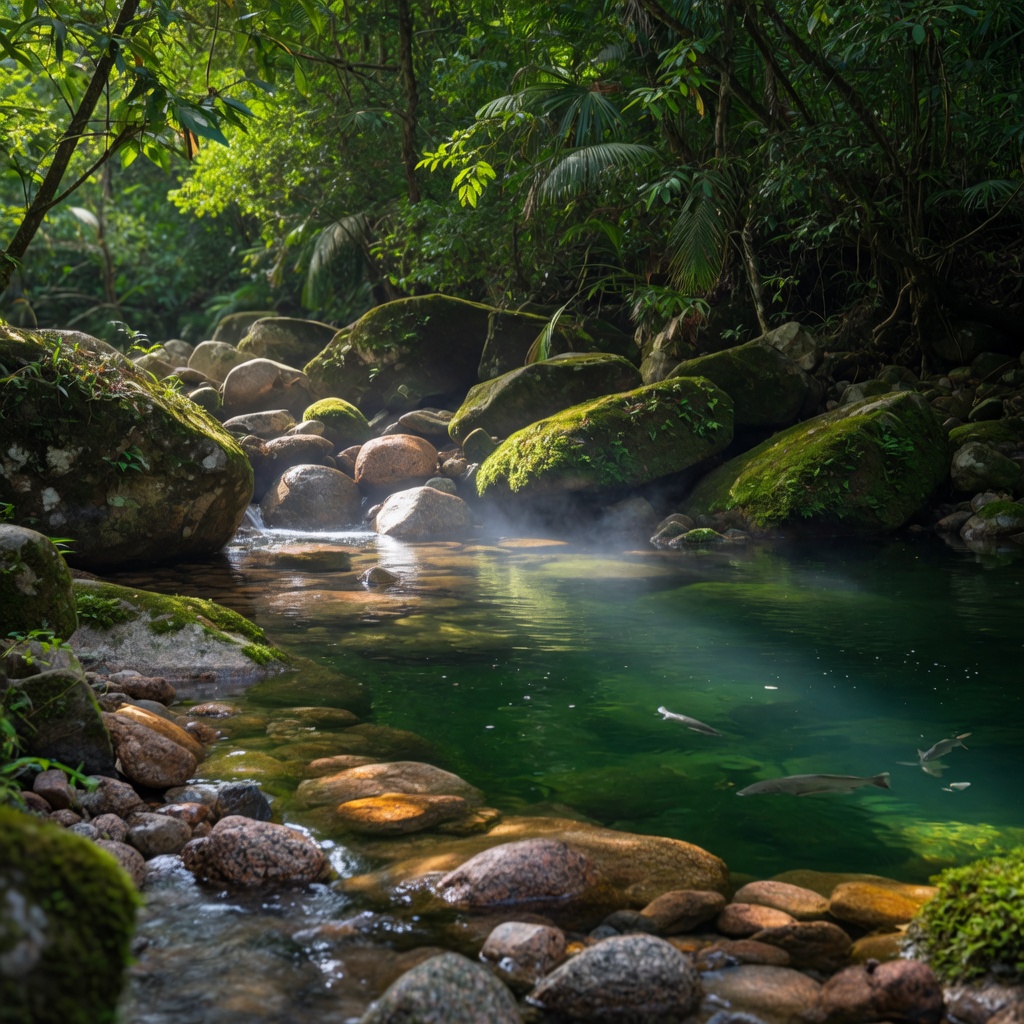
Two Tropical Stream Specialists
Above the tidal reach of northern rivers, where the water runs clear over cobble and granite, two native species dominate the fishing: sooty grunter (Hephaestus fuliginosus) and jungle perch (Kuhlia rupestris). Both are found across the Top End, Cape York, the Queensland wet tropics and parts of the Kimberley, and both reward anglers who walk, wade and cast light gear rather than sit and soak bait. Australian Fish Species covers these fish as part of our native freshwater series, alongside the better-known barramundi, Murray cod and Australian bass.
Sooty grunter are deep-bodied, blunt-headed and heavily built, usually bronze to charcoal with darker fin margins and thick, rubbery lips. Fish of 30-40 cm are common in headwater creeks, with larger specimens holding in deeper gorge pools. Jungle perch are a different shape entirely: silvery, streamlined, large-eyed, with a deeply forked tail and dark blotches on the tail lobes. They rarely exceed 45 cm but pull hard, jump and are famously wary in clear water.
Reading Tropical Stream Habitat
These streams are structured in a repeating pattern of riffle, run and pool, and each species uses it differently.
- Sooty grunter hold in the broken water at the head of pools, behind boulders, under undercut banks and around submerged timber. They tolerate warmer, slightly turbid water and will push well into small tributaries during the wet.
- Jungle perch prefer the clearest, most oxygenated water available - the tail of a rapid, the shaded edge of a plunge pool, the seam beside a waterfall. They need connected river systems because juveniles spend time in estuarine and coastal waters, so barriers and weirs hit them harder than sooties.
- Shade and overhang matter more than depth in small creeks. Casuarina roots, pandanus and rainforest canopy drop insects, fruit and berries that both species eat readily.
Seasons and Feeding Windows
The tropical north runs on a wet and dry cycle rather than four even seasons. Late spring through summer (roughly November to March) brings monsoon rain, high dirty flows, and dangerous access - creek crossings can rise metres in hours. The best stream fishing is typically the drying period from about April to September, when flows drop, water clears and fish concentrate in defined pools.
Within a day, first light and the last hour before dark are prime, especially for jungle perch, which become far harder to fool under high overhead sun in glass-clear water. Overcast, humid afternoons with light rain often trigger strong surface feeding. Water temperature is the throttle: both species slow noticeably during cool dry-season mornings in upland streams, then switch on as the sun warms shallow pool edges by mid-morning.
Tackle, Lures and Rigs
Light and mobile beats heavy and static. A practical stream outfit is a 1-2 kg to 3-5 kg spin rod of 1.8-2.1 m, a 1000-2500 size reel, 4-8 kg braid and a short 8-12 kg fluorocarbon leader. Heavier leader is worth it around timber and rock, where abrasion loses more fish than drag pressure ever does.
- Small hard-bodied lures 40-70 mm, shallow to mid divers, in gold, bronze and natural fish patterns for sooties.
- Surface lures - poppers, small walk-the-dog stickbaits and fizzers - are the classic jungle perch approach, cast tight to overhanging cover and retrieved with pauses.
- Soft plastics 50-75 mm on 1/12 to 1/8 oz jig heads, hopped through pool tails, cover both species.
- Small spinnerbaits and blades excel in slightly coloured water after rain.
- Bait, where permitted, can include grasshoppers, worms and small yabbies on a single hook with a light running sinker, fished naturally down a current seam. Check the rules for your area before using live bait.
Approach is half the game. Wade upstream so silt drifts behind you, keep low, use a long first cast to the pool tail before moving up, and avoid casting shadows across clear water.
Handling, Release and Habitat Care
Both species are commonly released. Use single inline hooks or crush barbs to speed unhooking, keep fish in the water where possible, support the body horizontally, wet your hands, and avoid dropping fish onto hot rock or dry sand. Jungle perch in particular are sensitive to prolonged air exposure - aim for under 30 seconds for a photo, then release into flowing, oxygenated water and hold the fish head-first into current until it swims off.
Habitat protection is central to these fisheries. Avoid trampling spawning gravels, do not move fish between catchments, clean gear between systems to limit spread of pests and disease, and pack out all line and packaging. Weirs and road crossings that block fish passage are a genuine problem for jungle perch, so support local fish passage and riparian revegetation work where you can.
Rules, Access and Safety
Bag limits, size limits, closures, permitted bait and stocked-impoundment permit requirements differ between Queensland, the Northern Territory and Western Australia, and they change over time. Treat this article as background only and verify current limits with the relevant state or territory fisheries authority before you fish. Many productive headwaters sit within national parks, Indigenous land or private grazing property, so confirm access permissions and any park fishing restrictions in advance.
Remote stream fishing carries real risks. Estuarine crocodiles occur in coastal and lower freshwater reaches of northern rivers, and can be present further upstream than many visitors expect - do not wade or stand at the water's edge in croc country, and follow local warning signage. Flash flooding during the wet can cut roads and strand vehicles, so check forecasts and river heights, carry drinking water, sun protection, a first aid kit and a satellite communicator or PLB where there is no mobile coverage, and tell someone your route and return time.
Questions about a particular catchment or trip plan? Contact the Australian Fish Species team on +61295585271 or [email protected] during Mon–Fri: 09:00 – 17:00 (AEST). We are based in Sydney and publish region-by-region guides across the northern tropics and the Murray-Darling Basin.

Navigation
See also
FAQ