Southern Calamari and Squid over Inshore Weed Beds
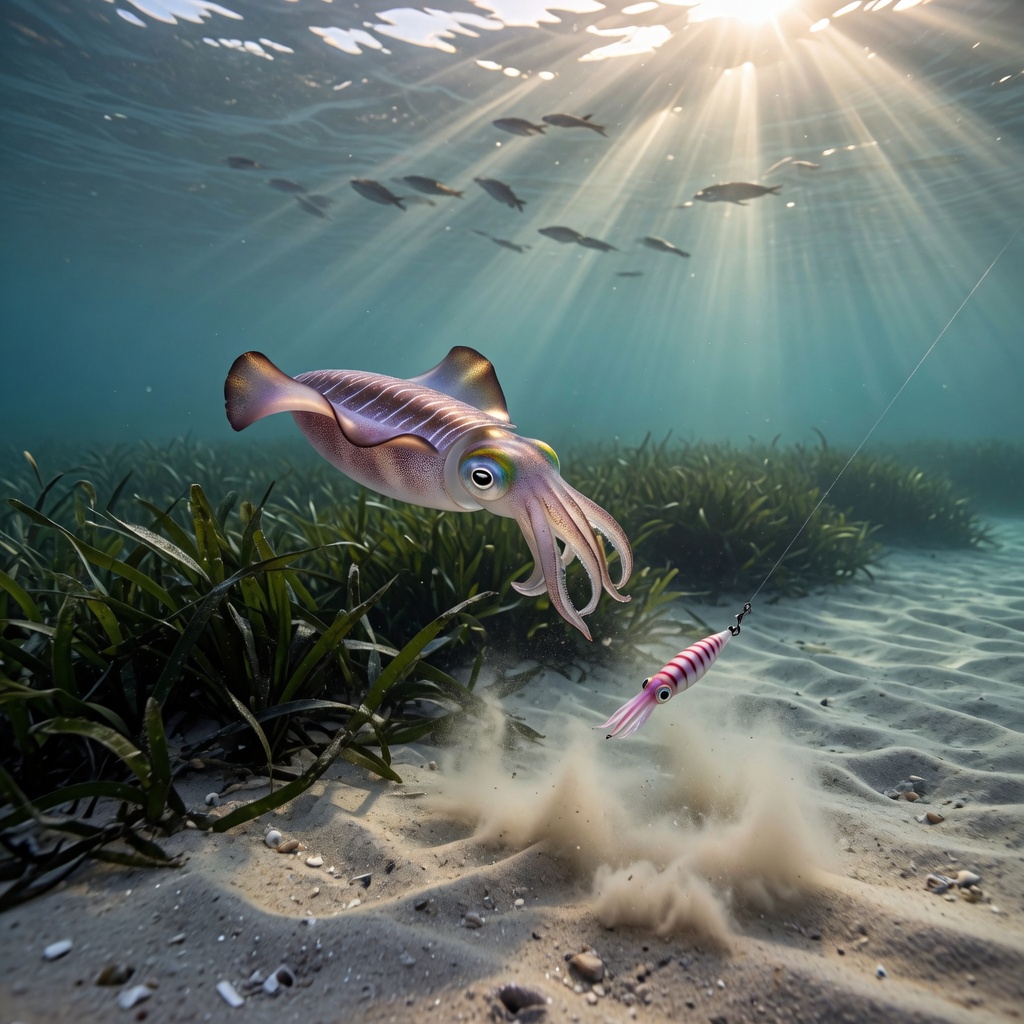
Why weed beds matter
Southern calamari are ambush feeders that hold tight to structure where small baitfish, prawns and juvenile fish shelter. Around Sydney, that structure is almost always seagrass: strap weed and eelgrass flats in 1.5 to 6 m of water inside the harbour, along the northern beaches lagoons entrances, and across the sandy bays of Botany Bay and Pittwater. Calamari sit over the weed edges and in the sand blows between patches, using the broken bottom to hide while they watch upward for silhouettes.
Learn to read the bottom before you cast. Dark, uneven patches on a clear day are weed; pale ribbons and circles are sand. Fish the seam between the two. On a sounder, healthy weed shows as a fuzzy, uneven return roughly 30 to 80 cm above hard bottom. If you are shore-based, polarised sunglasses do the same job in the first two hours after sunrise.
Southern calamari versus other squid
Southern calamari (Sepioteuthis australis) have broad fins running almost the full length of the mantle, giving a rounded, paddle-like profile. Arrow squid are slimmer with short triangular fins near the tail and are more common in deeper, open water. Cuttlefish are wider again, with a rigid internal cuttlebone, and are often encountered over the same weed. All three take jigs, but calamari are the mainstay of inshore weed-bed fishing and are the best eating of the group for most anglers.
Jigs, sizes and sink rates
- Size 2.5 is the everyday choice for 2 to 5 m of water, sinking roughly 3 to 3.5 seconds per metre.
- Size 3.0 suits deeper edges, wind drift or run in the tide.
- Size 1.8 to 2.2 shines in very shallow weed, gin-clear water or when calamari follow without committing.
- Colours: natural browns, pinks and pilchard patterns in bright conditions; orange, chartreuse and glow-backed jigs in low light or dirty water.
Count the jig down so it settles just above the weed rather than buried in it. If you are constantly picking off strands, shorten the count by two or three seconds or step down a size.
The retrieve that works
- Cast across the weed edge and let the jig sink on a semi-tight line, watching for the leader to jump.
- Give two or three sharp upward whips of the rod tip, lifting the jig 1 to 1.5 m.
- Pause and let it glide back down, and expect the hit on the drop.
- Wind up slack, repeat, and slow everything down if you see followers.
On the strike, do not swing hard. Keep steady, moderate pressure with a smooth drag and no pumping, because the crown of barbless spikes will pull free if you go slack or heave. Guide the calamari to the net or gaff-free landing rather than lifting it clear of the water.
Tackle and rigging
A 2.1 to 2.4 m graphite rod rated 1 to 3 kg with a fast tip, a 2000 to 2500 size reel, 0.6 to 1.0 mm braid at 4 to 8 kg and a 3 to 5 kg fluorocarbon leader of about 1.5 m covers nearly all inshore work. The thin braid transmits the flick of the jig and shows subtle weight when a calamari loads up. A long-handled net with a knotless mesh saves ink on the deck and damage to the mantle.
Tide, moon and light
Calamari feed hardest in low light. Dawn, dusk and the first hours of dark are prime, especially when they line up with a moving tide. A rising tide pushing clean water over the weed generally beats a falling tide dragging silt off the flats. Around lit wharves and moored boats, the shadow line is a reliable ambush point after dark. Neap tides with gentle flow make jig control easier for beginners, while bigger spring tides can concentrate squid on the down-current side of weed points.
Water clarity beats almost everything. After heavy rain in the catchment, move seaward towards the more oceanic weed beds where salinity stays stable. The same tide and light logic drives most of the species covered in our estuary and inshore fishing guides.
Care, handling and quality
Bleed the ink away from your catch by holding the squid over the side for a few seconds before it comes aboard. Chill immediately in a slurry of ice and seawater, keeping tubes whole until you are ready to clean. Rinse in cold seawater rather than fresh water to keep the flesh firm. Calamari also make premium bait: a fresh strip or head is hard to beat for mulloway, snapper and kingfish.
Rules, respect and safety
Bag and possession limits for squid and cuttlefish, plus any closed areas, aquatic reserves and no-take zones, vary by state and change over time. Before you fish, check the current rules with the relevant state or territory fisheries authority, and note that many inshore weed beds sit inside protected habitat where seagrass damage is an offence. Take only what you will eat, release cuttlefish carrying eggs, and avoid anchoring or dragging over seagrass. If you are fishing rock ledges or exposed shorelines for calamari, wear a lifejacket, check the marine forecast and swell, and never fish alone.
Questions about local weed beds or seasonal timing around Sydney? Contact Australian Fish Species on +61295585271 or at [email protected] during Mon–Fri: 09:00 – 17:00 (AEST).

Navigation
See also
FAQ