Surface Lure Whiting on Shallow Sand Flats
Why Whiting Eat Off The Top
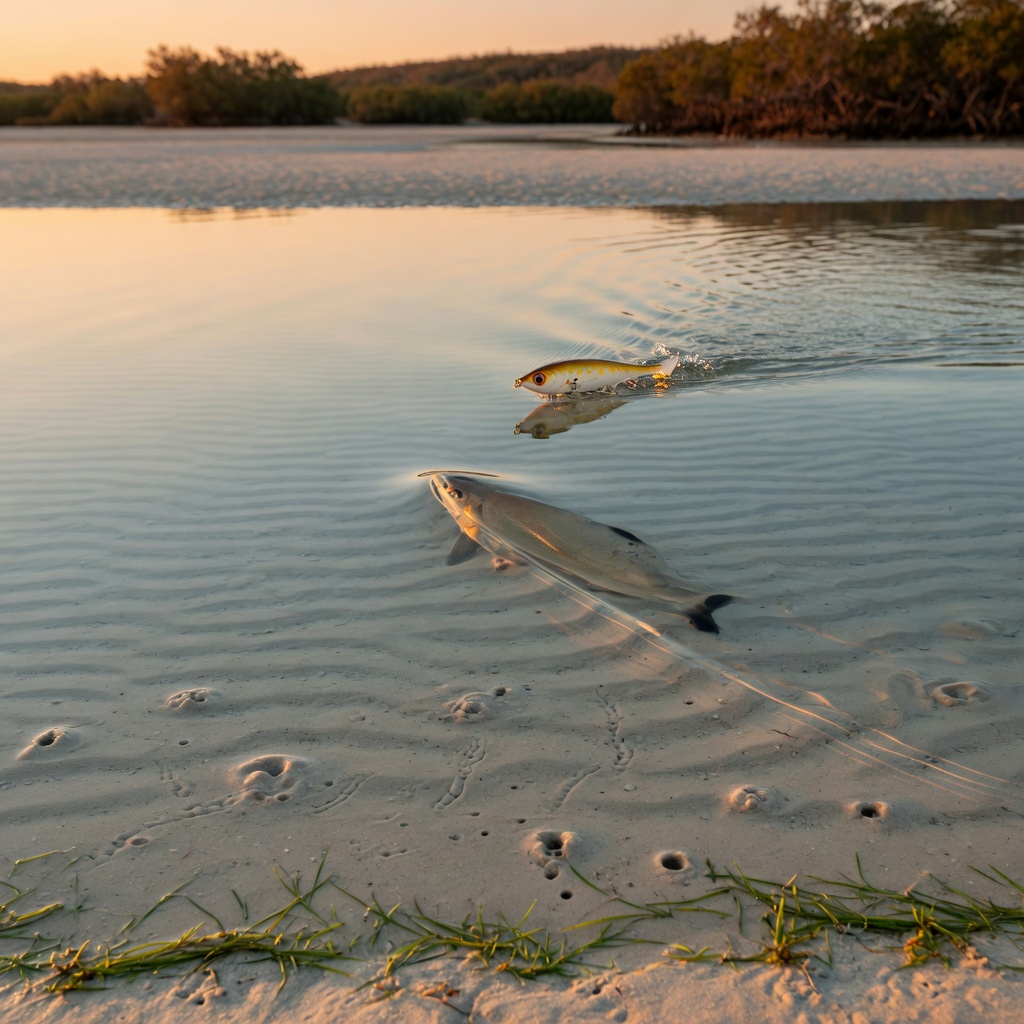
Sand whiting (Sillago ciliata) are best known as a bait fish for peeled prawn and beach worm, yet they are one of the most reliable surface lure targets in Australia. On shallow sand flats they hunt by sight and vibration, hoovering nippers, worms and small crabs from the top few centimetres of sand. A small walking stickbait or popper skittering across 20 to 60 cm of water mimics a fleeing prawn, and whiting will chase it for metres with a bow wave behind the lure. In Sydney the run of warm water from late spring through to early autumn produces the most consistent surface sessions, with the Georges, Hawkesbury, Port Hacking and the northern beaches lagoons all holding good numbers of flats fish.
Reading A Sand Flat
Not all flats fish equally. Look for clean, firm sand with scattered nipper holes, a light weed fringe, and a drain or gutter that empties as the tide falls. Whiting move onto the shallowest water on a rising tide, work the edges of yabby beds, then filter back to the drop-off as the water leaves. Signs worth walking for include:
- Nipper holes and worm coils exposed on the low, showing an active food source.
- Tailing fish with dorsal fins or tails breaking the surface as they nose into the sand.
- Puffs of sand and small bow waves moving away as you wade in.
- Clean water over pale sand, which lets fish see a surface lure from several metres.
Wade slowly and quietly. Whiting in ankle-deep water spook easily, so cast well ahead of the fish rather than at them, and keep your shadow off the target water when the sun is low.
Tide, Moon And Time Of Day
The best whiting window is usually the last two hours of the flood and the first hour of the ebb, when bait is being pushed high and fish are committed to feeding. Bigger tides around the new and full moon flood the flats harder and can produce spectacular sessions, though very dirty water after heavy rain shuts the bite down. Early morning and the last hour before dark reduce the number of refusals, but whiting will happily eat surface lures in bright midday sun if the water is clear. Warm, still days with a light onshore breeze that puts a slight ripple on the surface often beat glassed-off conditions.
Tackle And Rigs
Light gear is not just more fun, it casts small lures further and lands them softer.
- Rod: 2.0 to 2.3 m graphite spin rod rated 1 to 3 kg, fast enough to work a stickbait but soft in the tip to absorb head shakes.
- Reel: 1000 to 2500 size spin reel with a smooth drag set light.
- Braid: 2 to 4 kg (roughly PE 0.4 to 0.6) for distance and direct lure control.
- Leader: 1 to 1.5 m of 4 to 6 kg fluorocarbon. Go heavier only if flathead and bream are thick.
- Lures: 35 to 70 mm walking stickbaits, small poppers and bent-minnow style lures in clear, bone, prawn and pink patterns.
Many anglers replace trebles with single inline hooks. It reduces damage to small fish, unhooks faster, and rarely costs you a landed fish once you stop striking on the splash.
The Retrieve That Gets Bites
Cast long, wind up the slack, then start a continuous rhythm of short rod-tip taps with steady winding so the lure walks side to side. The key is consistency: a lure that keeps moving at the same pace pulls fish from a long way. When a whiting boils on the lure, do not strike. Keep walking the lure until you feel weight, then simply lift and load the rod. Missed strikes are normal, and a fish that misses will often come back two or three times if the lure never stops.
- Fan casts across the flat, covering water rather than fishing one lane.
- Speed up slightly if fish follow without committing.
- Pause only when a fish repeatedly refuses, then twitch on the spot.
- Cover shallow water first, then work the drop-off as the tide falls.
Bycatch, Care And Conservation
Flats surface fishing also produces bream, dusky flathead, and in northern estuaries small trevally and even queenfish, so keep pliers and a knotless landing net handy. Wet your hands, support the fish, and release quickly. Whiting have soft mouths and delicate scales, so avoid dragging them across dry sand. Bag and size limits for whiting differ between states and change over time, so always confirm current rules with the relevant state or territory fisheries authority before you keep a feed. Protect the resource by leaving yabby beds and seagrass undisturbed, and by walking around weed banks rather than through them.
Safety On The Flats
Shallow water still deserves respect. Wear old sneakers or booties against stingrays, shuffle your feet in murky water, and check the tide chart so a rising tide does not cut you off from the bank. Sun exposure on open sand is intense, so use a long-sleeve shirt, hat and polarised sunglasses, which also help you spot fish. If you are wading a bar-affected system or launching a small boat, review marine forecasts first.
Learn More
For identification features, size ranges and lookalike species across the whiting family, see our fish species profiles and identification guides. Questions about a local flat or a rig detail can be sent to [email protected] or by phone on +61295585271 during Mon–Fri: 09:00 – 17:00 (AEST), and Australian Fish Species continues to expand its regional coverage with reader input.

Navigation
See also
FAQ