Tackle Care and Corrosion Prevention in Australian Conditions
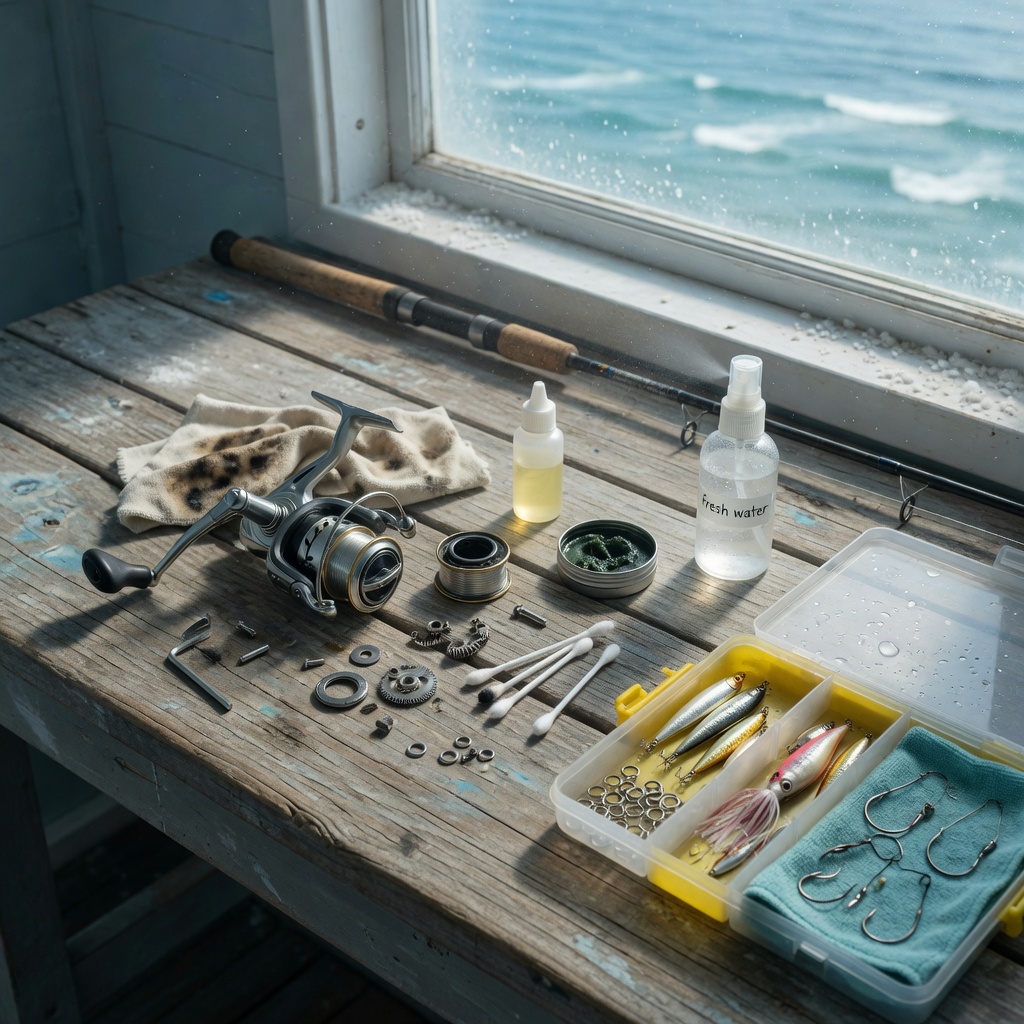
Why Australian Conditions Are Hard on Tackle
Salt spray, UV, sand and humidity work together to destroy fishing gear faster than most anglers expect. A morning session off the Sydney rock platforms or a long day chasing kingfish outside the Heads coats everything in a fine salt film. As that film dries, the salt draws moisture from the air and sits against bearings, screws, hook points and split rings. Add subtropical humidity through a Queensland summer, or fine beach sand from a tailor session, and untreated tackle can seize within a season.
Corrosion is not just a cost problem. A rusted hook point rolls or snaps under load, a stiff drag surges and pops leaders, and a corroded split ring straightens on a big fish. Looking after gear is part of fishing well, and it is also part of fishing responsibly: sharp, reliable hooks and smooth drags mean shorter fights and healthier releases. Tackle care sits naturally alongside catch care, release and conservation practice.
The Ten Minute Post-Trip Routine
Do this while the gear is still damp, not the next weekend.
- Back the drag off to almost nothing before washing, so the drag washers are not compressed while wet.
- Rinse with a light, cool spray or a damp cloth. Do not blast a reel with a pressure hose or high-volume jet, as that forces salt water past seals and into the gearbox.
- Wipe rod blanks, guides and reel seats with fresh water, paying attention to the underside of guide feet and the inside of guide rings where salt hides.
- Stand rods and reels upright to drain, then dry them in shade with airflow. Direct sun bakes salt into finishes and degrades cork, EVA and guide wraps.
- Once dry, apply a light reel oil to the handle knob and line roller, and a touch of grease only where the manufacturer specifies. More is not better; excess lubricant collects grit.
- Reset the drag to a light setting for storage, and store rods vertically or on horizontal racks, never leaning under tension.
Reels: Salt Water, Sand and Bearings
Line rollers, handle knobs and bail arms fail first because they are small bearings sitting in constant spray. Spin them by hand every few trips; a gritty or clicking feel means salt has entered. Most line rollers can be removed with a single screw for a rinse and re-lube. Baitcasters used for barramundi and mangrove jack in the tropics need particular attention to the spool bearings, as brackish water and heat thin the oil quickly.
If a reel goes for a swim, or gets dunked in a bar-crossing wave, treat it as an emergency. Rinse in fresh water promptly, remove the spool and side plate if you are confident, and get it to a service technician if it holds significant water. Salt inside a sealed body will keep working on the gears long after the outside looks fine.
Rods, Guides and Line
Check guide rings for hairline cracks by running a cotton bud around the inside; snagged fibres reveal a chipped insert that will shred braid. Inspect the frames for rust bleeding through the finish, especially on beach and rock rods. Rinse reel seats and remove sand from under sliding hoods on ring-seat rods.
Braid does not corrode, but it holds salt crystals that abrade guides and the line itself. Every few trips, strip the top 20 to 30 metres off the spool into a bucket of fresh water, then respool. Monofilament and fluorocarbon leader spools should be kept out of the sun in a closed tray, as UV weakens them steadily even when unused.
Hooks, Lures and Terminals
Terminal tackle is cheap to replace and expensive to trust blindly. Suggested practice:
- Rinse and dry hard bodies and metals before returning them to the tray. A single wet lure will rust every hook in a closed box.
- Leave lure trays open to dry, then store them out of direct sun. Soft plastics should be kept away from painted lures and in their original packets to stop plasticiser bleed.
- Upgrade rings and trebles on lures used for kingfish, tuna and Spanish mackerel, and inspect them after every capture.
- Sharpen or replace hook points that will not grab a thumbnail. Chemically sharpened hooks corrode quickly once the coating is scratched.
- Dry and separate sinkers, swivels and rings; mixed metals in a damp tray create galvanic corrosion that eats the softer component.
Storage, Transport and Boats
Store gear in a ventilated space rather than a sealed plastic tub in a hot garage. Rod tubes and soft covers must be bone dry before the rods go in. In boats, rinse rod holders, hatch hinges, gunwale tracks and trailer fittings, and flush the outboard after every saltwater trip. Anodes, bolts and stainless fittings should be checked seasonally for weeping rust, which signals crevice corrosion beneath the surface.
For rock and beach anglers, add a dedicated wash bucket to the car kit. A quick freshwater dunk of the reel foot, cleats and gaff head at the car park stops most salt damage before the drive home. Keep safety gear separate from tackle so lifejacket buckles, torches and knife sheaths get their own rinse and dry cycle.
Building a Seasonal Service Habit
Twice a year suits most Australian anglers: once before the summer pelagic and barramundi run, once before the winter bream, snapper and tailor seasons. A service session means full strip-downs on hard-used reels, new drag grease, fresh line, new leaders, replaced trebles, and a line-by-line check of nets, gaffs, pliers and cutters. Keep a simple written list of what was serviced and when, so nothing gets skipped.
Questions about a particular reel type, coastal conditions or a service routine for your setup? Contact Australian Fish Species on +61295585271 or at [email protected] during Mon–Fri: 09:00 – 17:00 (AEST). Our reference notes are written with Sydney and wider Australian conditions in mind, using metric units and Southern Hemisphere seasons throughout.

Navigation
See also
FAQ