Targeting Murray Cod on Surface Lures After Dark
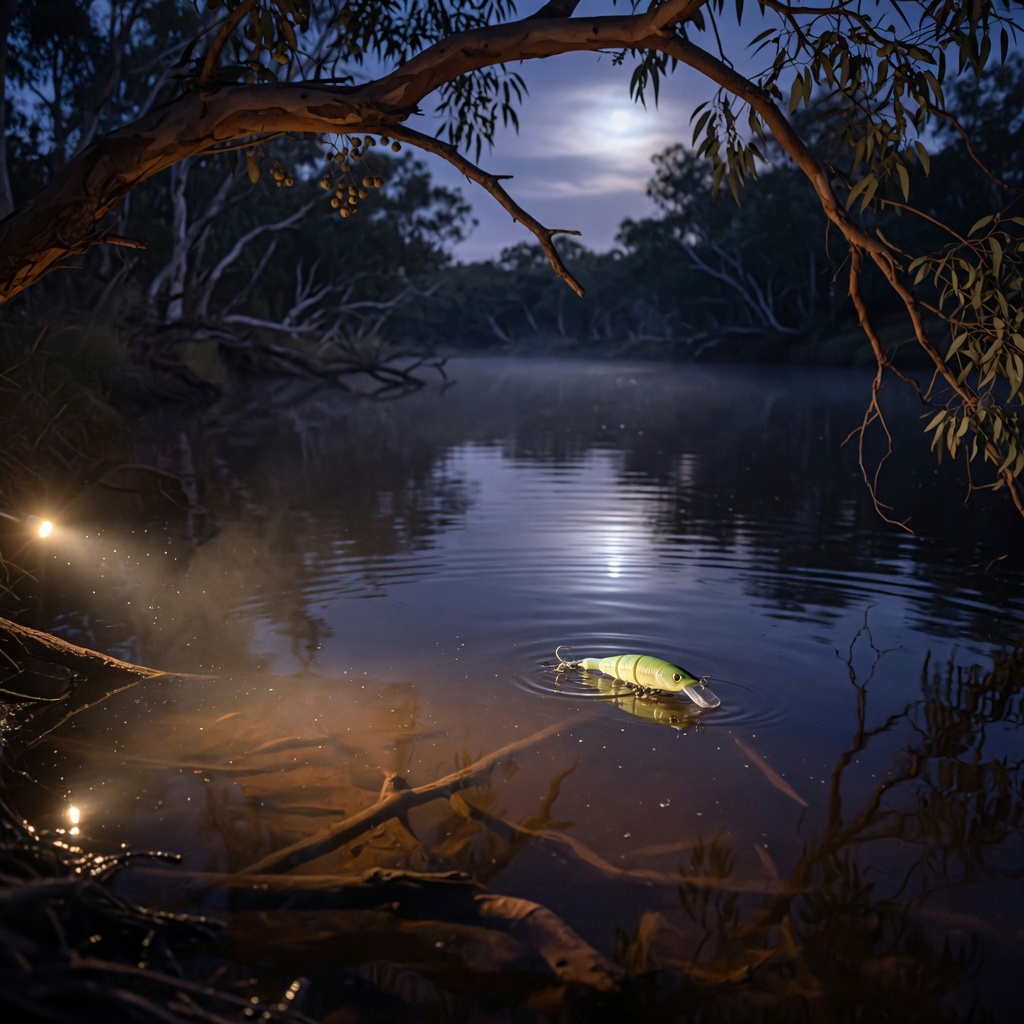
Why Surface Works After Dark
Murray cod are ambush predators built for low light. Their eyes and lateral line are tuned to detect vibration and surface disturbance, which is why a slow, noisy lure dragged across the top can out-fish deep presentations once the sun drops. Through the warmer months, roughly November to March in the Murray-Darling Basin, water temperatures above about 18 degrees push cod into the shallow margins at night, hunting frogs, mice, small birds and insects that fall in. That behaviour is the whole basis of night surface fishing: you are imitating something clumsy and struggling on the film of the water.
The best sessions usually start in the last half hour of daylight and run for two to four hours. Many anglers report a second bite window around midnight and again before first light. Overcast, still, humid nights after a warm day tend to fish better than cold, clear, windy ones. If a cold front drops the water a few degrees, expect surface activity to shut down and switch to a slow-rolled spinnerbait or a deep diver instead.
Lure Selection: Paddlers, Walkers and Poppers
Three families cover almost every situation on the Murray, Murrumbidgee, Goulburn and their tributaries.
- Jointed paddlers (cup-face crawlers): the classic choice. Cast, let it settle, then wind at the slowest speed that keeps the cup slapping. The steady plop-plop-plop can be worked for long distances along a snag line.
- Walkers and gliders: better on flat, quiet backwaters where a heavy noise signature spooks fish. Use a rhythmic rod-tip cadence and let the lure sit for two seconds after each glide.
- Poppers and spitters: ideal for tight work around a single laydown or rock ledge where you want maximum commotion in a small strike zone.
Size matters more than colour at night. Lures of 70 to 130 mm suit most rivers, while impoundment fish will happily eat larger profiles. Dark backs such as black, brown or olive silhouette well against a moonlit sky. Upgrade the factory hardware: replace split rings with heavy-duty rings and fit strong single or short-shank trebles that will not straighten when a big fish rolls into timber.
Rods, Leaders and Rigging
A 6 to 7 foot baitcast rod rated around 6 to 10 kg with a fast tip and strong butt gives you the leverage to turn fish away from structure. Load 30 to 50 lb braid and run 60 to 80 lb fluorocarbon or hard mono leader, roughly a rod length, joined with an FG or double-uni knot. Cod do not have cutting teeth, but their raspy jaws and the sandpaper of submerged timber will destroy light leader in seconds. Tie the lure on with a loop knot so the action stays free.
Set the drag firm. Most lost fish are lost because the angler was underdone in the first three seconds. Keep the rod low on the strike, wind hard, and do not lift until the fish is clear of the snag. For a broader look at connections, hardware and lure matching across species, see our baits, lures, rigs and leaders guide.
Reading the Water at Night
Scout your stretch in daylight. Mark the laydown timber, undercut clay banks, rock bars, weed edges and the seams where a faster run meets slack water. At night you fish memory, not eyesight. Cast parallel to structure rather than at it, so the lure spends the longest possible time in the strike zone. Work the shallow inside of bends and any water from knee to waist deep adjacent to deeper holes.
Discipline beats water covered. Give every promising snag three to five casts from different angles before moving on. Cod will often follow twice and eat on the third pass.
Setting the Hooks and Handling the Fish
Surface strikes at night are loud and startling. The single most common mistake is striking at the noise. Wait until you feel weight loading the rod, then sweep sideways and keep winding. If the fish misses, keep the retrieve going at the same pace; a miss often triggers a second, harder eat.
Murray cod are a long-lived native species and many populations are supported by stocking and closed seasons. Handle them wet-handed, support the belly horizontally, keep them out of the water for well under a minute, and never lay them on dry bank or hot boat decking. A large knotless landing net and long-nosed pliers make release far quicker. Bag limits, size limits and the annual spawning closure differ between states and change over time, so always confirm current rules with the relevant state or territory fisheries authority before you fish, and read our notes on catch and release best practice.
Night Safety Checklist
- Tell someone your exact stretch and expected return time.
- Carry two light sources, one head torch and one backup, plus spare batteries.
- Wear a lifejacket in any craft, and closed footwear on slippery clay banks.
- Watch for submerged timber when moving between spots after dark; idle, do not plane.
- Check the forecast for storms and river level changes before you commit to a long walk in.
Australian Fish Species is written for anglers around Sydney and across the Basin who travel inland for cod season. Questions or a correction to add? Reach us at [email protected] or +61295585271 during Mon–Fri: 09:00 – 17:00 (AEST).

Navigation
See also
FAQ