Trolling for Black Marlin on the Continental Shelf
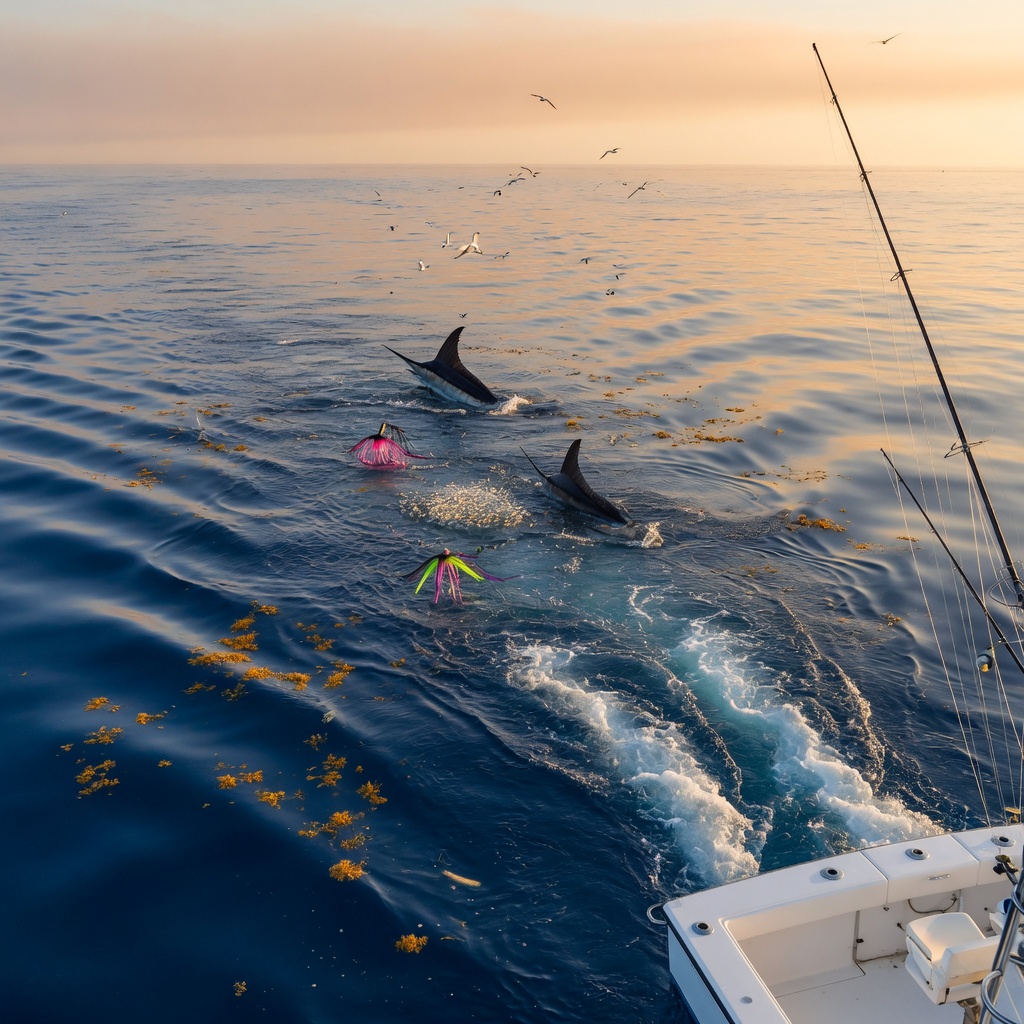
Why the Shelf Holds Black Marlin
The continental shelf drop-off is where cool inshore water meets the warm push of the East Australian Current. Off Sydney that edge sits roughly 20 to 30 nautical miles out, and the bathymetry does the work for you: canyons, ridges and pinnacles force nutrient-rich water upward, bait balls stack along the temperature break, and black marlin patrol the pressure edges looking for slimy mackerel, yellowtail scad and small tuna. Find bait, current lines, floating weed or working birds along the 100 to 200 metre contour and you have found a reason to put lures in the water.
Black marlin (Istiompax indica) are the most commonly encountered billfish on the northern half of the NSW coast in late summer and autumn, with a season that typically runs from December through to May depending on how far south the warm water pushes. Small "rat" blacks of 15 to 40 kilograms often come in tight to the shelf and even inside it, while heavier fish sit deeper along the true drop-off.
Identifying a Black Marlin Correctly
Correct identification matters for your logbook, for tag data and for understanding what the fish is likely to do on the end of the line. Key features to check before release:
- Pectoral fins: rigid and cannot be folded flat against the body. This is the single most reliable black marlin trait.
- Body shape: deep through the shoulders, laterally compressed, with a relatively short, thick bill.
- Dorsal height: first dorsal is lower than the body depth, unlike the tall sail of a sailfish.
- Colour: deep blue-black above, silver flanks that light up with cobalt bars when the fish is lit up and feeding.
Striped marlin show a taller dorsal and obvious vertical bars that persist after death; blue marlin have a pointed dorsal, a more rounded body and flexible pectorals. If you are still building your reference knowledge, work through our broader fish species profiles and identification notes so you can call a fish accurately from the cockpit rather than guessing.
Setting a Trolling Spread
Most shelf crews run a five to seven rod spread at 7 to 9 knots. A workable pattern:
- Short corners: two skirted lures or swimming baits in the second and third wake pressure waves, close enough to see the strike.
- Long riggers: from outriggers on light drop-back clips so a fish can turn with the lure before load comes on.
- Shotgun: a single lure well back off the centre rigger, often the rod that finds the shy fish.
- Teasers: a hookless daisy chain or dredge to build the illusion of a bait school.
Skirted lures in 20 to 25 centimetre sizes work well on rat blacks; switch to swimming garfish, slimy mackerel or striped tuna baits when fish come up to the teasers but refuse plastic. Lumo, purple-black and pink-white patterns all earn their keep. Keep a pitch bait rigged and ready in a bucket at all times.
Tackle and Drag Settings
For fish under 60 kilograms, 15 kg (24 kg for bigger models) lever drag game reels on bent-butt or straight-butt game rods are ample. Set strike drag around one third of line class breaking strain measured with a scale, not by feel. Use 4 to 6 metres of 100 to 150 kg mono leader, crimped, with a single 8/0 to 10/0 circle hook on bait rigs and a stiff-rigged double or single hook set on lures. Check leader for abrasion after every fish; a black marlin will wrap its bill during the fight and shred nylon fast.
Hook-ups, Fighting and Release
Circle hooks on baits demand patience: leave the reel in a light drop-back, let the fish eat and turn, then push to strike and let boat speed do the work. Do not strike-set by hand. On lures, keep the boat moving until the line comes tight and the reel loads.
Fight the fish with the boat, keeping the angle low and the leader away from the propellers. Most shelf blacks are released, so plan the process before the fish arrives: gloves on, wire man braced but never wrapping leader around a hand, tag pole ready if you are participating in a research tagging program. Support the fish alongside, keep it swimming into clean water, and remove the hook where possible or cut the leader close. Minimise time out of the water and never lift a billfish by the bill for photos.
Safety and Planning
Running to the shelf is a serious offshore trip. Check a marine forecast the evening before and again at dawn, note wind against current conditions that stand the sea up on the edge, and log a trip plan with a shore contact or the local marine rescue base. Carry an EPIRB, offshore-rated lifejackets, VHF, spare fuel and a charted return route. If you are crossing a coastal bar to get out, treat the crossing as the highest-risk part of the day and wait for a workable tide rather than a workable clock.
Billfish are covered by specific rules in some jurisdictions, and gear, possession and reporting requirements can change. Always confirm current arrangements with the relevant state or territory fisheries authority before you head out.
Questions about shelf trips or species identification? Contact Australian Fish Species on +61295585271 or [email protected] during Mon–Fri: 09:00 – 17:00 (AEST).

Navigation
See also
FAQ