Victoria: Port Phillip Bay Snapper and Gippsland Lakes Bream
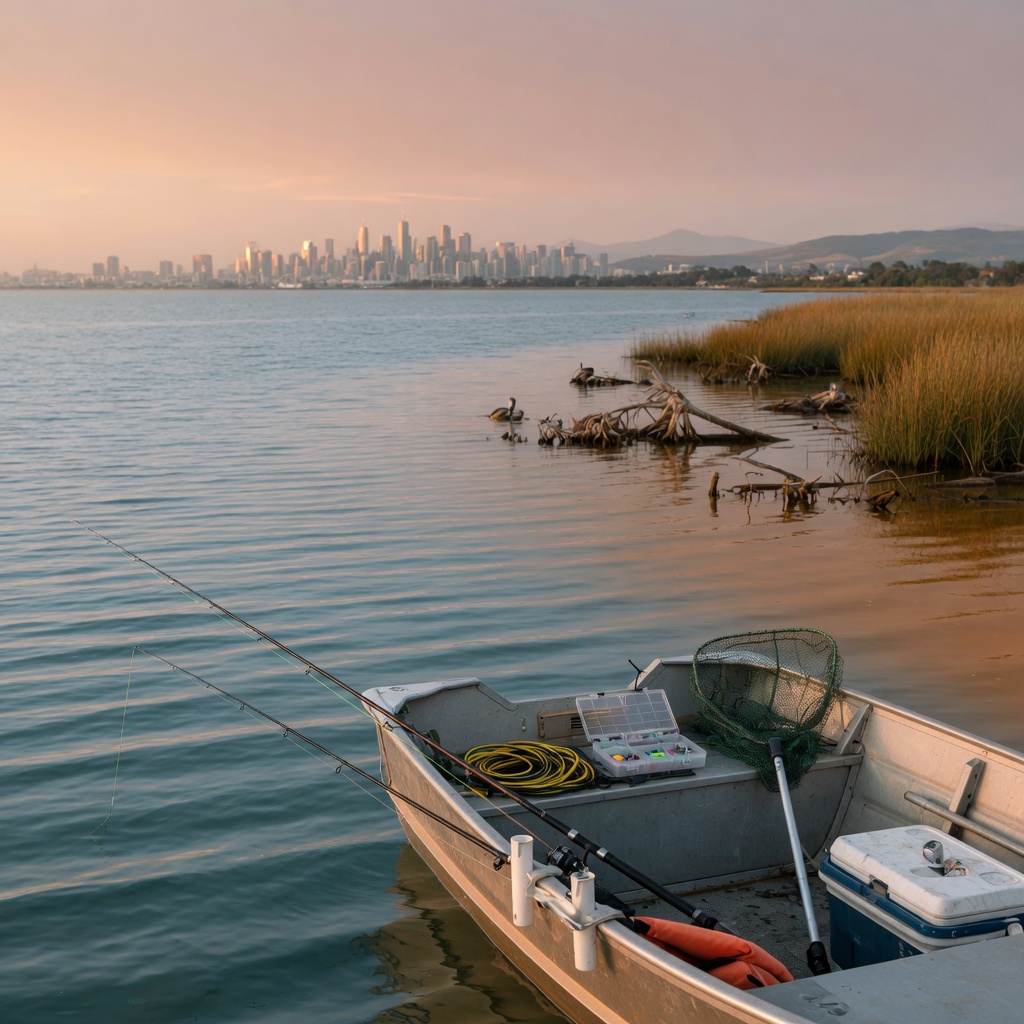
Two Victorian Fisheries Worth Learning Properly
Victoria offers two of the most accessible and rewarding inshore fisheries in the country. Port Phillip Bay delivers a genuine run of snapper each spring and summer within sight of Melbourne, while the Gippsland Lakes hold a resident population of black bream that can be chased twelve months a year. Both fisheries reward anglers who read structure, tide and water temperature rather than simply anchoring on last season's marks. This guide from Australian Fish Species sets out identification points, seasonal patterns and rigs that work, with the same species-first approach used across our fish species profiles and identification library.
Identifying Port Phillip Bay Snapper
Snapper (Chrysophrys auratus) are deep-bodied, silvery-pink fish with scattered electric blue spots along the flanks, most vivid on fresh fish under 3 kg. Victorian anglers use size-based local names: "pinkies" for juveniles up to roughly 40 cm, "reds" or "snapper" for adults, and older fish develop the pronounced nasal and forehead humps that mark a true "old man snapper". Key identification features include:
- Body colour: pink to coppery above, silver below, blue spotting fading after death.
- Head profile: steep forehead that becomes bulbous with age.
- Teeth: strong incisor-like front teeth with crushing molars behind, suited to crabs, shellfish and squid.
- Fins: single continuous dorsal with firm spines, forked tail with a faint dark margin.
Do not confuse pinkies with juvenile Australian salmon or tarwhine. Tarwhine have gold horizontal stripes and a smaller mouth, while salmon are more torpedo-shaped with rows of dark blotches.
Snapper Seasons, Water Temperature and Tide
The Port Phillip Bay run typically builds through October as water climbs past about 16 to 18 degrees, peaks over November and December, and tapers by late summer. Fish spread from the Mornington and Dromana banks through the middle grounds and up towards Werribee and Corio Bay. Practical patterns:
- Depth: early season fish often hold in 12 to 22 m; big reds move shallower into 6 to 12 m at dusk and after dark.
- Tide: anchor so berley and scent drift across the reef edge or drop-off; the last of the flood and first of the ebb usually fire best.
- Light: dawn, dusk and the first two hours of dark are the classic windows, especially around the new and full moon.
- Weather: a dropping barometer ahead of a change and dirty water after a northerly blow can both trigger feeding.
Rigs and Baits for Bay Snapper
A running sinker or snelled twin-hook rig on 15 to 20 kg leader covers most situations. Use just enough lead to hold bottom. Fresh bait matters more than quantity: pilchard, silver whiting, squid strips, garfish fillet and fresh sardine all work, with squid and garfish standing up better to pickers. Berley lightly and continuously rather than in heavy dumps. Soft plastic and micro-jig anglers drifting the banks should look for bait schools on the sounder and keep the presentation within a metre of the bottom.
Because snapper are often brought up from 15 m or more, expect signs of barotrauma in fish you intend to release: a distended stomach, bulging eyes or an inability to swim down. Use a release weight or venting tool correctly, keep handling brief, wet your hands and support the fish horizontally.
Identifying Gippsland Lakes Black Bream
Black bream (Acanthopagrus butcheri) are the resident bream of Victorian estuaries and differ from the yellowfin bream common further north in New South Wales. Look for dusky to bronze-olive flanks, dark grey-brown pectoral and pelvic fins rather than bright yellow ones, and a deep, compact body. Older Gippsland fish can reach 40 cm and beyond, with a thick shoulder and heavy jaw. Black bream spend their whole life cycle inside the estuary, so their behaviour is driven by salinity layers, freshwater inflow and structure rather than ocean tides alone.
Reading the Gippsland Lakes System
The lakes complex, taking in Lake King, Lake Victoria, Lake Wellington and the feeder rivers, holds fish that shift with the salt wedge. After heavy rain, bream stack in the lower lakes and along entrances; in dry, stable periods they push far up the Mitchell, Nicholson, Tambo and Latrobe rivers. Productive structure includes:
- Snags and fallen timber in the river arms, best worked with lightly weighted plastics cast tight and allowed to sink.
- Jetties, moored boats and channel markers that provide shade and vertical structure.
- Weed edges and drop-offs where prawns and small crabs congregate, ideal for surface lures in warm weather.
- Broken bottom in the open lakes, best found by drifting with vibes or blades.
Bait anglers do well on live or peeled prawn, sandworm, bass yabbies and small crabs on a 1/0 to 2/0 hook with light leader. Lure anglers should carry 2 to 3 inch grubs and paddle-tails, 40 to 60 mm hard bodies, small vibes and a couple of surface walkers for calm mornings. Fluorocarbon leader of 3 to 5 kg on 4 to 6 lb braid is a sensible all-round setup. Winter fish are often deeper and slower, so drag the presentation and expect subtle bites.
Rules, Access and Safety
Victorian bag limits, minimum sizes and any seasonal or spatial closures for snapper and bream are set by the state fisheries authority and change over time. Always check the current Victorian recreational fishing guide before you launch, carry a valid recreational fishing licence unless you are exempt, and measure fish properly to the tail tip as required. Port Phillip Bay can build a short, steep chop very quickly in a southerly or northerly blow, so check the marine forecast, log your trip, wear a lifejacket and keep a small crew boat well inside its limits. In the Gippsland Lakes, be aware of shifting sandbars near the entrance and never attempt a bar crossing in marginal conditions.
For trip planning questions or to suggest a location we should cover next, contact Australian Fish Species on +61295585271 or [email protected]. Our editorial team, based in Sydney, is available Mon–Fri: 09:00 – 17:00 (AEST).

Navigation
See also
FAQ