Water Temperature and Seasonal Fish Migrations in Australia
Why Water Temperature Rules the Calendar
Fish are ectothermic, so their metabolism, digestion rate and appetite rise and fall with the water around them. A change of just one or two degrees can switch a species from sulking to feeding hard, or push a whole school hundreds of kilometres along the coast. On Australian Fish Species we treat surface temperature as the single most useful number an angler can carry, ahead of moon phase and even barometric pressure, because it explains both where fish will be and how aggressively they will eat.
Around Sydney the pattern is easy to see. Coastal water sits near 16–18 degrees in late winter and climbs through spring to 22–24 degrees by February, with warm East Australian Current eddies occasionally pushing 25 degrees water inside the shelf. Estuaries and shallow bays swing further and faster than the ocean, sometimes 4–5 degrees between a cold dawn and a still afternoon on a dark mud flat.
Comfort Bands for Common Species
Use these as guides rather than rules, since salinity, bait presence and structure all modify behaviour. Local usage of names matters too, so check our species profiles and identification guides if you are unsure what you have landed.
- Bream — active from about 15 degrees, peak feeding 18–23 degrees, spawning runs to estuary mouths in the cooler months.
- Dusky flathead — sluggish under 15 degrees, strongest in 19–25 degrees when they ambush on warming sand flats.
- Snapper — broad tolerance, but inshore reef bites often improve as water drops through 18–20 degrees in autumn and again in spring.
- Mulloway — comfortable 16–24 degrees; movement is usually tied to freshwater flow, bait and tide more than heat alone.
- Yellowtail kingfish — patchy under 17 degrees, prime 19–24 degrees on headlands and offshore reefs.
- Barramundi — a tropical fish that shuts down below roughly 20 degrees and feeds best 28–32 degrees through the northern build-up and wet.
- Murray cod and golden perch — inland natives that wake as river water climbs past 16–18 degrees in spring.
- Trout — stressed above 20 degrees, best in 8–16 degrees highland streams and lakes.
Reading Temperature Breaks Offshore
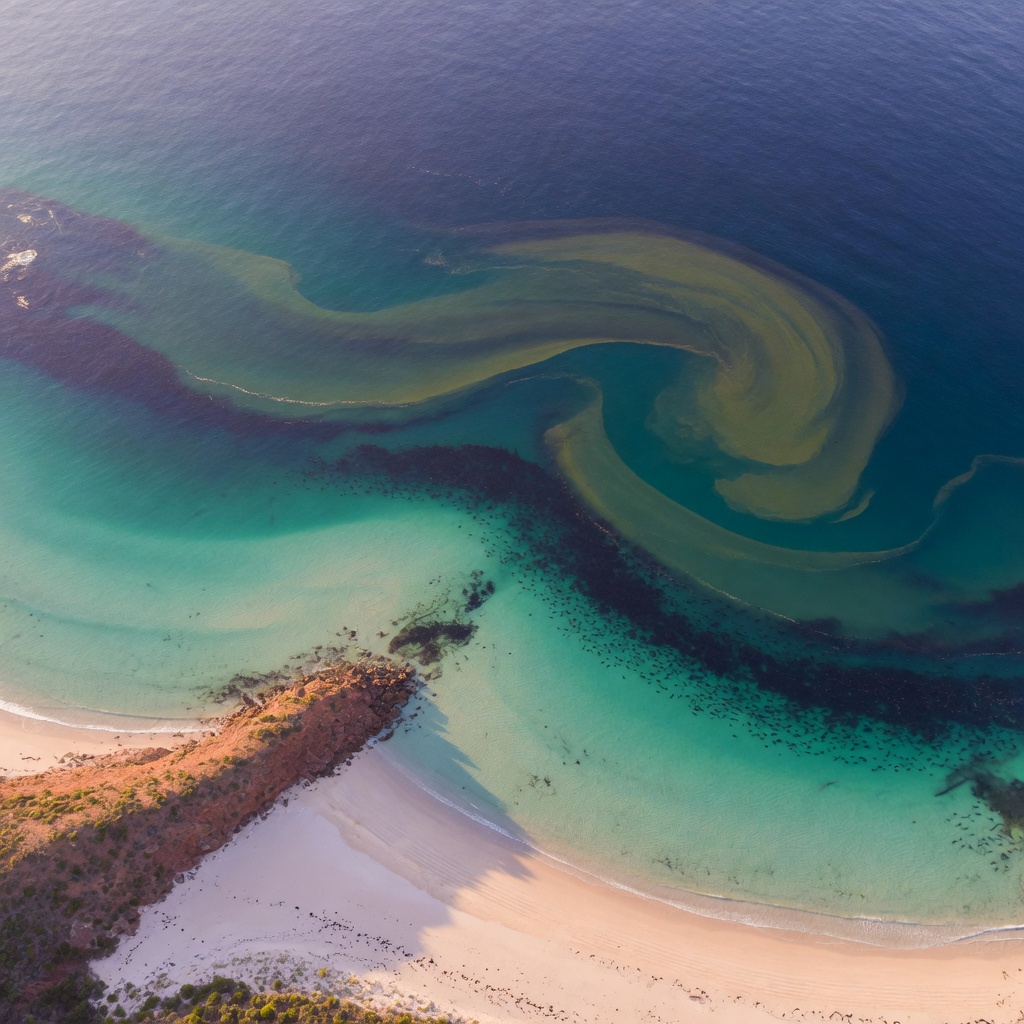
Game fishing is largely a search for edges. Pelagic species such as striped marlin, yellowfin and longtail tuna, and Spanish mackerel hold along thermal fronts where warm current water meets cooler shelf water, because those seams concentrate plankton, then bait, then predators. A break of one degree over a short distance is worth working; two degrees is a genuine feature.
- Check a sea surface temperature chart and a current map the night before, and note the depth contours the break crosses.
- Run to the cooler, greener side and troll the warm edge, watching for bait shows, terns and current lines.
- Log your own surface readings against catches — after a season your notebook beats any generic chart.
Season by Season Around the Coast
Spring
Rising water triggers spawning and heavy feeding. Flathead spread across flats, kingfish return to headlands, and inland natives begin moving in the Murray-Darling. Expect fast changes week to week.
Summer
Warm surface layers push some southern species deeper or into cooler tidal channels during the middle of the day, while northern estuaries fire for barramundi and mangrove jack. Fish first light and last light, and target moving water.
Autumn
Often the best all-round window in the south-east. Water is still warm but falling, bait is abundant, and tailor, Australian salmon, snapper and mulloway all respond well.
Winter
Cold water slows metabolism, so downsize baits, slow retrieves and fish the warmest part of the day. Australian salmon and trevally patrol beaches, while deep estuary holes hold bream and school mulloway.
Practical Ways to Use the Numbers
- Carry a simple thermometer and record surface temperature at every session, along with tide, wind and moon phase.
- In cold water fish slower and smaller; in warm water fish faster, larger and higher in the column.
- Look for micro-warm zones in winter — dark weed beds, north-facing shallows, rock ledges in afternoon sun.
- In summer look for micro-cool zones — deep channels, freshwater inflows, upwellings along headlands.
Safety, Care and Current Rules
Warm water holds less oxygen, so released fish tire faster and need extra care. Keep fights short, wet your hands or use a knotless net, support the fish horizontally and release it promptly. Fish taken from deeper reefs may need a release weight to overcome barotrauma. Always read the marine forecast before heading out, treat rock platforms and coastal bar crossings with respect, and wear a lifejacket.
Seasonal closures, bag limits and size limits change between states and over time, and several are tied directly to spawning periods that shift with water temperature. Verify current limits with the relevant state or territory fisheries authority before every trip. Questions or corrections are welcome by [email protected] or +61295585271 during Mon–Fri: 09:00 – 17:00 (AEST).

Navigation
See also
FAQ