Yellowtail Kingfish Jigging on Offshore Pinnacles
Why Pinnacles Hold Kingfish
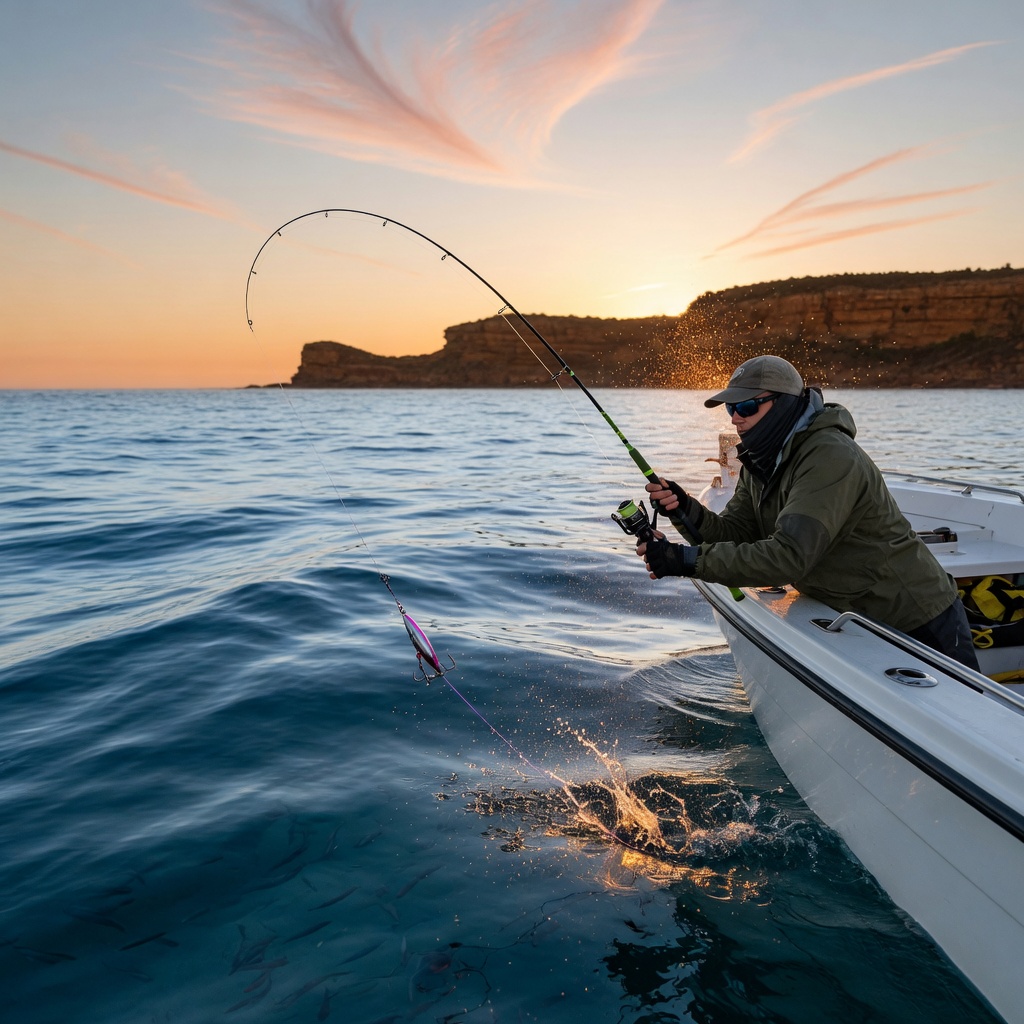
Yellowtail kingfish (Seriola lalandi) are ambush predators that use structure to their advantage. Offshore pinnacles, isolated bommies, reef edges and wrecks in 30 to 90 metres force current upward, concentrating baitfish such as yellowtail scad, slimy mackerel and cuttlefish against the rise. Kingfish sit on the up-current face or just behind the peak, waiting for bait to be swept past. That predictable positioning is exactly what makes vertical jigging so effective: you can drop a lure into the strike zone repeatedly rather than towing lures over empty water.
Around Sydney and the wider NSW coast, the best pinnacle sessions usually run from late spring through autumn, with warmer water pushing bigger fish onto shallower structure. Winter still produces, but fish often hold deeper and feed in shorter windows. Larger models, the fish anglers call hoodlums, tend to be more common on isolated, less-pressured structure.
Reading Sounder, Tide and Current
Before you drop, spend time marking the structure. Run passes over the pinnacle from several angles to find the peak depth, the direction the current is running and where bait is stacked. Look for tight bait balls with arches underneath or off to one side. If the screen is empty, move rather than grinding out fruitless drops.
- Current is king: a moderate run switches kingfish on. Slack water often means lockjaw.
- Tide changes: the hour either side of a tide change frequently produces the sharpest bite.
- Moon phase: larger tides around new and full moon move more water and can lift activity, but also make holding position harder.
- Wind against current: makes drift control difficult and jigs sit at bad angles. Plan drifts so the boat tracks with the flow.
Always check the marine forecast, swell period and wind change timing before heading out. Pinnacles are often well offshore, and a rising afternoon nor-easter can turn a comfortable morning into a long, wet ride home.
Jig Choice: Mechanical Versus Slow-Pitch
Two styles dominate. Mechanical (speed) jigging uses long, narrow jigs of 100 to 250 grams worked with fast, rhythmic rod strokes and reel turns to mimic a fleeing baitfish. Slow-pitch jigging uses wider, flatter jigs that flutter horizontally on the drop, triggering fish that are holding tight and unwilling to chase.
- Weight: choose the lightest jig that reaches bottom near vertical. As a rough guide, 1.5 to 2 grams per metre of depth in moderate current.
- Colour: silver, blue-and-white and pink-and-glow cover most conditions; glow patterns help in deeper, dirtier water.
- Assist hooks: twin assists on the nose for mechanical jigs, plus a tail assist for slow-pitch presentations where fish nip at the rear.
Work the bottom third of the water column first, then extend your retrieve higher if you see fish rising on the sounder. Kingfish will often follow a jig well off the bottom before committing near the surface.
Tackle and Rigging
Balance matters more than brute strength. A typical mechanical jigging outfit is a 5 to 6 foot PE3 to PE5 rod paired with a high-speed spinning reel holding 300 metres of 30 to 50 lb braid, joined to a 40 to 80 lb fluorocarbon leader with an FG or PR knot. Slow-pitch outfits use lighter overhead gear and a slower, more parabolic rod.
Set drag firmly enough to turn a fish away from structure, commonly around a third of line breaking strain, and lift the rod tip immediately on hook-up. A kingfish that reaches the reef will bury the leader in seconds. Check leaders after every fish and re-tie at the first sign of abrasion.
Safety, Fatigue and Boat Handling
Jigging is physical work in an unstable environment. Keep one hand for the boat when moving around, wear a lifejacket in rough conditions, and rotate anglers so nobody is jigging to exhaustion. Log your trip plan, carry appropriate safety gear including EPIRB and VHF, and know your bar crossing before you commit to it if launching through one. Sun protection, water and food matter on long offshore days.
Handling and Release
Kingfish fight hard and heat up fast. Support the fish horizontally, avoid dropping it on hot decks, and use a knotless net or a wet cradle. If you are releasing fish taken from deeper pinnacles, watch for signs of barotrauma such as a distended stomach or difficulty swimming down, and use a release weight or venting tool as recommended by your state fisheries authority. Kill fish you intend to keep quickly, bleed them and get them into an ice slurry for the best table quality.
Size limits, bag limits and any seasonal or spatial closures for yellowtail kingfish vary by state and change over time. Always confirm current rules with the relevant state or territory fisheries authority before you fish. For more techniques across bluewater ground, see our offshore, reef and game fishing section.
Questions about a specific pinnacle, jig weight or rig setup? Contact Australian Fish Species at [email protected] or +61295585271 during Mon–Fri: 09:00 – 17:00 (AEST).
Navigation
See also
FAQ